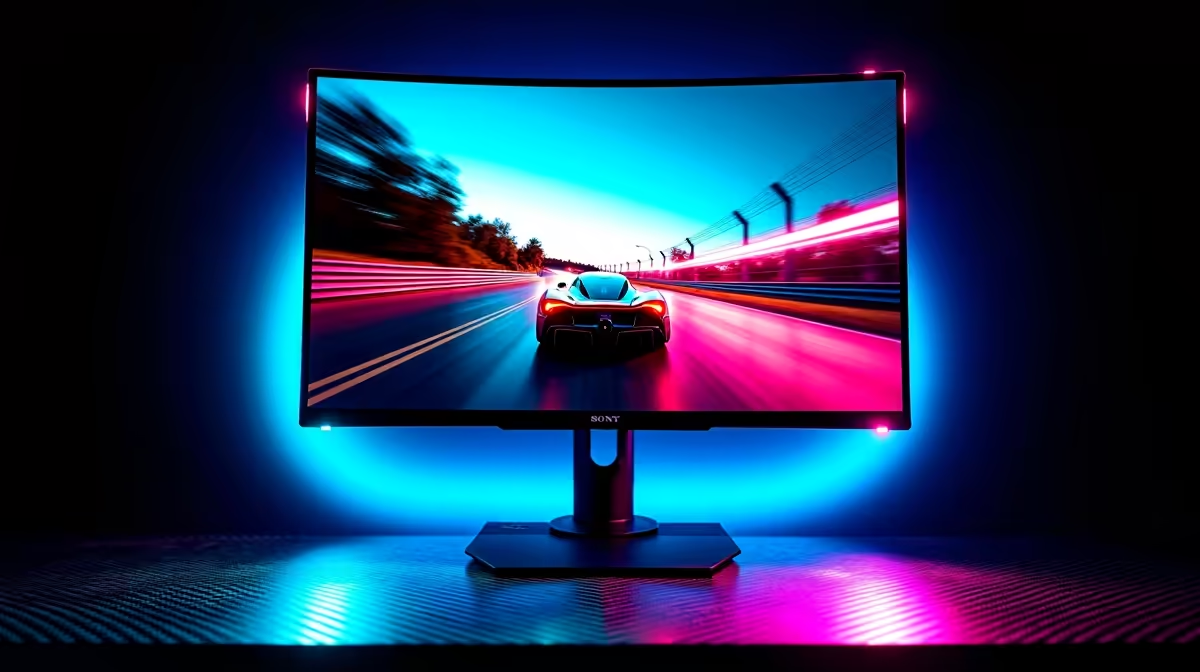
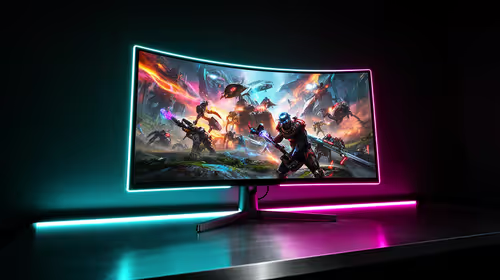
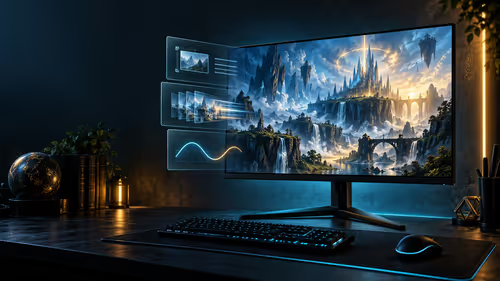
Staring down an opponent in Valorant on Breeze, the last thing you need is your screen tearing... that jarring visual glitch that splits your display and costs you the round. In the high-stakes world of South African competitive gaming, smooth visuals aren't a luxury; they're essential. This brings us to the big debate: FreeSync vs G-Sync. Which adaptive sync technology is the best choice to give you the edge on local servers? Let's dive in. 🎮
What is Adaptive Sync and Why Does it Matter?
Before we pit FreeSync vs G-Sync against each other, let's quickly cover what they do. Your graphics card (GPU) and your monitor are in a constant conversation. The GPU renders frames as fast as it can, while the monitor refreshes the screen at a fixed rate (e.g., 144Hz, 240Hz).
When these two are out of sync, you get visual artefacts:
- Screen Tearing: The monitor tries to display two different frames at once.
- Stuttering: The GPU can't supply a new frame in time for the monitor's refresh.
Adaptive sync forces your monitor to refresh only when the GPU sends a new frame. This synchronisation creates a buttery-smooth, tear-free experience that is critical for tracking targets and reacting instantly in competitive play.
Breaking Down G-Sync: The NVIDIA Powerhouse
G-Sync is NVIDIA's proprietary solution. For years, this meant a dedicated hardware module inside the monitor, which added to the cost but guaranteed a premium, consistent experience. While these "G-Sync Ultimate" displays still represent the gold standard, the landscape has changed.
Today, you'll also find "G-Sync Compatible" monitors. These are essentially high-quality FreeSync monitors that NVIDIA has rigorously tested and certified to deliver a solid G-Sync experience.
G-Sync: The Pros & Cons
- Pros: Extremely reliable performance, strict quality control, and often better handling of very low frame rates.
- Cons: Traditionally more expensive, and it locks you into using an NVIDIA graphics card.
While G-Sync monitors were once a niche premium product, today you can find them across all gaming monitors at various price points in South Africa.
Understanding FreeSync: The AMD Open Standard
FreeSync is AMD's answer to G-Sync. The biggest difference? It's an open standard built into the DisplayPort specification, meaning manufacturers don't have to pay AMD a licensing fee. This has made it incredibly popular and widespread. ✨
However, not all FreeSync is created equal. It comes in three tiers:
- FreeSync: The basic tear-prevention technology.
- FreeSync Premium: Adds Low Framerate Compensation (LFC) to smooth out performance when your FPS drops below the monitor's minimum refresh rate, plus a guaranteed 120Hz refresh rate at FHD.
- FreeSync Premium Pro: Includes all the above, plus optimised support for HDR content.
This open standard means you'll find FreeSync on a massive selection of PC monitors, from budget-friendly options to high-end displays.
Pro Tip: Enabling G-Sync on a FreeSync Monitor ⚡
If you have an NVIDIA 10-series GPU or newer and a FreeSync monitor, you can often enable G-Sync! Open the NVIDIA Control Panel, go to "Set up G-SYNC," check the "Enable G-SYNC, G-SYNC Compatible" box, select your monitor, and tick "Enable settings for the selected display model." It's not guaranteed to be perfect, but it works flawlessly on many displays!
FreeSync vs G-Sync: The Head-to-Head for SA Gamers
So, which one should you choose? The FreeSync vs G-Sync decision for a South African gamer comes down to your budget and your current hardware.
For an immersive experience in single-player titles, pairing adaptive sync with the wrap-around view of curved monitors is a fantastic combination. Even high-resolution 5K & 4K monitors benefit hugely from this tech, ensuring smooth gameplay at demanding pixel counts.
- For the Aspiring Pro: If you have a high-end NVIDIA card (like an RTX 4070 or better) and your budget allows, a true G-Sync or a top-tier G-Sync Compatible monitor offers peace of mind. The guaranteed performance consistency is a small but valuable advantage when every frame counts.
- For the Smart & Savvy Gamer: For the vast majority of players, a FreeSync Premium monitor is the undisputed champion of value. The performance is excellent, the cost is lower, and its compatibility with both AMD and modern NVIDIA cards gives you flexibility for future upgrades.
Beyond the Tech: What Else to Look For
Adaptive sync is crucial, but it's only one part of the puzzle. Don't forget these key specs when browsing the best PC monitor deals:
- Refresh Rate (Hz): For competitive gaming, 144Hz is the baseline. 240Hz or higher is ideal for titles like CS2 and Valorant.
- Response Time (ms): Look for 1ms (GtG) to minimise motion blur and ghosting.
- Panel Type: IPS panels offer the best colour accuracy, while VA panels provide superior contrast.
Whether you're looking for a primary display or something for on-the-go with portable monitors, these fundamentals always apply. Finally, don't forget the right VESA mount or cables from our range of monitor accessories to perfect your setup. 🚀
Ready to Find Your Perfect Match?
The FreeSync vs G-Sync debate depends on your GPU and budget, but one thing is certain: the right monitor will transform your gaming. Explore our massive range of gaming monitors and find the perfect display to dominate the server.