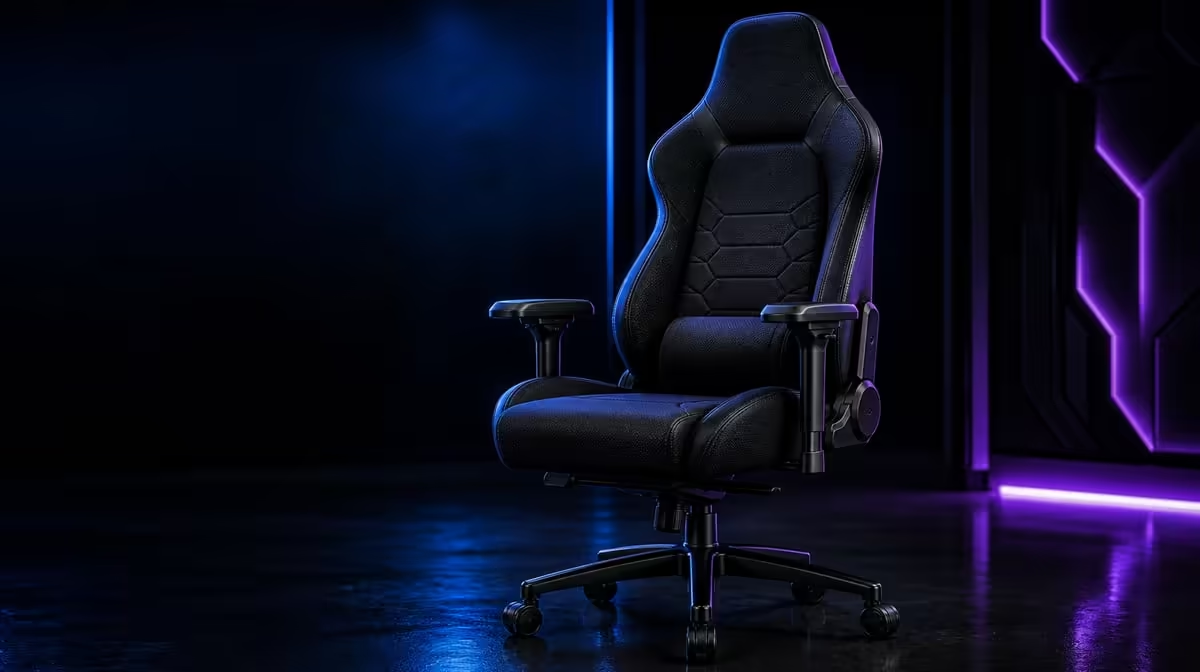
An R8,000 ceiling is useful only when it stays firm and the required features are ranked before shopping. Gaming chair features under R8,000 should begin with user range, stable construction and support that improves the desk routine. The noblechairs HERO Black Edition is a comparison point, not a qualifying option: its R8,599 price sits R599 above the limit.
Quick Answer
The HERO does not fit an under-R8,000 budget because it costs R8,599. Within the ceiling, prioritise suitable user design, dependable structure, lower-back contact and arm support before appearance. Use the HERO's steel frame, continuous lumbar system and enlarged 4D armrests to understand what the extra R599 adds, then decide whether the stretch solves a real need.
💰 Keep the ceiling visible
Write R8,000 beside every candidate and compare complete chair prices. Do not describe the R8,599 HERO as under the limit or hide the R599 difference inside a broader range.
A hard ceiling can remain hard. The buyer is not required to stretch because a premium example sits nearby. Instead, use the difference to ask what feature would change.
Start with non-negotiable fit: intended user range, usable backrest contact, arm position and desk clearance. Cosmetic preferences follow only after those filters pass.
The Evetech gaming chair range provides the broad category for comparing options against the ceiling.
⚖️ Rank structural requirements first
Check whether each chair is designed for the user's range. The HERO offers an up-to-150kg reference and a robust steel frame, but a buyer below that figure still needs to inspect body fit.
Frame material contributes to structure without predicting exact longevity. Avoid converting steel, plastic or a capacity figure into an unsupported years claim.
Test normal seated movement and adjustment controls. A chair should remain practical at the desk, not merely pass a specification filter.
Add chair width and desk clearance to the practical check without inventing measurements. Sit in the candidate, move it towards the controls and observe whether the armrests or backrest obstruct normal movement. The test uses the actual space rather than an assumed universal fit.
For a shared chair, make each person pass the intended user-range and support checks independently. One user's success does not transfer automatically to another body shape.
Evetech's noblechairs chair category shows how the HERO packages its premium construction.
🎚️ Separate required support from upgrade features
Under R8,000, seek lower-back and forearm support that actually meets the user. The mechanism can differ; the outcome is comfortable contact without reaching or raised shoulders.
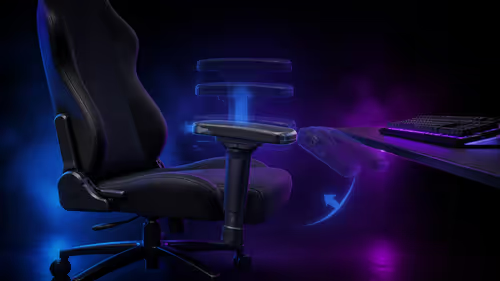
The HERO illustrates a more elaborate approach through infinitely adjustable lumbar depth. Its enlarged 4D pads can move across different desk and gaming positions.
Ask whether a candidate's simpler controls already solve the task. If they do, paying R599 more is not automatic. If fine lumbar or four-way arm movement fixes a repeated mismatch, the stretch has a named purpose.
Compare lumbar contact through a full task rather than a brief sit. A fixed or simpler backrest can be suitable when it meets the user's curve, while continuous control matters when small depth changes create a better result.
For arm support, bring keyboard, mouse and controller positions into the same test. Count how many pad directions are actually used. A 4D label has little budget value when the successful setting never changes.
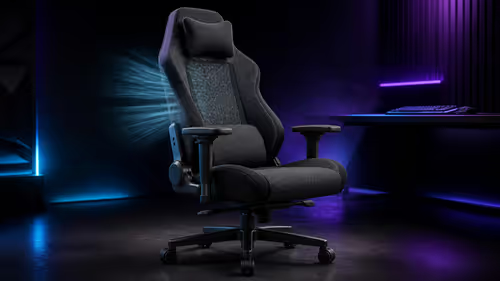
The HERO also combines breathable covering with air channels. Warm-room buyers can include surface ventilation in the score while remembering that room conditions and movement still matter.
🧪 Compare at the desk, not on labels
Sit back, bring the controls within reach and test the lower-back contact. Then position the forearms and check whether the shoulders remain relaxed through typing, pointer work and controller use.
Use the chair long enough to move beyond the first impression. Note pressure, heat, desk collision and whether adjustments remain useful after task changes.
Create a pass table: user range, structure, lumbar fit, arm support, covering and price. An under-R8,000 chair that passes every critical row can deliver strong value without imitating every HERO feature.
For the R8,599 HERO, run the same table and mark what the extra amount improves. Do not award points simply because it exceeds the ceiling.
Include warm-room use. The HERO's breathable covering and air channels provide a reference for ventilation-focused design, but an in-budget alternative should be judged through its own stated construction and a realistic session.
Do not treat the premium product as a requirement. Its purpose in this guide is to show what a stretch can add and to force a more precise comparison near the limit.
Compare premium options through Evetech's gaming chairs above R4,000. The category can include chairs on both sides of the R8,000 line, so keep the live price beside each model.
If the budget cannot move, remove the HERO and evaluate the remaining options honestly. If R599 is available, require the additional features to solve a problem observed during the desk test.
Avoid predicting durability from price. The HERO's steel frame and intended user range are useful facts; neither guarantees a lifespan.
Keep a reserve for no immediate purchase. If no chair below R8,000 passes the critical fit filters and the extra R599 is unavailable, waiting respects the budget better than accepting a known mismatch.
At the final comparison, read the product pages again and confirm every price and feature that shaped the verdict. The title's ceiling should remain visible on the scorecard.
The strongest decision may be a chair below R8,000, the R8,599 HERO, or no immediate purchase. The correct outcome is the one that respects the ceiling and passes the required fit checks.
Treat the R8,000 ceiling as a design constraint for the whole workstation. A lower-priced chair that leaves room to correct monitor distance or input-device placement may create a stronger overall result than spending every Rand on unused chair controls. List what must pass before browsing: intended user range, back contact, forearm support and desk clearance. Then rank breathable surfaces, additional adjustment directions and appearance according to frequency. The HERO at R8,599 sits just above this particular ceiling, so it works best as a comparison point that shows what the extra R599 would need to achieve, not as permission to ignore the limit.
Frequently Asked Questions
Does the HERO qualify under R8,000?
No. Its R8,599 price is R599 above that ceiling.
What should the budget prioritise first?
Prioritise intended user range, sound structure, lower-back fit, arm position and desk compatibility.
Which HERO features illustrate the upgrade?
Its steel frame, infinite lumbar adjustment, enlarged 4D armrests and ventilation-focused covering show the premium package.
Must the buyer stretch by R599?
No. Stretch only when a HERO feature solves a confirmed problem that an in-budget option leaves unresolved.
Can a cheaper chair still be comfortable?
Yes. Personal fit and useful support matter more than matching every premium control.
How should a user near 150kg filter?
Confirm that the chair's intended user range is appropriate before comparing comfort or appearance.
Does price establish longevity?
No. Normal use, complete construction and care vary, so a price tier cannot promise years.
Should ventilation outrank body fit?
Not automatically. Surface heat can matter, but the chair still needs to suit the user range, back and desk.
What if no chair passes under R8,000?
Keep the ceiling intact or make a deliberate R599 stretch only after identifying the exact feature gained.
Ready to keep R8,000 honest while comparing the features above it?
Explore Evetech gaming chairs and make every extra Rand answer to a tested fit or support need.