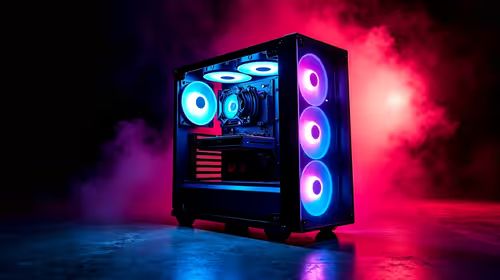
So, you’re serious about games. Not just playing them, but breaking them. For any developer, QA tester, or aspiring game-maker in South Africa, your PC isn't just for entertainment; it’s a professional tool. A standard rig might run the latest titles smoothly, but a purpose-built gaming PC for game testing builds is an entirely different beast. It's designed to handle the chaos of unoptimised code, debug overlays, and a dozen background apps without breaking a sweat. 🚀
Why Your Average Gaming Rig Won't Cut It
Think of it this way: a race car is built for speed on a perfect track. A rally car is built to withstand punishment on unpredictable terrain. Your standard gaming PC is the race car, optimised for a flawless experience. A gaming PC for game testing, however, is the rally car. It needs the raw power and stability to handle the bumpy, unfinished roads of game development.
When you're testing, you're not just running a game. You're often running it alongside:
- An IDE (Integrated Development Environment): Like Visual Studio or Rider, which are resource-hungry.
- Debugging Tools: Which overlay performance metrics and logs, adding CPU and RAM overhead.
- Multiple Game Instances: To test networking or specific scenarios.
- Asset Editors: Like Blender or Unreal Engine, running simultaneously.
A standard PC will quickly buckle under this load, leading to frustrating slowdowns and inaccurate test results.
Core Components for a Flawless Game Testing PC Build 🔧
Building a PC specifically for game testing means prioritising components differently. It's less about hitting 4K at 200 FPS and more about brute-force stability and multitasking horsepower.
The CPU: Your Multitasking General
While a good gaming CPU needs strong single-core performance, a PC for game testing thrives on multiple cores and threads. Compiling code, running virtual machines, and managing numerous background processes all happen at once.
- Recommendation: Look towards CPUs like the Intel Core i7/i9 or AMD Ryzen 7/9 series. The extra cores are not a luxury here; they are a fundamental requirement for a smooth workflow.
RAM: Go Big or Go Home
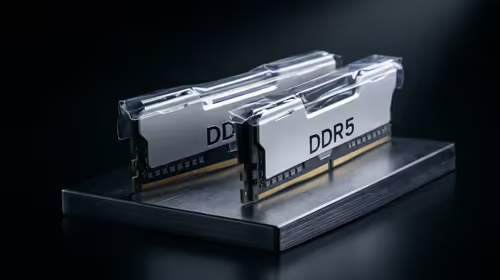
Thirty-two gigabytes (32GB) of RAM should be your absolute minimum. Game engines, especially with large, uncompressed assets loaded, can easily consume over 16GB on their own. Add your OS, Discord, a browser with a hundred tabs for research, and your debugging tools, and you'll see why 32GB is the new standard. For heavy-duty engine work, especially with Unreal Engine 5, pushing to 64GB is a wise investment.
Pro Storage Tip
Dedicate a separate NVMe SSD just for your game builds and testing environments. This isolates it from your OS drive, preventing potential corruption from unstable code and dramatically speeding up loading times for uncompressed assets. No more waiting around!
Graphics Card (GPU): Stability Over Splendour
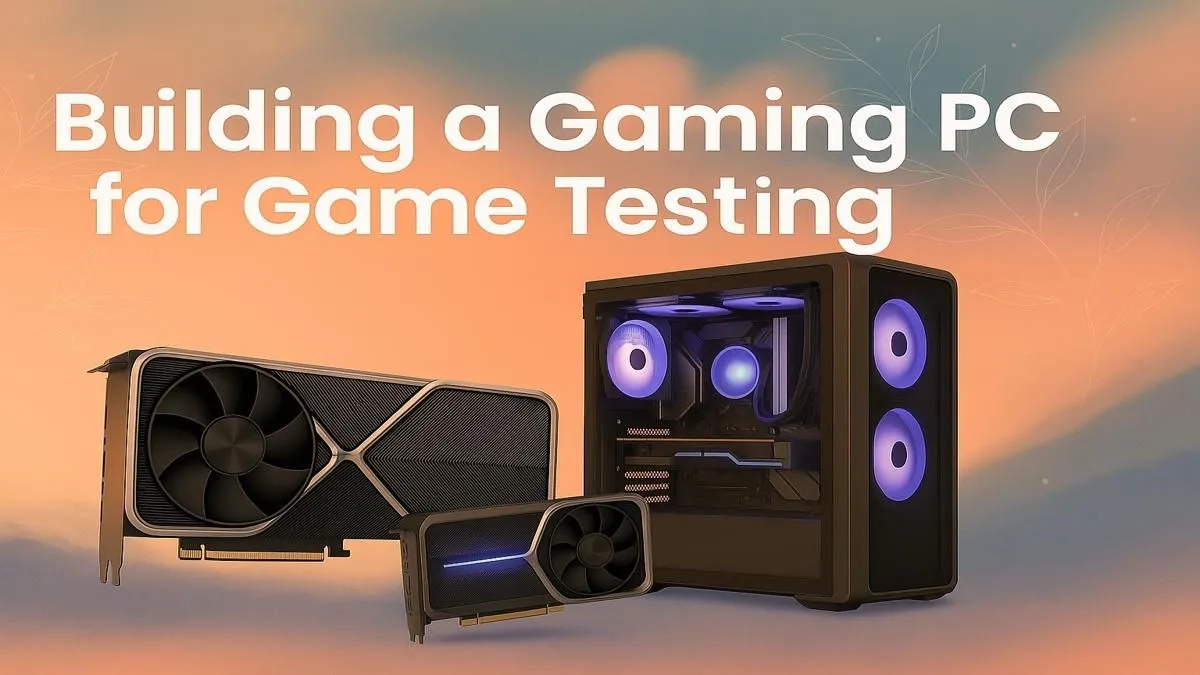
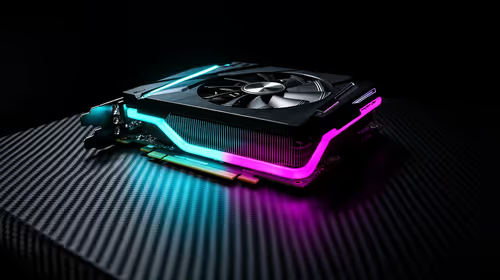
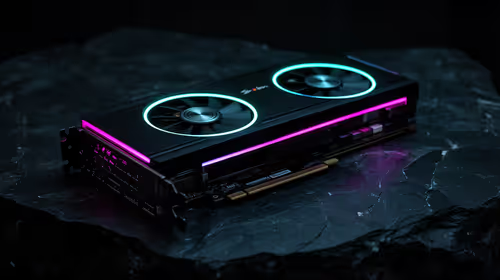
This might sound counter-intuitive, but you don't always need the absolute top-of-the-line GPU. Instead, focus on a card with a solid VRAM buffer (12GB+) and, most importantly, rock-solid, mature drivers. NVIDIA GPUs are often favoured in development circles for the robust support provided by their Studio Drivers, which are optimised for creative and development applications over raw gaming performance. A reliable RTX 4060 or 4070 offers a fantastic balance of power and stability for most game testing builds.
Storage: The Unsung Hero of Speed ⚡
When you’re constantly loading massive projects and saving new builds, storage speed is critical. A fast NVMe SSD is non-negotiable for your primary OS and applications. As the tip box suggests, using a second NVMe drive exclusively for your projects will revolutionise your workflow. The time saved waiting for levels to load or builds to transfer adds up significantly, giving you more time to actually test.
It's All About a Balanced Build ✨
Crafting the perfect gaming PC for game testing builds is about smart choices, not just throwing the most expensive parts together. Prioritise a powerful multi-core CPU and a generous amount of high-speed RAM. Complement that with fast, dual-drive storage and a reliable, well-supported GPU. This balanced approach ensures your machine is a powerful development tool, ready to tackle any buggy code you throw at it.
Ready to Build Your Ultimate Test Bench?
Stop fighting your hardware and start finding those bugs. Design a custom PC tailored for development and testing with Evetech’s powerful and easy-to-use PC Builder tool today.