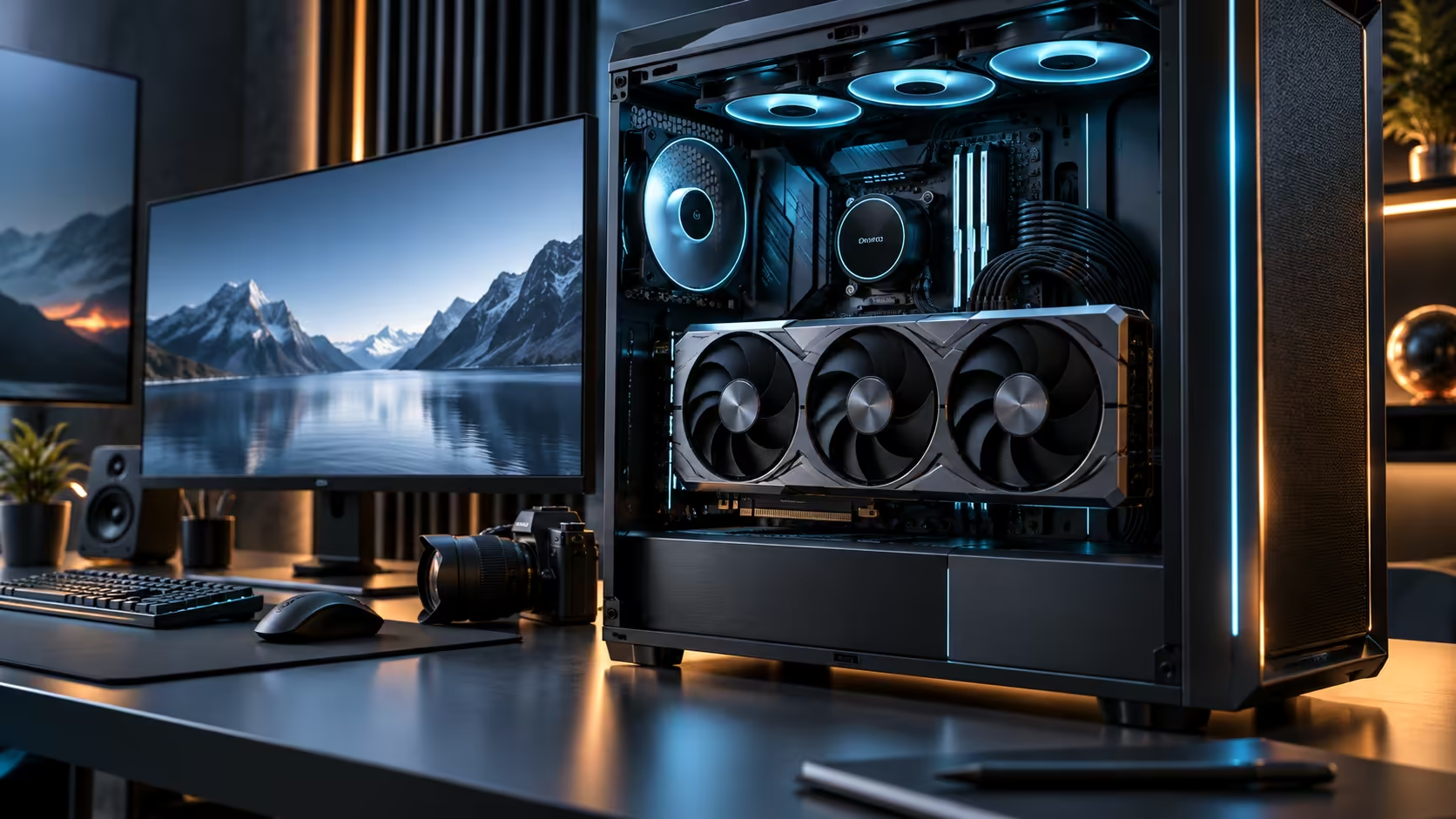
Two numbers decide how fast a graphics card can feed itself data, and neither one means anything on its own. GDDR7 memory raises what each individual pin carries per second; a wider bus multiplies that by more pins working in parallel. Multiply them together and you get the total bandwidth figure that actually predicts whether a card struggles at high resolution.
Quick Answer
Total memory bandwidth is the per-pin data rate of the memory generation multiplied by the width of the bus connecting it to the processor. GDDR7 raises what each pin carries compared with older memory types, and pairing that with a 512-bit path, double the 256-bit lane count found on mainstream cards, means the two effects compound rather than simply add. The Astral Edition 20, built around this wider bus, asks R119,999.
📶 What "per-pin speed" actually measures
Every generation of graphics memory ships with a headline transfer rate, which describes how much data one pin can move per second under the standard's own signalling method. Newer generations use more advanced signalling to push that number higher without needing more voltage or generating disproportionately more heat, which is the core improvement each memory generation brings over the last. A full memory generation change like this typically arrives every 3 to 4 years, so the gap between GDDR6 and GDDR7 reflects several years of signalling refinement rather than an incremental yearly bump.
The exact rated speed for any specific card is set by the manufacturer and published on that card's own page, because the same memory generation ships across many products at different clocked speeds depending on how the card is tuned. Treat any number you see quoted for a "typical" card in a memory generation as a ceiling, not a guarantee for the card in front of you.
🛣️ Why bus width multiplies rather than adds
A 512-bit bus means 512 individual electrical paths carrying data in parallel between the memory chips and the processor, against 256 on a mainstream design. Doubling the paths does not just double the number of possible connections, it doubles the amount of data moving every single clock cycle, which is why bus width has an outsized effect on total bandwidth compared with a small bump in per-pin speed.
This is also why two cards using the same memory generation can perform very differently at high resolution. A narrower bus starves the card of data before the memory chips themselves are the limiting factor, so the gap between a card's 1080p scores and its 4K or 8K scores often traces back to this figure rather than to the memory generation printed on the box.
🏭 What actually changed between memory generations
Each move from one GDDR generation to the next has come from changing how the signal itself is encoded onto the physical pin, not simply cranking up the clock. Older schemes send one of two voltage levels per clock cycle; newer signalling methods pack more distinct voltage levels into the same clock, letting a pin carry more information without needing a proportionally faster clock or more power just to push it through the trace. That is a manufacturing and signal-integrity problem as much as a pure speed one, which is part of why a new memory generation typically arrives on flagship cards first, then filters down once the design work is proven at scale.
It also explains why raw pin-speed comparisons between generations understate the real-world gain. A pin carrying more distinct signal levels per clock delivers a bandwidth increase larger than the headline clock figure alone suggests, and it does so with a smaller increase in heat and power draw than simply running the older scheme faster would have needed. That efficiency is why bandwidth-hungry workloads, 8K textures and dense AI models among them, gain more from a memory generation change than a modest clock bump on the previous generation would ever deliver.
🎮 Where the compounded number actually shows up
At 4K and above, the sheer volume of texture and frame buffer data crossing the memory path each frame climbs sharply, so total bandwidth has a direct relationship with how smoothly a card handles the jump in resolution. In content creation, that same bandwidth determines how fast a timeline scrubs or a scene renders once the data it needs is already resident in memory, which is a separate question from the capacity discussed elsewhere.
Compare the current lineup in the graphics card range if you are shopping by bus width rather than a single headline number, since the published bus width tells you more about a card's ceiling at high resolution than the memory generation name alone. The gaming card range is where this particular model is listed alongside its stablemates, and the exact RTX 5090 listing carries current pricing and configuration for the card built around this bus width.
Frequently Asked Questions
Is a newer memory generation always faster than an older one?
Usually per pin, but total bandwidth also depends on bus width, so a newer memory type on a narrower bus can lose to an older type on a wider one. Check both figures together, never one alone.
Does bus width matter at 1080p?
Less than at 4K and 8K. Lower resolutions move less data per frame, so a narrower bus is less likely to be the limiting factor there than at higher resolutions.
Where do I find the exact memory speed for a specific card?
In that card's own specification listing. The same memory generation ships at different clocked speeds across different cards, so a generation name alone does not tell you the number for the model in front of you.
Does a card's advertised memory generation guarantee a specific bandwidth figure?
No. The generation name sets a ceiling for what is possible, but the actual clocked speed a manufacturer chooses for a given model is what determines the real figure, and that is published per card rather than assumed from the generation alone.
Does more memory bandwidth mean better AI performance?
It helps, particularly when data is streaming continuously during training or inference, but capacity and compute also matter for that workload, so bandwidth is one factor rather than the whole answer.
Can a fast CPU or system RAM make up for a narrow GPU memory bus?
No. The graphics memory bus sits entirely on the card, between its own memory chips and its own processor, and system RAM never enters that path during normal rendering. A bottleneck there is fixed by choosing a different card, not by upgrading anything elsewhere in the machine.
Ready to judge a card by more than its memory generation's name?
Check the bus width alongside the memory speed before comparing two cards on paper.