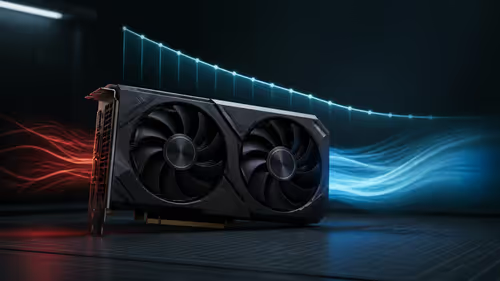
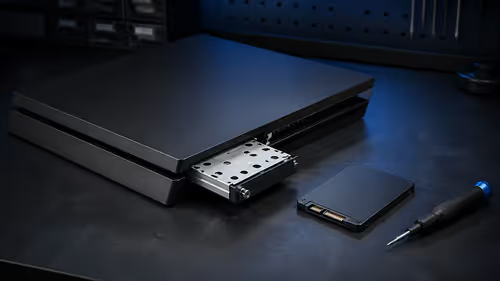
So, you’ve got your eye on a new Gen 5 NVMe SSD. You’re dreaming of those absurd 12,000MB/s+ speeds, slashing game load times and making file transfers instant. But there’s a catch, and it’s a hot one. 🌡️ These drives run hotter than a Durban summer, and without proper Gen 5 SSD cooling, they’ll throttle and lose the very performance you paid for. The big question for South African builders is: do you go with a massive, silent heatsink or a compact active fan?
Why Gen 5 SSDs Run So Hot
Before picking a side, let's understand the problem. The leap in performance from Gen 4 to Gen 5 is massive, driven by powerful new controllers like the Phison E26. This controller, combined with faster NAND flash memory, works incredibly hard to deliver those next-level speeds. The byproduct? A whole lot of heat.
When an SSD gets too hot, it activates a safety feature called thermal throttling. It deliberately slows itself down to prevent damage, tanking your performance. Imagine your lightning-fast drive suddenly feeling sluggish… that’s throttling in action. Effective Gen 5 SSD cooling isn't a luxury; it's essential to get what you paid for. Whether you're a competitive gamer or a content creator, maintaining stable temperatures is key to unlocking the full potential of the latest NVMe SSDs.
The Cooling Contenders: Heatsink vs. Fan
Your motherboard might come with a basic M.2 heat spreader, but for a top-tier Gen 5 drive, you'll likely need one of two dedicated solutions.
The Silent Giant: Massive Passive Heatsinks
This is the most common approach. Think of a big, finned block of aluminium or copper that sits on top of your SSD. It works by absorbing heat from the drive's components and dissipating it into the surrounding air in your case.
Check Your Clearance! 🔧
Before buying a Gen 5 SSD with a massive heatsink, check your motherboard's manual and measure the space between your M.2 slot and your primary PCIe x16 slot. A chonky GPU like an RTX 4090 can easily clash with a tall SSD heatsink, causing a major build headache.
The Active Cooler: Tiny Fans to the Rescue 💨
Some manufacturers are opting for a smaller heatsink paired with a tiny, high-speed fan. This fan actively blows air over the fins, dramatically increasing its cooling efficiency.
Which Gen 5 SSD Cooling Solution is Right for You?
The choice between an active fan and a massive heatsink comes down to your specific PC build and priorities.
If you prioritise a silent, low-maintenance PC and have a case with excellent airflow (think multiple large intake and exhaust fans), a massive heatsink is a fantastic, reliable choice. It’s the workhorse of Gen 5 SSD cooling.
However, if you're building in a compact Small Form Factor (SFF) case where every millimetre counts and airflow is restricted, an active fan cooler might be the only way to keep temperatures in check. It’s also a great option for performance purists who want the absolute lowest temperatures possible.
Ultimately, both solutions aim to keep your drive running at peak performance. It's about balancing noise, reliability, and physical space within your rig. As you browse for high-performance solid-state drives, you'll see both types on offer. While you're weighing up options, it never hurts to check out the best SSD deals to see where you can get the most bang for your buck. Even though we are focused on internal storage, a speedy setup is complemented by having reliable backups on one of the many available external SSDs.
The technology is still evolving, and we’re likely to see even more innovative cooling designs integrated directly into motherboards in the future. For now, choosing the right cooler ensures your investment in next-gen speed doesn’t go to waste. 🚀
Ready to Beat the Heat?
Whether you're on Team Heatsink or Team Fan, the perfect high-speed drive is waiting for you. Explore our full range of SSDs and find the ideal Gen 5 solution to power up your PC build.