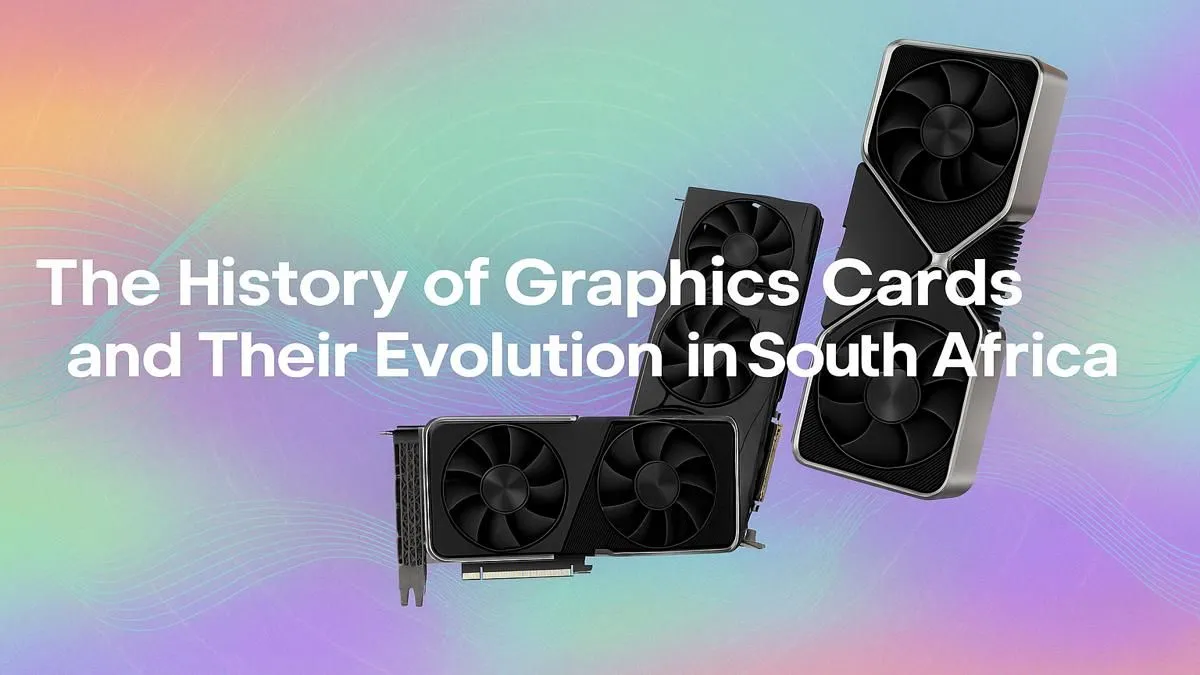
Remember the days when a 'powerful' PC meant you could run Doom without it looking like a slideshow? For many South African gamers, the journey from chunky pixels to photorealistic worlds is a story written by the graphics card. The graphics card history in South Africa isn't just about silicon; it's about late-night LANs, saving up every Rand for an upgrade, and the thrill of booting up a new game for the first time. Let's take a trip down memory lane. 🚀
The Dawn of 3D: Pixels and Patience
Back in the late 90s and early 2000s, the battle for 3D supremacy was fierce. Names like 3dfx Voodoo, NVIDIA's Riva TNT, and ATI's Rage series were legendary. Getting one of these in South Africa often meant a hefty price, but the bragging rights were priceless. The release of the GeForce 256, hailed as the first 'GPU', marked a massive turning point in the GPU evolution in SA. Suddenly, games like Quake III Arena had smooth, detailed environments. This era laid the foundation for the powerful early NVIDIA and ATI graphics cards that would follow.
The Great GPU Arms Race: DirectX 9 and Beyond
The mid-2000s were a golden age. The release of titles like Half-Life 2 and F.E.A.R. pushed hardware to its absolute limits. This was the era of the GPU arms race, where every few months brought a new performance champion. Do you recall the legendary GeForce 6800 Ultra vs the ATI Radeon X800 XT showdown? This intense competition drove innovation at an incredible pace, giving us features like Shader Model 3.0 which brought water effects and lighting to life. This rich heritage continues today in the legacy of AMD Radeon graphics cards, which were born from ATI's innovation.
Today's Titans: Ray Tracing and New Challengers
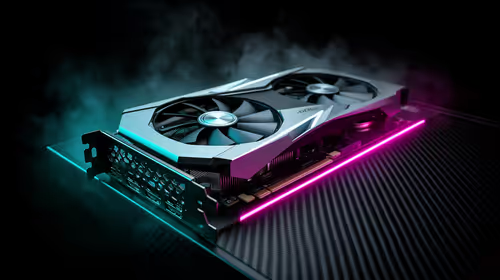
Fast forward to today, and the conversation has shifted. The graphics card history in South Africa has led us to an era of real-time ray tracing, AI-powered upscaling like DLSS and FSR, and frame rates our younger selves could only dream of. While NVIDIA's RTX series and AMD's RDNA architecture dominate, the market is getting more exciting with new contenders like Intel Arc entering the fray. ✨ This competition is fantastic for consumers, with board partners adding their own cooling solutions and factory overclocks to stand out. You'll often find that cards from trusted partners like MSI offer a brilliant balance of performance and thermal design.
Resolution Reality Check ⚡
Your GPU and monitor are a team. There's no point buying a top-tier RTX 4090 if you're still gaming on a 1080p 60Hz screen. Match your graphics card's power to your monitor's resolution and refresh rate for the best value. A solid RTX 4060 or RX 7700 XT is often the sweet spot for 1080p 1440p gaming in South Africa.
More Than Just a Game: The Professional Evolution
The GPU's journey hasn't just been about gaming. Today, these powerful processors are the engines behind creative industries, scientific research, and AI development. Video editors, 3D artists, and engineers in South Africa rely on the parallel processing power of GPUs to slash render times and run complex simulations. For these demanding tasks, gaming cards make way for specialised workstation graphics cards designed for stability and certified driver support. 🔧
Ready to Write Your Next Chapter?
The graphics card history in South Africa is still being written, and your next PC build is part of it. Whether you're chasing framerates or powering creative projects, the perfect GPU is waiting. Explore our massive range of graphics cards and find the perfect engine for your machine.