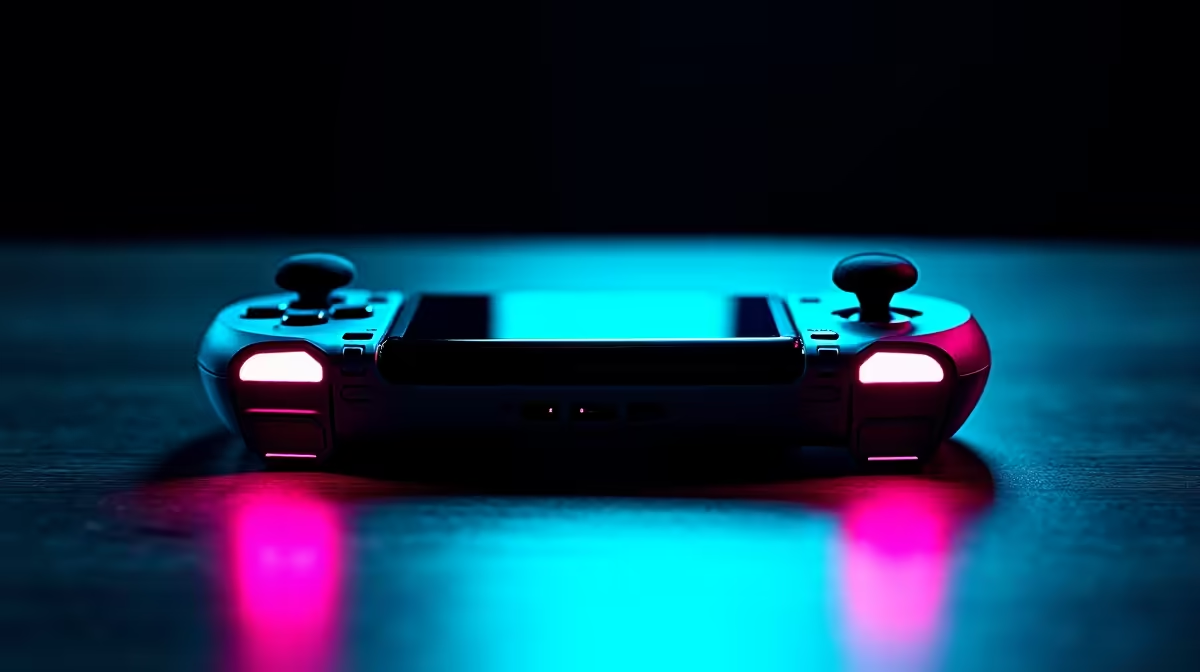
For travelling gamers, a handheld is the whole rig in a bag. The starter-to-serious path is really about battery, storage and durability for life on the move.
Quick Answer
For travel, prioritise battery life, storage and a protective case over raw power; a mid-tier handheld capping at 15W can stretch a charge to 3-4 hours in lighter games. Capable handhelds are stocked locally from around R10,000, with stronger models above R15,000.
Starter Handheld for Travel
A capable APU handheld plays most titles at 720p-1080p, often 40-60 fps with tuned settings. For travel, the key extras are a 256GB+ microSD (R400-R700) and a sturdy carry case to survive a backpack and changing temperatures.
Stepping Up
As you travel more, a higher-end handheld with a bigger battery and a brighter screen makes outdoor and long-haul play far better. A power bank with USB-C PD (around R600-R1,200) extends sessions when there is no plug, which suits long flights or bus trips.
Travel Practicalities
Pre-download games over Wi-Fi before you leave, since mobile data and hotel Wi-Fi can be slow or capped. Cap the wattage when on battery to stretch playtime, and use a screen protector to survive bag wear.
FAQ
What matters most in a travel handheld?
Battery life, storage and durability. A 256GB+ microSD, a protective case and a USB-C power bank matter more for travel than chasing the highest performance tier.
How long does a handheld last on battery while travelling?
Capping power to around 15W and using lighter games can stretch a charge to 3-4 hours. Demanding AAA titles at full power drain far faster, often under 90 minutes.
Should I download games before travelling?
Yes. Pre-load titles over Wi-Fi before leaving, since hotel Wi-Fi and mobile data in transit can be slow or capped, leaving you unable to install large games on the go.
For travel, prioritise battery, a 256GB+ microSD and a USB-C power bank, and pre-download your games over Wi-Fi before you leave home.