Why HDD vs SSD Power Consumption Matters for South Africans
In South Africa, we are all too familiar with the struggle of managing power. Whether you are dodging the latest round of loadshedding or trying to lower your monthly Eskom bill, efficiency matters. When building or upgrading a PC, the HDD vs SSD power consumption debate is more than just speed. It is about how much electricity your rig pulls from the wall every single hour. ⚡
The Mechanical Cost of Traditional Storage
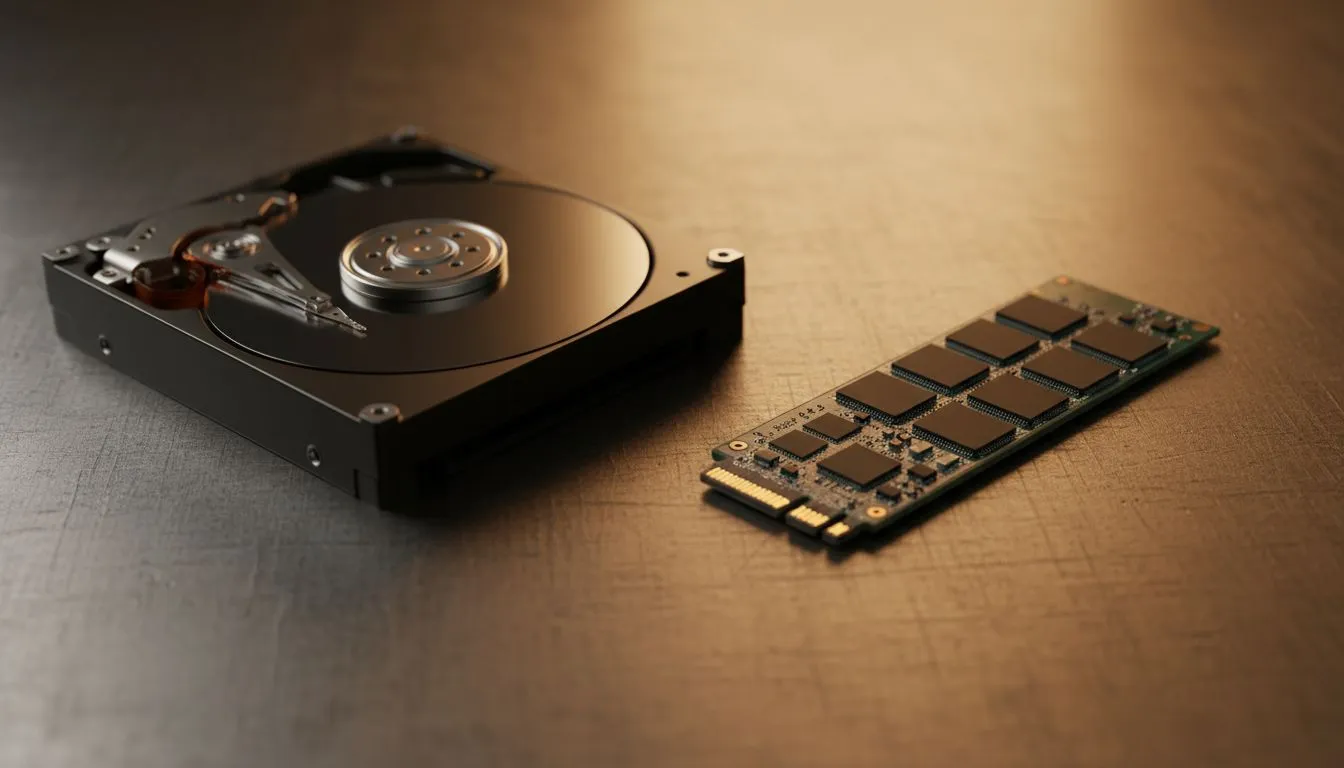
The primary reason for the difference in energy draw lies in physics. A Hard Disk Drive (HDD) relies on physical platters spinning at thousands of revolutions per minute. A mechanical arm must move across these disks to read data. This physical movement requires a constant flow of energy. By contrast, switching to modern solid state drives eliminates these moving parts entirely.
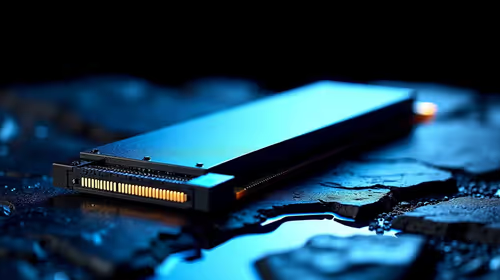
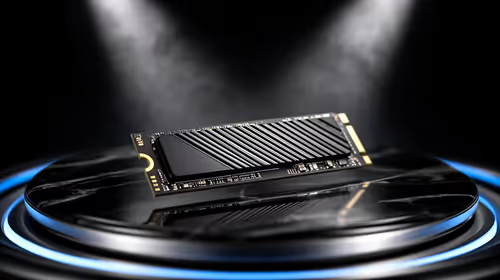
SSDs use flash memory, which functions much like the storage in your smartphone. Because there are no motors to spin up, the idle power draw is significantly lower. In a country where electricity costs continue to rise, every watt saved helps your budget. Brands like Western Digital have designed their latest drives to enter deep-sleep states when not in use... further reducing your carbon footprint.
Efficiency Pro Tip ⚡
To truly optimise your system's power usage, ensure your Windows Power Plan is set to 'Balanced'. This allows your SSD to enter low-power modes during inactivity. It can save several watts over a long session, which adds up if your PC runs 24 7 for work or downloads.
Environmental Impact and Heat Management
More power consumption inevitably leads to more heat. In our warm South African summers, a hot PC is a noisy PC. Your internal fans have to spin faster to exhaust the heat generated by mechanical drives. This creates a secondary power drain. By choosing energy-efficient options like ADATA storage, you reduce the thermal load inside your chassis. 🌍
Less heat also translates to a longer lifespan for your components. Electronic waste is a growing global concern... and keeping your hardware running for longer is the best way to be environmentally conscious. 🔧
Power Savings on the Move
For laptop users, the HDD vs SSD power consumption comparison is even more critical. A mechanical drive can shave 30 to 60 minutes off your battery life compared to an SSD. If you need portable storage that won't kill your laptop during a power outage, external SSDs are the gold standard.
When looking for a specific External form factor, you benefit from ruggedness and efficiency. There are no delicate disk heads to crash if you bump your drive, and the energy required to transfer large files is much lower.
Performance vs Efficiency in High-End Builds
If you are building a top-tier gaming rig, you might look at Gen 5 (NVME) drives. While these high-performance components use more power than basic SATA SSDs, they complete tasks much faster. This "race to sleep" strategy means the drive finishes its work and returns to a low-power state almost instantly. 🚀
Ultimately, choosing an SSD is an investment in both performance and the planet. You get faster boot times, snappier gaming, and a lower electricity bill at the end of the month.
Ready to Find Your Perfect Match?
The HDD vs SSD power consumption debate is clear: SSDs offer the best efficiency and performance for the modern South African home. Explore our massive range of SSD specials and find the perfect drive to upgrade your efficiency today.