


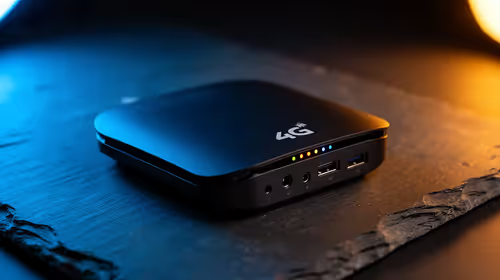
How to Use a Nano SIM 4G Router for Reliable Home Internet
Master using a Nano SIM 4G router as your primary internet solution. Get stable speeds and seamless connectivity for gaming and streaming at home! 🌐🚀
Read moreWhere Hexagon Modular Lights Versus Traditional RGB Strips for Gam really differs is panel count, USB power draw, and the 70 effect presets on Cololight Pro. We line up specs side by side so the trade-offs are obvious.

Hexagon modular lights deliver more visual impact and per-panel colour control at a higher price (typically R400 to R1,500 for a starter kit), while traditional RGB LED strips cost as little as R80 to R300 and excel at desk edge, monitor backlight, and accent lighting. They serve different roles and the best gaming setups often use both.
Hexagon panels are statement pieces. Their geometric shape fills wall space with structured light that looks intentional rather than decorative, which is why streaming backgrounds favour them. Each panel in a modular array can display a different colour simultaneously, creating gradients that a single-channel LED strip cannot replicate. A seven-panel starter kit stocked at Evetech in the R500 to R900 range produces enough ambient fill to change the atmosphere of a 3 m x 3 m gaming room. Most systems include smart home integration and music-reactive modes out of the box, features that require additional controllers on LED strip setups.
RGB strips excel at accent and bias lighting in tight spaces. A 2 m strip behind your monitor reduces eye strain by raising the ambient light level behind the screen, narrowing the contrast ratio your eyes must adapt to. Strips are the go-to for underlighting a desk, lighting a PC case interior through a glass side panel, or running along cable management channels. Entry-level ARGB strips in the R150 to R400 range offer per-LED colour control when paired with a compatible motherboard header or standalone controller, giving reactive patterns that rival basic hexagon modes at a fraction of the cost.
Budget is the clearest differentiator. Under R300, a quality ARGB strip delivers more usable lighting per rand than a single hexagon panel. Between R500 and R1,500, a hexagon starter kit makes more sense for wall mounting. Many SA gamers combine a four to six panel hexagon cluster on the wall with a strip running the desk perimeter, achieving layered ambient light without redundancy between the two formats.
Cheaper RGB strips lose saturation within six to twelve months when run at full brightness continuously. Keep your strips at 70 to 80 percent brightness as a default; this extends LED lifespan and the colour quality often looks punchier than maximum output because the LEDs are not overdriving into a washed-out white cast.
Only if both products share a platform such as Razer Chroma or ASUS Aura Sync. Otherwise you manage them in separate apps. Some smart home platforms can group them for basic on/off and brightness control even without colour sync.
Both use adhesive mounting. Hexagon panels use pads per panel while strips use peel-and-stick backing along their full length. Both are removable, though wide strips leave more residue. Hexagon panels are generally safer on painted walls because the load is distributed across multiple small pads.
Most bundled RGB strip kits include a remote-controlled box or Wi-Fi controller. ARGB strips intended for motherboard headers do not include a standalone controller because they draw power and signal directly from the motherboard's ARGB header.
Not sure which lighting format suits your setup? Evetech stocks both modular hexagon panel kits and RGB LED strips so you can mix and match for the exact gaming ambiance you want.
Master using a Nano SIM 4G router as your primary internet solution. Get stable speeds and seamless connectivity for gaming and streaming at home! 🌐🚀
Read more
Confused by Cat4 vs Cat6 LTE routers? 🌐 We break down the technical differences to help you choose the right router for faster gaming and streaming. Get the speed you deserve today! 🚀
Read more
Learn how to setup a VPN server on your 4G LTE router to secure your remote access. Protect your data and browse safely from anywhere with our easy guide! 🌐🔐
Read more
Choosing the best 4G LTE router for South Africa ensures reliable internet when fibre is unavailable. Discover top connectivity tips for rural and urban areas. 🌐📶
Read more
Discover what is passive PoE and how it streamlines outdoor router installations. Eliminate messy cabling and simplify your network setup with this efficient power delivery method. ⚡🌐
Read more
Need to extend internet coverage to outbuildings or farms? 📡 An outdoor 4G router is the ultimate solution for stable, high-speed connectivity in remote locations. Discover how to boost your range and stay connected anywhere on your property. 🌐
Read more
Wondering if a TKL wireless mechanical keyboard is worth it for everyday productivity? We break down latency, battery life, comfort, and workflow gains for real work. ⚡⌨️

Maximise battery life on a fanless 15-inch laptop using efficiency core architecture. Cut idle drain, tune power profiles, and improve thermals for longer runtime. 🔋⚙️
Learn how to reduce desk clutter with a TKL wireless keyboard using fewer cables, smart placement, and tidy essentials. Get a faster, calmer workspace with better ergonomics. ✅🧼
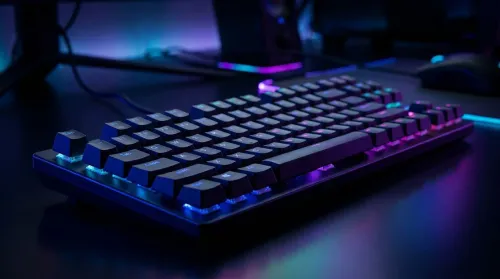
RGB keyboard lighting too distracting? Learn how to manage backlight modes, set brightness, and reduce distraction for focus and productivity 😌🖱️

Are themed gaming keyboards worth the extra cost? Compare build quality, switch options, features, and resale value to find the best fit for your setup 🎮⌨️

Full-Size vs Tenkeyless mechanical keyboards for gaming: find out if a smaller layout truly improves aim, speed, and comfort. We break down layout, desk space, latency-feel, and keybinds 🎮⌨️

Dedicated media rollers vs function key shortcuts: learn which setup gives you better workflow control, faster media access, and fewer mistakes. 🖱️🎧

Best Mechanical Switch Type for Gaming: Clicky vs Linear vs Tactile. Find your feel, speed, and noise balance with practical guidance for FPS, MOBA, and productivity 😄🎮

Direct mouse answer: Mouse not keeping up with your work? Everything that matters about dual-mode 2.4GHz + BT 5.0: DPI behaviour, channel switching, battery curves and per-app button mapping. Covers when 2.4GHz USB wins (low-latency desk) and when BT 5.0 wins (laptop, d

Plain wireless mouse guide: Mouse not keeping up with your work? Everything that matters about wireless productivity mouse: DPI behaviour, channel switching, battery curves and per-app button mapping. Includes DPI tuning tips, channel switch shortcuts, and ZAR-aware fea
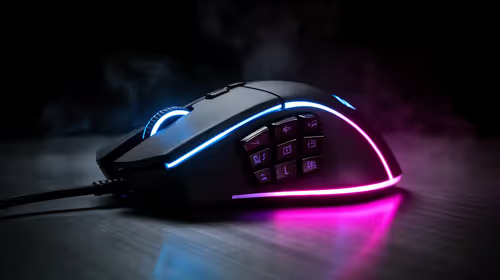
Real productivity numbers: Set up your wireless mouse in this order: everything that matters about wireless productivity mouse: DPI behaviour, channel switching, battery curves and per-app button mapping. Includes DPI tuning tips, channel switch shortcuts, and ZAR-aware
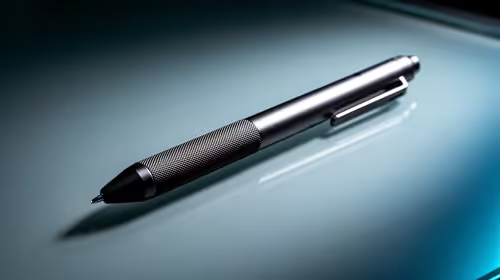
Pen not feeling like paper? Stylus lag and skipping usually trace to old drivers, dirty nibs, or display refresh mismatches, not the pen itself. Covers pressure curve tuning, tilt thresholds, nib swap timing, and SA pricing brackets.