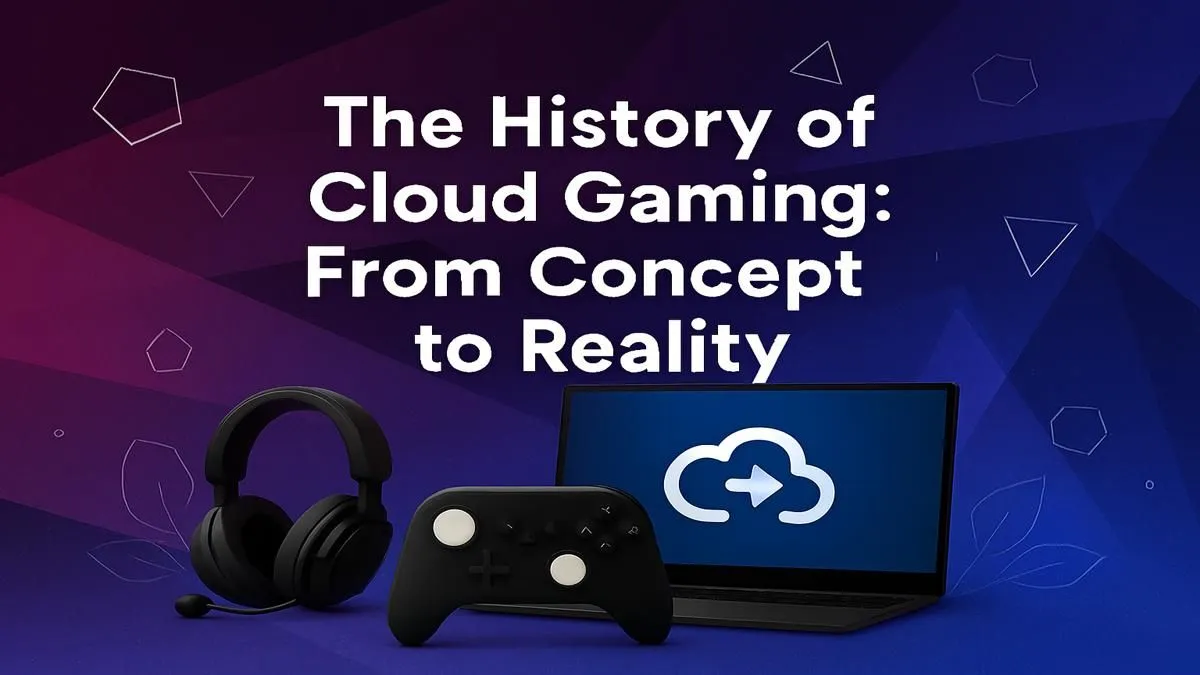
Imagine firing up Cyberpunk 2077 with maxed-out ray tracing... on your phone. Or smashing a boss in Elden Ring on a decade-old laptop. This is the promise of cloud gaming, a technology that feels futuristic yet has a surprisingly long and turbulent history. For South African gamers now enjoying fast fibre, understanding the history of cloud gaming—from the ambitious dreams of OnLive to the powerhouse that is GeForce Now—is key to knowing where we're headed.
The Pioneers: The Bumpy Beginnings of Game Streaming
The core idea of cloud gaming isn't new. The dream has always been to stream games like you stream a Netflix show, removing the need for powerful, expensive hardware. The first company to truly attempt this at scale was OnLive, which launched way back in 2010. 🚀
OnLive was revolutionary. It showed the world that streaming a high-fidelity game over the internet was possible. However, it was ahead of its time. Widespread internet speeds couldn't handle the intense demands, leading to noticeable input lag—the ultimate fun-killer for any gamer. The business model also struggled. While the concept was amazing, the execution highlighted just how crucial a stable, low-latency connection is. For many, the reliability of a physical machine, even one of the excellent budget gaming PCs available today, was simply a better deal.
The Evolution: Lessons Learned and New Contenders
The fall of OnLive wasn't an end, but a lesson. The industry saw the potential. Sony acquired OnLive's main competitor, Gaikai, and its technology became the backbone of PlayStation Now. The cloud gaming evolution was shifting from trying to replace local hardware to supplementing it.
This era refined the technology, focusing on reducing latency and creating more sustainable business models. It became clear that for streaming to work, the user's home network had to be up to the task. Even with the best service, a poor local setup can ruin the experience.
Optimise Your Home Network for Streaming ⚡
For the smoothest cloud gaming session, ditch the Wi-Fi and plug directly into your router with an Ethernet cable. This provides a more stable, lower-latency connection. Also, log into your router's settings and look for a Quality of Service (QoS) feature. Prioritising traffic to your gaming device can make a massive difference, especially if others are streaming movies or downloading files.
While services improved, the value of owning your own rig remained undeniable. The ability to play any game, online or off, without worrying about server status or data caps is a freedom many gamers aren't willing to give up, especially with great PCs under R20,000 offering incredible performance for the price.
The Modern Era: GeForce Now, Xbox Cloud Gaming, and the Stadia Saga
Today, the landscape is mature and fiercely competitive. This modern chapter in the history of cloud gaming is defined by giants.
GeForce Now & Xbox Cloud Gaming
NVIDIA's GeForce Now, now officially available in South Africa, took a brilliant approach. Instead of selling you games, it lets you stream titles you already own on platforms like Steam, Epic Games, and Ubisoft Connect. You're essentially renting a monstrously powerful PC in the cloud. ✨
Microsoft's Xbox Cloud Gaming (formerly xCloud) took a different path, bundling streaming into its already incredible Xbox Game Pass Ultimate subscription. For a monthly fee, you get access to a massive, rotating library of games to play on console, PC, or via the cloud. It's a compelling offer, especially for discovering new titles without huge downloads. For those who want guaranteed peak performance for their favourite games, our wide variety of pre-built PC deals offers a perfect, plug-and-play solution.
The Ghost of Google Stadia
No history of cloud gaming is complete without mentioning Google Stadia. The technology was arguably best-in-class, with incredibly low latency. So why did it fail? The business model. It required users to buy games specifically for the Stadia platform, creating a walled garden that gamers rejected. Its closure in 2023 was a stark reminder that great tech alone isn't enough; you need the right library and the right strategy. For serious enthusiasts who want zero compromises, investing in one of our top-tier PCs above R20,000 remains the ultimate way to control your gaming library and experience.
Is Cloud Gaming the Future for South Africa?
So, where does that leave us? Cloud gaming is no longer a distant dream; it's a viable option for many South Africans, thanks to the rollout of fibre internet. It’s fantastic for casual gaming, trying out titles on Game Pass, or for playing on the go.
However, for the dedicated gamer, it's not a replacement for a proper gaming rig... at least, not yet. Issues like potential input lag in competitive shooters, data consumption on capped connections, and the simple fact that you don't own the hardware are significant factors. A powerful local PC gives you unmatched performance, total control, and the best possible visual fidelity without relying on a server hundreds of kilometres away. It's the difference between streaming a concert and being in the front row. For the absolute best, no-compromise experience, nothing beats the best gaming PC deals you can get your hands on right now.