Quick Answer
Analog optical switches on gaming keypads detect partial key press depth using an infrared light beam and a graduated sensor, outputting a continuous value between 0 and 100 percent rather than a simple on/off signal. This lets the keypad report movement pressure the same way a controller thumbstick does, giving variable walk speed, vehicle throttle, and tilt control through keyboard keys.
The Physics Behind Analog Optical Switch Detection 🔬
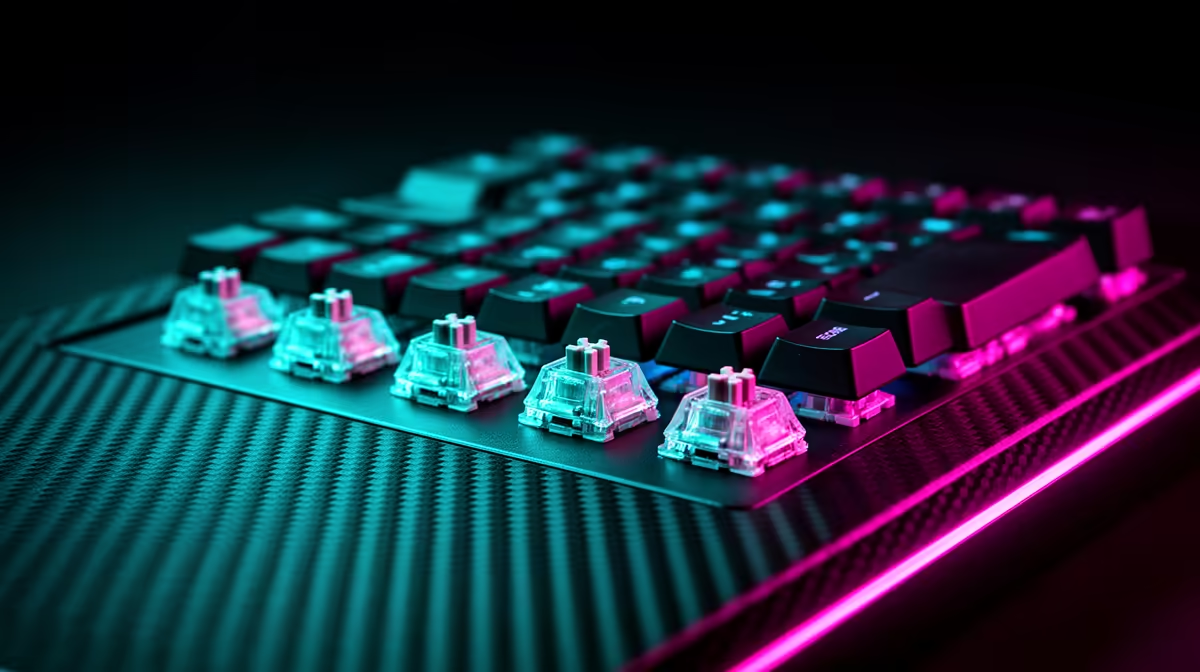
A standard optical switch fires one signal when the key stem interrupts the light beam at a fixed depth. An analog optical switch goes further: the sensor reads the intensity of reflected or partially blocked light across the full travel range, converting that reading into a position percentage from 0 to 100. The keypad firmware maps this value to an analog axis in the driver, identical in protocol to a USB gamepad thumbstick. Travel range on most analog optical switches is 1.5 to 3.6 mm, and the actuation threshold is software-adjustable anywhere within that range. Two actuation points can be set per key: a first-stage action at 1.0 mm of travel and a second-stage action at 2.5 mm.
Practical Advantages for Different Game Genres 🎮
Analog optical switches change gameplay feel across several genres. In racing games, throttle and brake applied through keypad keys become smooth and progressive rather than all-or-nothing, removing the jerky acceleration that kills cornering consistency. In open-world and RPG titles, variable walk speed allows natural character movement without toggling a walk modifier key repeatedly. In flight simulators, pitch and yaw can be mapped to keypad keys with analog sensitivity, giving finer control than digital keyboard input.
Actuation Customisation and Driver Settings 🔧
The real power of analog optical switches is software-adjustable actuation. Most keypad drivers let you set two distinct actuation points per key: a shallow first press for one action (aim-down-sights) and a deeper press for a second action (fire). This dual-zone actuation effectively doubles the command capacity of each key without requiring a separate physical button. Sensitivity curves (linear, aggressive, or soft) are adjustable per key, so fast-twitch actions like jumping can use a steep curve while analog movement keys use a gradual curve for smoother speed transitions.
Start With a High Actuation Point When Learning ⚡
When setting up analog optical switches for the first time, start with a shallow actuation threshold around 1.0 to 1.5 mm for primary gaming actions. This makes the keys feel responsive without requiring a deep press. Adjust the analog curve to linear for the most predictable movement output. You can always deepen the actuation later if you find accidental triggers mid-session.
FAQ
Do analog optical switches work with every game?
Analog output requires DirectInput or XInput controller emulation, which most keypad drivers provide. Games that explicitly block controller input may not recognise the analog axis. For standard digital key presses, analog switches work identically to normal switches in every game.
Are gaming keypads with analog optical switches expensive in South Africa?
Entry-level gaming keypads start around R700 to R900, while keypads with full analog optical switch arrays sit in the R1,500 to R2,200 range at local retail. The price reflects the more complex sensor array compared to standard switch keypads.
Can I use both analog and digital modes on the same keypad simultaneously?
Yes. Most analog optical keypads let you configure each key individually: some keys output digital signals while others output analog values. This is ideal for setups where movement keys are analog but action keys remain digital for instant response.
Want joystick-like precision from a keyboard layout?
Evetech stocks gaming keypads with analog optical switches for players who want full control customisation. Explore the gaming keypad range to find the right analog setup for your genre.