Quick Answer
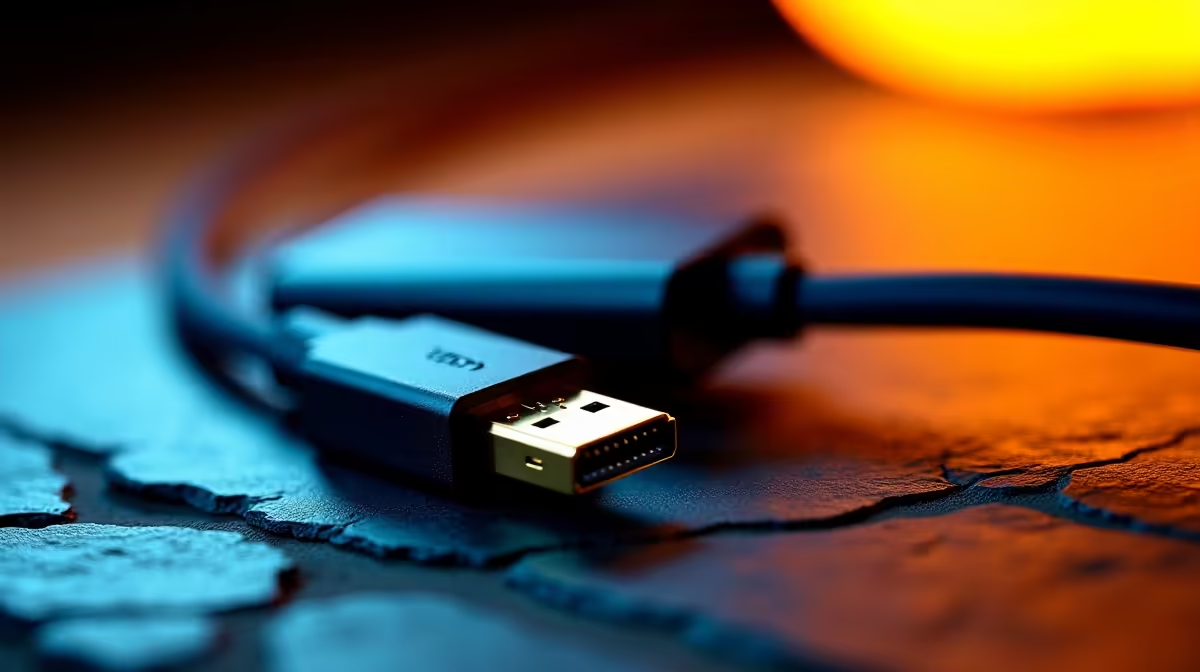
Gold-plated connectors do not improve DisplayPort signal quality directly, because DP carries digital packets that are either intact or not. Gold's real function is preventing the oxidation that increases contact resistance over time, which can eventually cause intermittent signal loss. A gold-plated contact maintains consistent electrical contact for significantly longer than an oxidised tin contact.
The Corrosion Mechanism: Why Oxidation Matters for Digital Cables 🔧
Tin and nickel oxidise when exposed to moisture and oxygen, forming a resistive layer on contact surfaces. For digital signals like DisplayPort, increased contact resistance eventually prevents reliable link training, causing the monitor to fail to detect the source or drop bandwidth. Gold does not oxidise, maintaining near-zero contact resistance indefinitely. In SA's coastal cities where humidity is persistently high, this differential becomes meaningful within two to three years of use.
Plating Thickness and Real-World Durability 💡
Gold is soft and wears with each insertion cycle. Manufacturers apply gold over a nickel undercoat for hardness. Typical consumer cable gold thickness is 15 to 30 microns over nickel. Cables advertising flash gold coating at under 5 microns wear through quickly and offer minimal protection. For a permanently installed cable, flash coating lasts adequately. For a portable monitor cable connected and disconnected regularly, 15 microns or above over a nickel undercoat is the specification to seek.
Gold Plating Versus the Rest of the Cable's Construction 🏗️
Connector plating is one component of overall cable quality. A cable with gold-plated contacts but inadequate shielding still suffers from EMI interference in the signal path. Triple-layer shielding affects signal integrity across the full cable length, which is the more critical factor for sustained 8K/60Hz output. Gold plating becomes decisive when comparing otherwise equal cables in high-humidity SA environments. Quality cables in the R300 to R600 range typically include both gold plating and adequate shielding as standard.
Clean Gold Contacts Annually in Coastal Areas ⚡
Even gold-plated contacts accumulate contamination from handling oils and airborne salt in coastal environments. Once a year, unplug the cable and clean the connector contacts with a dry lint-free cloth or a cotton swab lightly dampened with isopropyl alcohol. Allow to dry fully before reconnecting. This simple step extends connector life significantly.
FAQ
Do gold contacts affect the maximum bandwidth of a DisplayPort cable?
No. The maximum bandwidth is determined by the cable's conductor gauge, shielding, and dielectric material, not the connector plating metal. Gold only affects long-term contact integrity.
Is gold plating worth it for a cable I plan to leave connected permanently?
It is a small benefit for a static installation in a dry inland environment like Johannesburg. In Durban or Cape Town, gold plating is worth the modest premium for any cable, even permanently installed ones.
How can I tell if a cable has genuine gold plating versus a gold-coloured finish?
Genuine gold plating is specified in microns in the product documentation. A gold colour without a micron thickness specification may be a decorative finish over plastic or minimal flash plating. Buy from retailers who publish technical specifications.
Looking for quality display cables with durable connector specifications?
Evetech stocks a range of certified display cables for gaming and professional setups across South Africa. Browse the full range at Evetech.