Ever typed on a keyboard that felt... soft? Quiet, almost spongy? Chances are, you were using a membrane keyboard. They’re the workhorses of offices, schools, and budget gaming setups across South Africa. But have you ever stopped to wonder what’s happening under those keys? It’s not magic, just clever engineering. Let's peel back the layers and explore the science behind the press and understand exactly how membrane keyboards work. It’s simpler than you think.
The Anatomy of a Membrane Keyboard
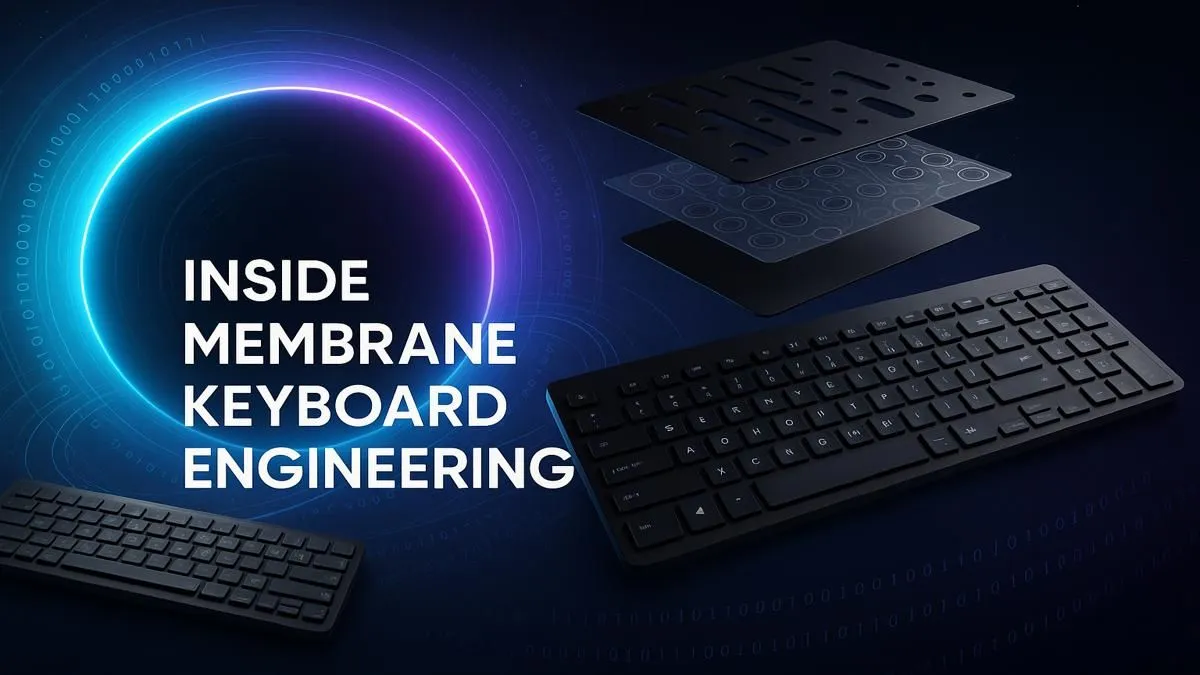
At its heart, a membrane keyboard is a bit like a sophisticated electrical sandwich. Forget complex mechanical parts; the magic here lies in three thin, flexible layers sitting beneath your keycaps. Understanding this structure is key to understanding how membrane keyboards work.
Here’s a simple breakdown of the layers:
- The Top Membrane Layer: This is a thin sheet, usually made of rubber or silicone, shaped into domes. Each dome sits directly under a keycap. When you press a key, you're pushing down on one of these domes.
- The Middle "Hole" Layer: This is an inert spacer sheet with holes cut out. It keeps the top and bottom layers separated, preventing them from touching and accidentally registering a keystroke.
- The Bottom Membrane Layer: This layer has a printed circuit of conductive traces. Directly below each dome on the top layer is a contact point on this bottom circuit.
When you press a key, the rubber dome collapses. It pushes a conductive material on its underside through the hole in the middle layer, completing a circuit with the contact point on the bottom layer. That electrical signal is sent to your PC as a keystroke. Release the key, the dome pops back up, the circuit breaks, and the signal stops. Simple, effective, and incredibly cost-efficient to produce. ✨
Membrane vs. Mechanical: The Great South African Debate
So, why choose a membrane keyboard when the gaming world is obsessed with loud, clicky mechanicals? It all comes down to personal preference, use case, and of course, your budget. The science behind the press for each is fundamentally different.
Mechanical keyboards rely on individual keyboard switches under every key, offering distinct tactile feedback and satisfying clicks. This complexity allows for deep customisation with things like unique custom keycaps, but it also drives up the price.
Membrane keyboards, with their simpler pressure-pad design, offer a different set of advantages:
- Quiet Operation: Perfect for late-night gaming sessions or office environments where you don't want to disturb anyone.
- Affordability: The manufacturing process is much cheaper, making them the go-to for budget-conscious buyers. You can often find some of the cheapest gaming keyboards in South Africa using this technology.
- Spill Resistance: The sealed membrane layers offer better protection against accidental spills... a lifesaver for anyone who enjoys a cooldrink at their desk. 💧
Keep It Clean 🧼
To clean your membrane keyboard, gently pop off the keycaps (take a photo first!). Use a soft brush or compressed air to clear out dust and crumbs. Wipe the keycaps and the keyboard surface with a slightly damp cloth and a mild cleaning solution. Let everything dry completely before reassembling.
Who Should Use a Membrane Keyboard?
While hardcore esports pros might favour mechanicals for their precise actuation, the humble membrane keyboard has a massive audience. If you fall into one of these categories, understanding how membrane keyboards function will show you why they are an excellent choice.
You might be a perfect fit if:
- You're on a Budget: You can get a fantastic typing and gaming experience without breaking the bank. Many excellent keyboard and mouse combos are built around reliable membrane technology, giving you everything you need to get started for a great price.
- You Work in a Shared Space: Your colleagues or family will thank you for the quieter keystrokes.
- You're a Casual Gamer: For many gamers, the slight difference in response time is unnoticeable, but the savings in Rands are very real.
- You Prioritise Comfort: The soft landing of a membrane key can be less fatiguing over long typing sessions. For an even better experience, pairing your keyboard with an ergonomic wrist rest can make a world of difference.
The technology behind membrane keyboards is a testament to brilliant, cost-effective design. It delivers reliable performance for millions of users every day, proving that you don’t always need complex mechanics to get the job done. 🚀
Ready to Type, Game, and Conquer?
Now that you know the science behind the press, you can choose the right tool for your needs. Whether you need a quiet workhorse or a budget-friendly gaming rig, there's a keyboard waiting for you. Explore our fantastic gaming keyboard deals and find your perfect match in South Africa today.