


PCIe 5.0 vs PCIe 4.0 for Strategy and Sim Games in SA
PCIe 5.0 and PCIe 4.0 differ most in lane support, compatibility, and upgrade value for strategy and sim games. SA buyers should match the choice to their actual hardware and games.
Read moreSet aside R28,000 to R45,000 for a 27-inch 4K 240Hz QD-OLED in SA, accounting for DisplayPort 2.1a cable kits, VESA arm mounting, and a UHBR20-capable graphics card upgrade. Rand pricing shifts with SA stock cycles, so check current availability against your build plan.
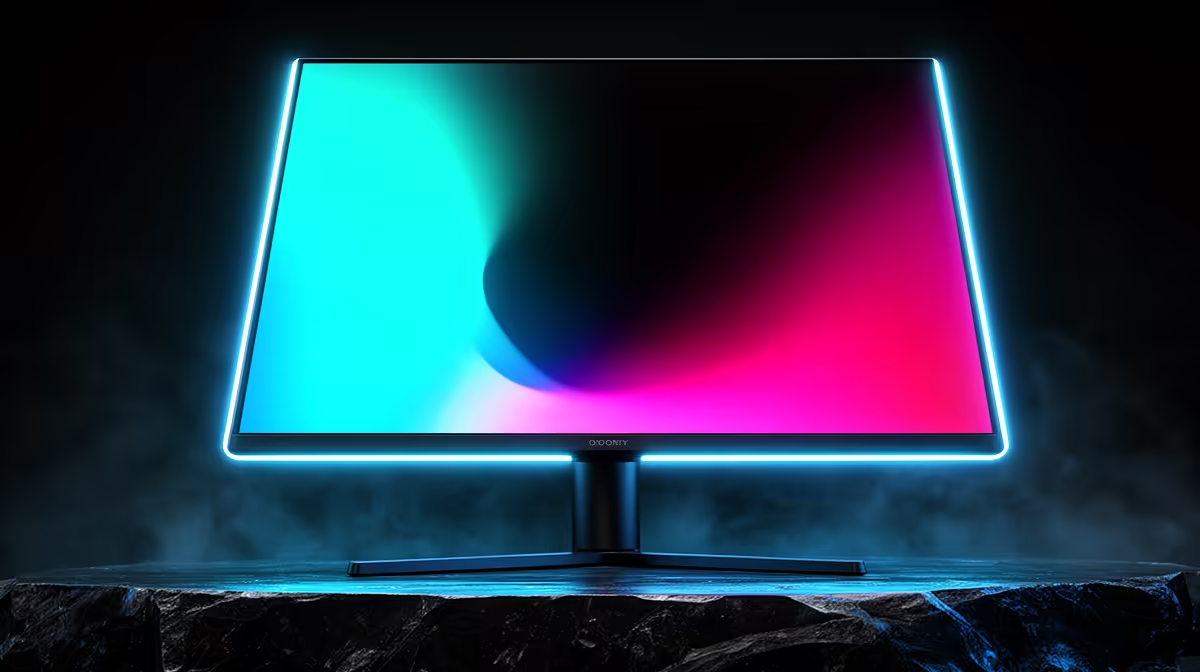
Budget between R18,000 and R28,000 for a 4K 240Hz QD-OLED gaming monitor in South Africa in 2026. Entry-level QD-OLED panels at this spec start around R18,000, while flagship models from ASUS ROG and LG UltraGear sit at R22,000 to R28,000 with additional features like USB-C power delivery and superior factory calibration.
In this price range, you can expect a 27-inch 4K QD-OLED panel running at 240Hz with G-Sync Compatible and FreeSync Premium Pro certification, DisplayHDR True Black 400 certification, 0.03ms GtG response time, and DisplayPort 2.1a connectivity for uncompressed 4K 240Hz output. Models like the Samsung Odyssey OLED G8 and certain ASUS TUF Gaming OLED panels sit in this tier. Factory calibration at this level is good but not always Delta E-documented, and USB-C with full power delivery is not guaranteed. For pure gaming performance the spec is identical to higher-priced models.
Flagship QD-OLED monitors in this range, such as the ASUS ROG Swift OLED PG27UCDM and LG 27GS95QE, add refinements over the entry tier: confirmed USB-C with 90W to 140W power delivery for connecting a gaming laptop, a four-port USB hub on the monitor itself, factory Delta E calibration documentation, superior stand ergonomics with broader height and pivot range, and in some cases dual HDMI 2.1 ports alongside DP 2.1a. These additions matter for SA users who run a laptop plus desktop setup, since the USB-C port allows single-cable connection for a notebook. The gaming panel performance is essentially the same as the R18,000 tier, so the price premium is for connectivity and build quality.
A 4K 240Hz QD-OLED monitor represents a significant slice of a total setup budget. Pairing it with an RTX 5080 (around R18,000 to R22,000 locally), a Ryzen 7 9800X3D (around R9,500), and supporting components puts the full desktop-plus-monitor build between R70,000 and R90,000. The monitor at R20,000 to R25,000 accounts for 25 to 30 percent of the total. This is proportionally high but defensible: the monitor is a multi-year purchase that outlasts multiple GPU generations, so the per-year cost is lower than it appears at first.
Local online retailers including Evetech occasionally run promotions on premium monitors during Black Friday, mid-year sales, and back-to-school periods. Setting a price alert for your target model and holding off purchase by 4 to 8 weeks around these periods can yield savings of R1,500 to R4,000 on monitors in the R20,000-plus bracket.
Yes. Most premium monitors are imported and priced against the USD. A rand weakening by 10% against the dollar typically translates to a corresponding price increase on imported monitors within one to two stock cycles. Buying when the rand is strong relative to recent history is a meaningful saving on items in the R20,000-plus range.
No. All QD-OLED panels are manufactured by Samsung Display and assembled into monitors by brands like ASUS, LG, and MSI. There is no local assembly of QD-OLED monitors. All units sold in SA are imported and priced in USD at source.
A 32-inch QD-OLED at 4K 240Hz typically costs R3,000 to R6,000 more than a comparable 27-inch model. The larger panel gives a more immersive single-player experience and more comfortable productivity use, but pixel density drops from 163 PPI to 138 PPI. Both are sharp enough for gaming; the preference between them comes down to desk size and intended use split between gaming and work.
Planning your QD-OLED monitor budget? Evetech stocks QD-OLED gaming monitors across the R18,000 to R28,000 range with full local warranty. Visit the Evetech OLED monitor section to find the right model for your setup and budget.
PCIe 5.0 and PCIe 4.0 differ most in lane support, compatibility, and upgrade value for strategy and sim games. SA buyers should match the choice to their actual hardware and games.
Read more
AM5 vs AM4 for video editing in 4K Difference explained is mostly about compatibility, budget, upgrade path, and setup fit. SA buyers should check device support and real needs before expecting a clear win from either option.
Read more
OLED vs QD-OLED for strategy and sim games buyers - what changes is mostly about compatibility, budget, upgrade path, and setup fit. SA buyers should check device support and real needs before expecting a clear win from either option.
Read more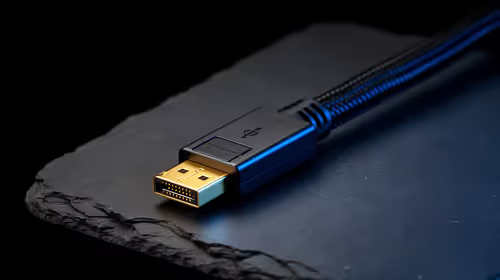
DisplayPort 2.1 and 1.4 differences matter when SA PC builders match GPUs, monitors, and refresh targets. Use this difference between displayport 2 1 and displayport 1 4 explained pc builders guide to avoid mismatched parts.
Read more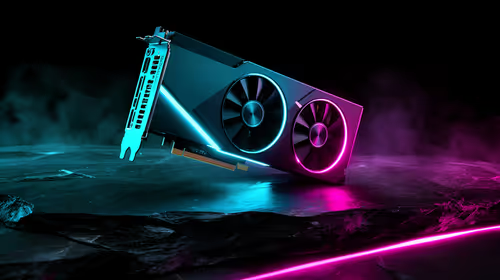
Ray tracing vs Path tracing depends on Strategy and sim games needs, platform limits, and budget fit. Compare compatibility, latency, upgrade path, and real setup constraints before choosing for an SA build.
Read more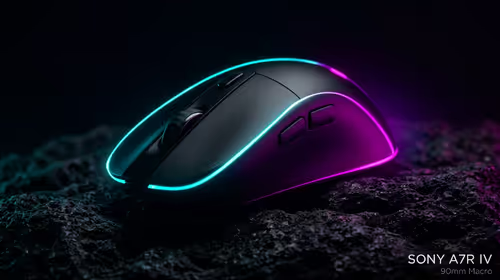
wireless mouse guide for Gqeberha gamers should be shortlisted around the job it must do. South African buyers should compare sensor, shape, weight, and wireless latency, warranty path, and upgrade room before treating any pick as best.
Read more
From 1 October 2026, WhatsApp Business Platform service replies in South Africa are expected to cost about $0.0076, or 12 cents, per delivered message.
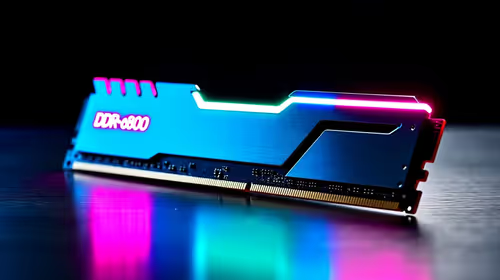
DDR5-8000 RAM Kits pros and cons depend on the build, budget, and workload. Weigh gaming needs, platform fit, power, cooling, warranty support, and South African pricing context before shortlisting it.
Wi-Fi 6E vs Wi-Fi 6 depends on AAA single-player gaming needs, platform limits, and budget fit. Compare compatibility, latency, upgrade path, and real setup constraints before choosing for an SA build.
Ryzen 9 9950X3D dead pixel checks should isolate the panel first. Run colour fills, inspect the monitor menu, test another cable or input, and capture proof before linking it to the SA CPU upgrade.

YouTube will count public views from the first frame across video formats from 24 August, while earnings and eligibility remain tied to engaged viewing.
Canonical expects Ubuntu on WSL users to outnumber native Ubuntu desktop users before the end of 2026. The software is open source and runs inside supported Windows PCs.
Telkom's daily bundles pair WhatsApp access with 10 all-network voice minutes. The R15 option includes 300MB, while the R17 option uses a fair-use threshold.
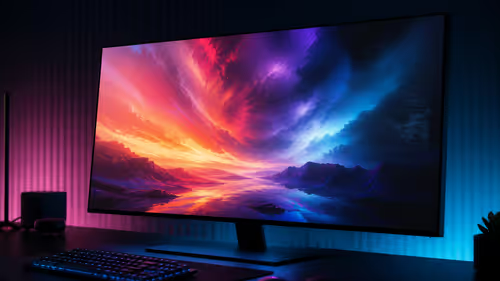
A 10,000-hour test found similar image retention across older and newer OLED TVs, while newer panels were brighter and more efficient. Local OLED monitors started at R9,999.
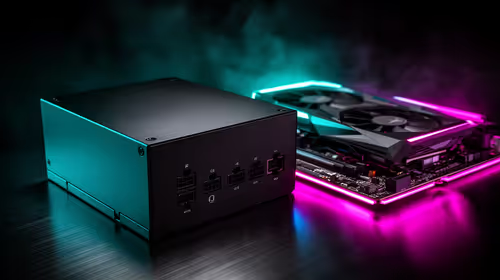
650W for RTX 5090 needs a full-build check, not a simple yes. Review GPU guidance, CPU draw, transient load, connectors, PSU quality, and upgrade plans before deciding.
PCIe 5.0 and PCIe 4.0 differ most in lane support, compatibility, and upgrade value for strategy and sim games. SA buyers should match the choice to their actual hardware and games.

How to fix FPS drops Windows 11 RX 9070 XT starts with GPU drivers, overlays, power plans, and frame pacing checks. For SA gaming PCs, verify chipset updates, HAGS, refresh rate, thermals, and per-game graphics settings.
AM5 vs AM4 for video editing in 4K Difference explained is mostly about compatibility, budget, upgrade path, and setup fit. SA buyers should check device support and real needs before expecting a clear win from either option.