Quick Answer
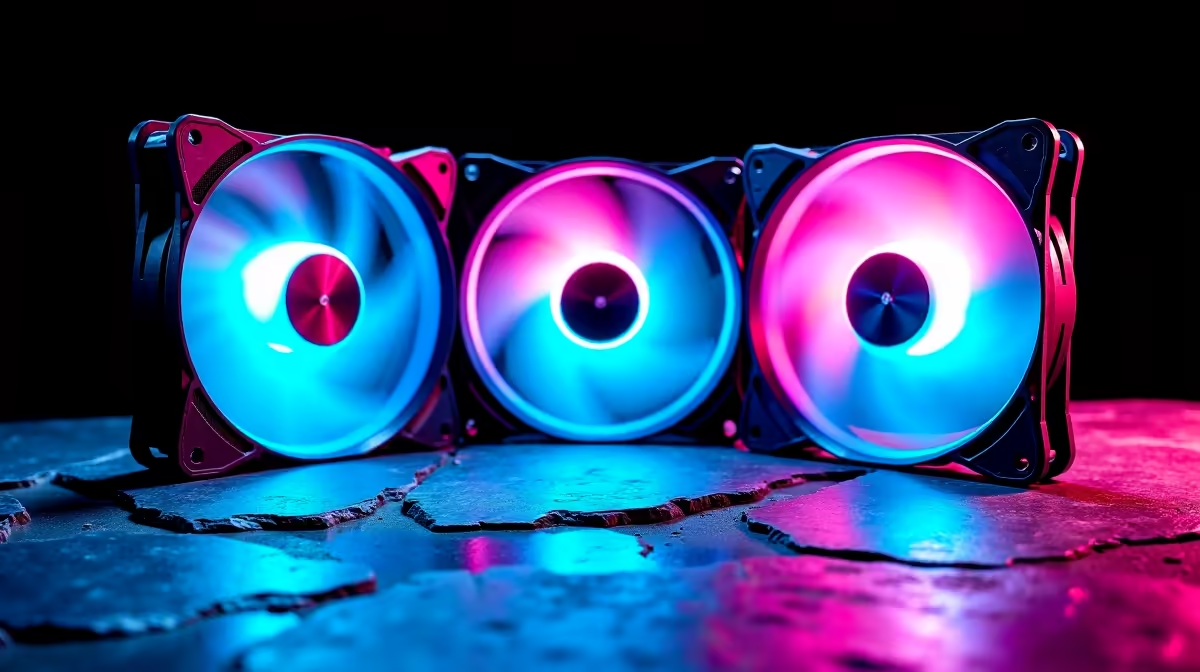
For most SA gaming builds, spending R250 to R450 per fan (or R700 to R1,300 for a three-fan pack) hits the sweet spot between lighting quality, airflow performance, and long-term reliability. Budget fans under R150 each exist but tend to use sleeve bearings and produce inconsistent ARGB output. Flagship options above R500 per fan offer marginal gains for most use cases.
What Your Money Actually Buys at Each Tier 💰
At R150 to R230 per fan you get basic ARGB with 6 to 8 LEDs, a sleeve bearing rated for around 30,000 hours, and PWM support. These are adequate for a first build where aesthetics are secondary to getting a system running. Midrange fans from R250 to R420 per unit step up to 12 to 16 fully addressable LEDs, FDB (fluid dynamic bearing) or ball bearing construction rated at 50,000 hours, tighter blade tolerances for more consistent airflow, and daisy-chain or hub-based RGB sync. This tier represents the best value for SA builders, covering 95 percent of use cases. Premium fans from R450 to R650 per unit add low-noise optimised bearings, higher static pressure for radiator use, and brand-ecosystem integration with ASUS, Corsair, or DeepCool native software. Spending above R650 per fan yields diminishing acoustics and cosmetic returns unless you are building a show system or a silent workstation where every dB matters.
How Many Fans Do You Actually Need? 🌀
A standard mid-tower gaming build needs at minimum three front intake fans and one rear exhaust fan. Adding top exhaust fans improves heat removal for high-TDP builds with RTX 5070 Ti or RX 9070 XT class cards. Budgeting for four fans means your ARGB spend falls between R1,000 and R1,700 at the midrange tier. If your case supports a 360mm front radiator, the three radiator fans replace the front intakes, and you are spending on performance-matched ARGB fans rather than pure airflow models. Three-fan packs almost always offer better rand-per-fan value than three individual purchases, typically saving R100 to R200 total. For builds in SA student housing where space and budget are tighter, three fans (two front, one rear) is a workable minimum.
When to Spend More and When to Save 🎯
Spend more when: your CPU cooler is a 240mm or 360mm AIO requiring static pressure fans, your case has a restrictive front panel requiring high-pressure intake, or you want seamless ecosystem sync across fans, RAM, and motherboard LEDs without workarounds. Save when: your case has ample open mesh, your GPU and CPU are mid-range with modest TDPs, or the side panel is solid rather than glass (lighting is less visible anyway). Never buy individual expensive fans when a three-pack at the same per-unit price exists, and always confirm bearing type on the spec sheet before purchase.
Pack vs Singles Cost Check ⚡
Always calculate cost per fan for packs and singles side by side. A R950 three-fan pack works out to R317 per fan, which often beats a R280 individual fan of the same model when the pack includes a hub or controller worth R100 to R150 on its own. Factor in the included accessories before comparing.
FAQ
Is a R150 ARGB fan worth buying for a gaming PC?
For a budget build it is acceptable short-term, but sleeve bearings on cheap fans can fail within two to three years of continuous use. If the build will run daily, the R250 to R350 midrange tier is worth the extra spend.
Do I need to spend more on ARGB fans for a case with a solid side panel?
No. If the panel is not glass or mesh, lighting is not visible during normal use. Save the RGB budget and spend it on airflow performance instead.
Are three-packs always better value than singles?
Generally yes, especially when the pack includes a hub, controller, or extra cabling. Confirm exactly what is in the box before assuming a per-unit discount.
Setting a fan budget for your next build?
Evetech stocks ARGB case fans across all price tiers from starter packs to flagship three-fan bundles. Check the current selection to find the right balance for your spending limit.