Quick Answer
For a case that supports up to 420mm cooling, front mounting is the best default choice for gaming builds: cool ambient air enters directly through the radiator and fans before warming on other components. Top mounting works well when GPU temperatures are the priority and you want CPU exhaust pushed straight out, but check for RAM and VRM heatsink height conflicts first.
Front vs Top: The Thermal Logic 🌡️
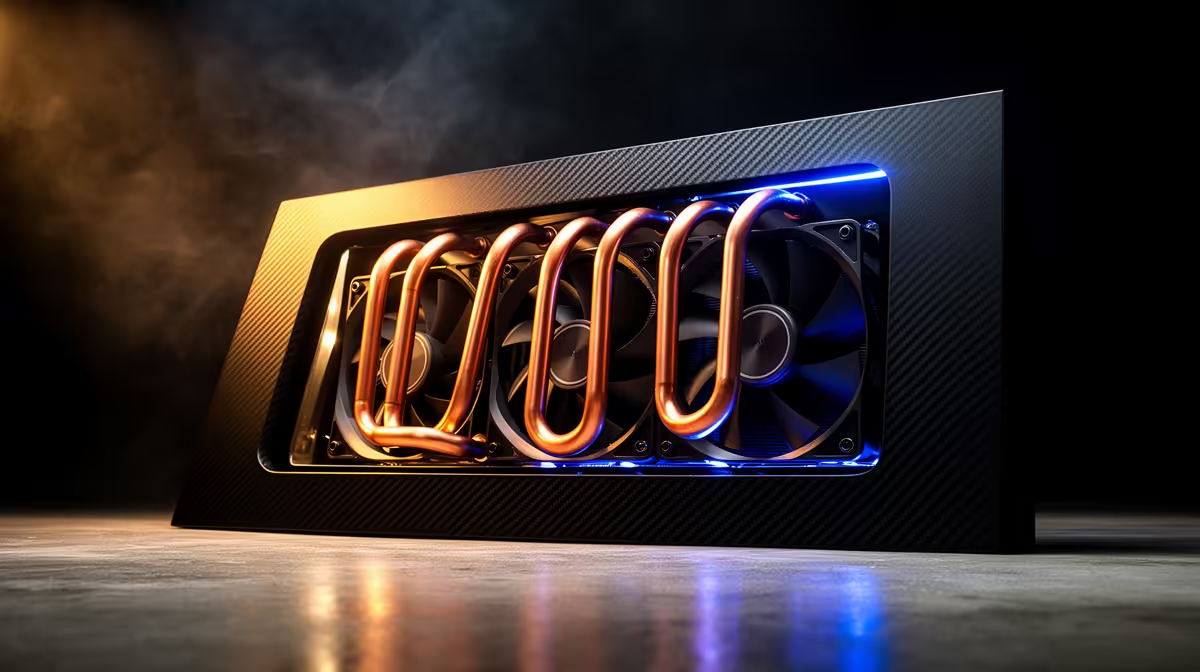
A 420mm radiator mounted at the front uses three 140mm fans drawing cool air from outside the case across the cold plate, then directing warmer air across the GPU and out through rear and top exhaust. This configuration results in the lowest CPU liquid temperatures under sustained load because the radiator always sees fresh ambient air.
Top mounting flips this: the 420mm radiator at the top draws warm case air through the radiator and exhausts it out the top. CPU temps run slightly higher (typically 3 to 6 degrees Celsius) but GPU temps can improve because the front of the case is free for additional intake fans pushing cool air across the graphics card directly.
Clearance Conflicts to Resolve Before Mounting ⚙️
Top-mounted 420mm radiators create three common conflicts. First, RAM height: DDR5 kits with heatspreaders above 45mm can physically interfere with the AIO pump head or radiator hose on certain board and case combinations. Measure the gap between your tallest RAM stick and the planned radiator position. Second, VRM heatsink height on high-end motherboards: boards designed for Ryzen 9 9950X or Core Ultra 9 285K often have tall VRM fin arrays that sit near the top mounting zone.
Front mounting has fewer conflicts but reduces GPU clearance in smaller mid-towers. A 420mm radiator typically adds 60 to 80mm of depth to the front mounting zone.
Optimising Fan Direction and Speed for SA Ambient Temps 💨
In warm SA conditions, run radiator fans as intake (pulling air from outside into the case through the radiator) rather than exhaust for front-mounted setups. This is counter-intuitive to some builders but the physics are straightforward: radiating heat into already-warm case air is less efficient than pushing fresh ambient air through the radiator.
Fan speed curves matter too. Set your AIO pump to full speed at all times (pumps are quiet at full speed) and control the three 140mm fans on a temperature-triggered curve starting at 30 percent below 60 degrees liquid temperature and ramping to 80 percent above 75 degrees.
Pre-Mount Hose Routing Check ⚡
Before committing to front radiator placement, route the AIO hoses dry and check whether they reach the CPU socket without kinking. On large E-ATX boards where the CPU socket sits far from the front panel, a 420mm front-mounted radiator may require longer hose kits sold separately. Most standard AIO hose lengths are 400mm to 450mm.
FAQ
Can I mount a 420mm radiator at the bottom of my case?
Technically yes if the case supports it, but it's the least efficient position for most builds. Bottom intake pulls warm settled air and can introduce dust. Reserve bottom mounts for secondary radiators in custom loop builds where you have separate intake control.
Does front radiator mounting always reduce GPU clearance?
In most mid-tower cases, yes. The reduction ranges from 25mm to 60mm depending on how the front mounting bracket sits relative to the GPU zone. Full-tower cases and some oversized mid-towers have dedicated front radiator chambers that keep GPU clearance unaffected.
What pump speed should I run a 420mm AIO at?
Run the pump at maximum speed continuously. AIO pumps are not load-bearing noise sources and produce minimal additional sound at full speed while delivering meaningfully better liquid circulation and lower CPU delta T compared to eco or silent pump modes.
Building with a 420mm AIO and need the right case to match?
Find 420mm-compatible cases and AIO coolers at Evetech, with local stock and specs you can verify before buying.