Why Choosing the Right Wi-Fi Router Matters in South Africa ⚡
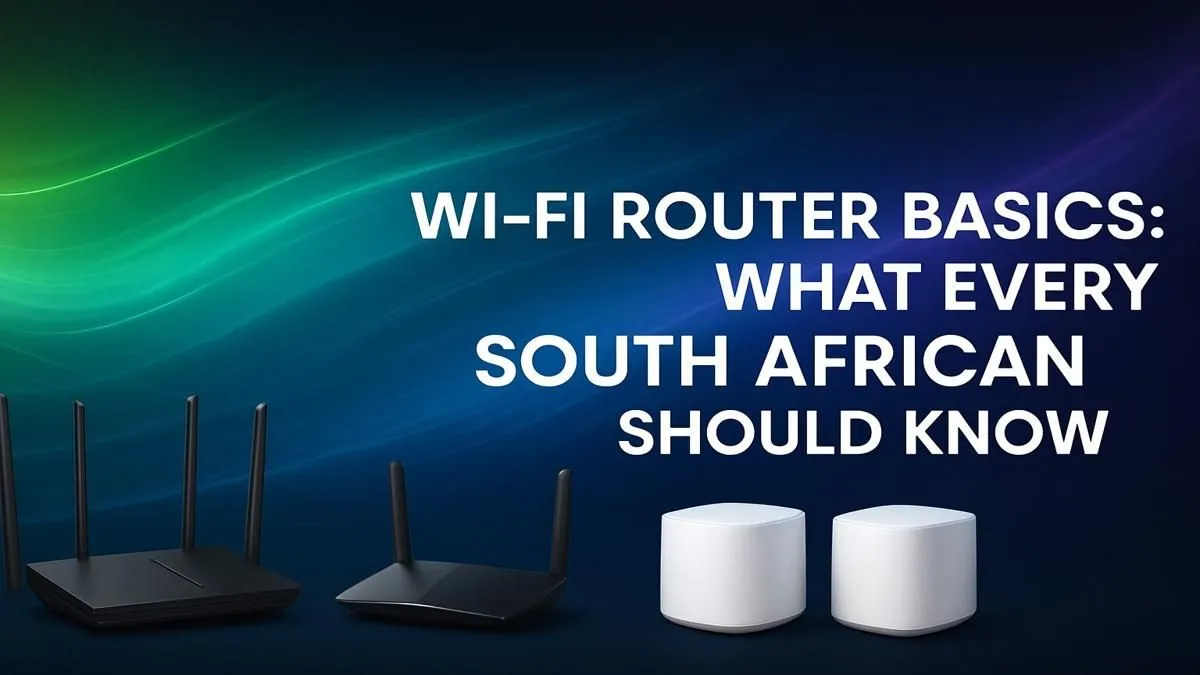
If your gaming lags or video calls keep cutting out, your Wi-Fi router could be the culprit. South Africa’s diverse internet landscape—from fibre in suburbs to wireless in rural areas—demands the right router choice. Choosing a Wi-Fi router in South Africa isn’t just about speed; it’s about reliability, coverage, and future-proofing your home network. Let’s untangle the jargon and get you online with confidence.
Understanding Basic Wi-Fi Router Features 🔧
When hunting for the best Wi-Fi router, focus on specs that match your needs. Look for Wi-Fi standard support like Wi-Fi 5 (802.11ac) or Wi-Fi 6 (802.11ax) for faster speeds and more connected devices. Dual-band routers operate on 2.4GHz and 5GHz frequencies, balancing coverage and performance.
South African houses often have thick walls—consider a router with strong antenna design or beamforming technology to push the signal where you need it most. If your home is large or has areas with poor reception, wireless range extenders can fill those spots neatly. For options, explore Evetech’s range of wireless range extenders.
Match Your Router to Your Internet Connection Type
Your internet plan influences which router works best. Fibre users, predominant in urban South Africa, should consider fibre-ready routers to unlock full speeds and stability. Evetech’s fibre routers are designed to handle high bandwidth, ensuring your fibre plan isn’t bottlenecked.
For those on alternative setups or needing to boost wireless signals, a high-quality wireless adapter can improve device connectivity—check out compatible options at Evetech’s wireless adapters collection.
Assess Your Device Load and Usage Patterns 🚀
Ask yourself: how many devices connect to your Wi-Fi daily? Smartphones, smart TVs, gaming consoles, laptops, and IoT gadgets all share your bandwidth. A router with robust processors helps manage multiple devices smoothly.
Gamers will benefit from routers with Quality of Service (QoS) features that prioritise gaming traffic over other uses. For casual browsers or smaller households, a mid-range router might suffice; Evetech’s selection of wireless routers covers all these bases with their performance tiers clearly specified.
Pro Tip for South African Homes
Beamforming technology improves your Wi-Fi connection by focusing signals toward your devices instead of radiating them all around your home.
Where to Buy and What to Consider Before Purchasing
Stick to reputable retailers with clear warranty and support policies. Evetech offers a great balance between price and performance, with expert advice available if you’re unsure. Browsing through wireless networking components can also help you bundle routers with other network gear.
Final Thoughts on Picking Your Wi-Fi Router in South Africa
Getting your Wi-Fi router right saves frustration and future upgrades. Pick with your household size, internet plan, and building materials in mind. With Evetech’s options tailored for South African users, you’re set to enjoy smooth browsing, lag-free gaming, and strong streaming signals.
Upgrade Your Home Network Today
Don’t settle for weak signals or slow connections—Shop now at Evetech for reliable routers that empower your digital lifestyle.