Quick Answer
Installing a 360mm AIO with magnetic daisy-chain fans follows the same core steps as a standard AIO installation, with one key difference: the fans clip together magnetically and share a single fan header or USB controller connection rather than requiring three separate headers. The process takes around 45 to 60 minutes for a first-time builder.
What You Need Before You Start 🔧
Confirm your case supports a 360mm radiator, typically requiring at least 360mm of clearance on the top or front panel, with 30mm of depth clearance for the radiator thickness plus fan stack. Check your CPU socket: AM5, LGA1851 and LGA1700 all require different mounting brackets, and most 360mm AIOs ship with hardware for all three. You will need a Phillips head screwdriver, the included thermal paste or a third-party compound like Thermal Grizzly Kryonaut (around R220 to R350 locally), and isopropyl alcohol wipes to clean the IHS before mounting. Lay the case on its side on a padded surface for easier overhead access if mounting the radiator to a top panel.
Mounting the Radiator and Fans 🖥️
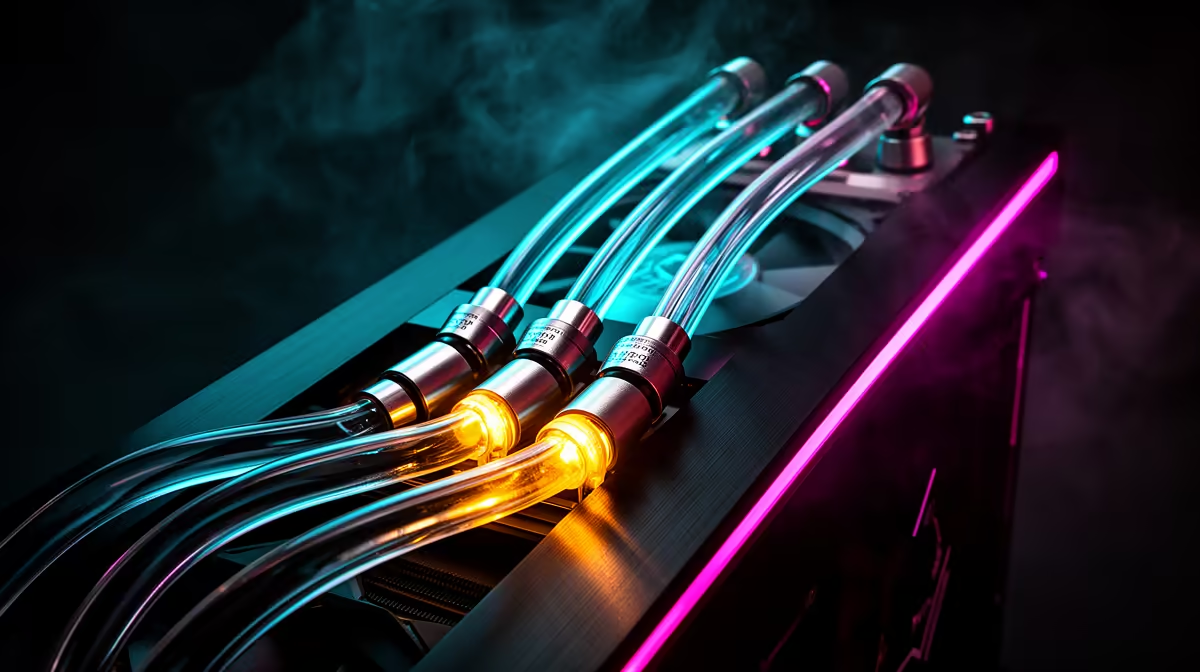
Attach the three magnetic daisy-chain fans to the radiator first, before mounting the radiator in the case. The fans link together via magnetic connectors on their edges, eliminating individual screws between fan bodies. Once chained, they behave as a single connected block. Use the provided screws to secure the fan-and-radiator sandwich to your case mounting points, ensuring the radiator inlet and outlet tubes are oriented towards the CPU socket side of the motherboard for the shortest hose run. Fan orientation matters: for top-mount exhausts, fans push air through the radiator and out of the case; for front-mount intakes, fans pull cool air through the radiator into the case. Most builders prefer front intake for radiator setups to feed cool ambient air directly through the fins.
Mounting the Pump Block and Final Connections 🚀
Apply a thin pea-sized dot of thermal paste to the centre of the CPU IHS. Press the pump block firmly and evenly, then secure the mounting screws in a cross pattern to prevent uneven pressure. Tighten finger-tight, then a quarter-turn with the screwdriver, but do not overtighten. Connect the pump cable to the CPU_OPT or AIO_PUMP header on your motherboard. The daisy-chained fan assembly routes to a single connector: either a 4-pin PWM fan header or a USB 2.0 internal header if the AIO uses a hub controller. Consult your AIO manual for the exact connection. Route the single cable through your case's cable management channels and secure with provided zip ties or velcro straps.
Bleed the Pump After First Boot ⚡
After powering on, run the system at idle for 15 to 20 minutes to allow any air bubbles trapped in the pump loop to work through. You may hear a soft gurgling sound initially; this is normal and typically clears within the first hour of operation.
FAQ
Do magnetic daisy-chain fans require a special fan header on the motherboard?
No. The daisy-chain connection is between the fans themselves. The last fan in the chain connects to your motherboard via a standard 4-pin PWM header or to a controller via USB. The motherboard sees one fan device regardless of how many are chained.
Can I mix magnetic daisy-chain fans with standard fans in the same build?
Yes. Daisy-chain fans are ecosystem-specific for their inter-fan connections, but they connect to motherboard headers and controllers the same way as standard fans. You can use three daisy-chain fans on the radiator and add separate case fans on other mount points without conflict.
How do I know if my case supports a 360mm top-mount radiator?
Check your case's specification sheet for radiator clearance. Most full-tower and many mid-tower cases list 360mm top support explicitly. Also verify CPU cooler height clearance, since a top-mounted radiator reduces the available space above the motherboard tray.
Ready to upgrade your cooling setup?
Browse Evetech's range of 360mm AIO coolers including models with magnetic daisy-chain fans for cleaner installs and better cable management.