Quick Answer
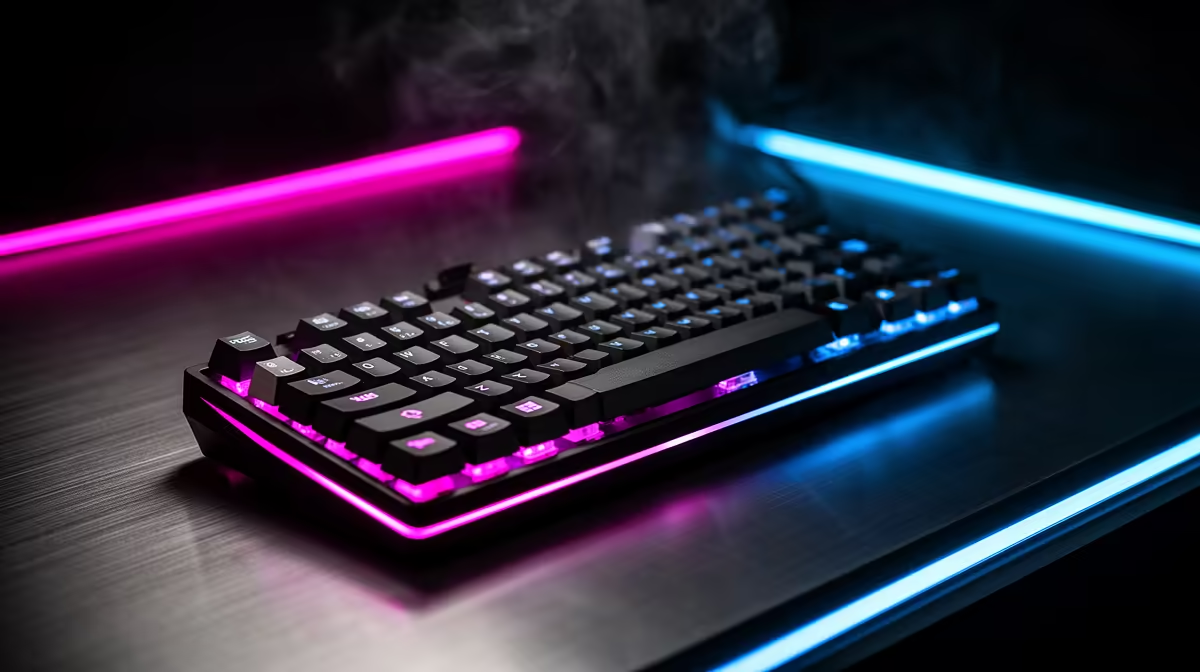
Replacing a full-size keyboard with a gaming keypad on a gaming or creative workstation reclaims roughly 35 to 45 centimetres of horizontal desk space, which is enough room to extend your mouse pad, add a secondary monitor, or improve wrist positioning. The trade-off is losing quick-access to typing keys, making the swap best suited for dedicated gaming or single-application creative setups rather than general-purpose desks.
What You Gain From the Swap 🖥️
A standard full-size keyboard measures around 44 cm wide. A gaming keypad measures 12 to 18 cm wide. On a typical 120 cm student or home-office desk in South Africa, the difference is significant: that recovered space can accommodate a wider extended mouse mat, move the mouse zone closer to the centre of the desk for better posture, or accommodate a small speaker or stream deck. For South African students in res or private digs working on compact IKEA Linnmon or Meubel student desks, where 75 to 90 cm is often all the surface available, switching from a full keyboard to a keypad is one of the most impactful hardware changes possible without buying new furniture.
Setting Up a Keypad-Only Gaming Station 🎮
For pure gaming use, a 20-key programmable keypad covers WASD, ability bindings, consumable hotkeys, push-to-talk, and a macro layer with room to spare. Pair it with a secondary number pad or Bluetooth mini keyboard nearby for the rare moments you need to type a message or enter console commands. If your workflow splits between gaming and light productivity, a 60 percent keyboard plus a gaming keypad is a better compromise than keypad alone, keeping a compact typing board within reach while the keypad handles game inputs. Desk organisation improves further when you route the keypad and keyboard on a single USB hub, reducing cable scatter on a tight surface.
Cable Management and Positioning Tips 💡
Position the keypad roughly where your left hand rests naturally when relaxed. Avoid placing it too far left, which forces shoulder abduction and creates the same fatigue it was meant to solve. Velcro cable ties cost under R50 at local hardware stores and keep the USB cable flat against the desk edge rather than looping across the surface. If your desk has a cable port cut-out, route the keypad cable down and under the surface. A desk pad or extended mouse mat unifying the keypad and mouse zones also makes the setup look intentional rather than improvised, which matters for streamers whose desk is visible on camera.
Keep a Small Bluetooth Keyboard as Backup ⚡
Before fully committing to a keypad-only setup, have a compact Bluetooth keyboard such as a 65 percent or 75 percent board within reach for typing-heavy tasks, chat, and system commands. Switching between the two takes seconds and ensures you are never stuck hunting for letter keys when a game drops you into a chat prompt or command console unexpectedly.
FAQ
Can you use a gaming keypad for typing in a pinch?
Most gaming keypads do not have enough keys for full touch-typing, though some 30-plus key models can be programmed with a QWERTY alpha layer. For anything beyond short commands, a secondary compact keyboard is a practical addition.
What desk size is the minimum for a comfortable keypad and monitor setup?
A 100 cm wide desk is comfortable for a keypad plus a single 27-inch monitor. A 120 cm desk opens up enough room for dual monitors plus the keypad and mouse without crowding. Smaller desks under 90 cm benefit most from the keypad switch.
Are there wireless gaming keypads available in South Africa for a cable-free desk setup?
A small number of wireless gaming keypads exist, though the category is dominated by wired models. Check current availability at Evetech for the latest wireless options, as stock changes regularly.
Trying to reclaim desk space without sacrificing inputs?
Evetech stocks compact gaming keypads in a range of sizes and switch types. Browse the gaming peripherals section at Evetech for options that fit your workspace.