Streaming away from a desk turns battery, mounting, audio and mobile coverage into one moving system. A minimum IRL streaming kit in South Africa must stay secure and connected while its recurring data use remains affordable.
Quick Answer
A minimum IRL stream needs a phone with a dependable camera and current streaming support, a secure grip or mount, a microphone that survives movement, enough battery for the route, and a tested mobile-data connection. The data bill depends on the actual upload bitrate and stream duration, so calculate it from your settings instead of using a fixed gigabytes-per-hour claim.
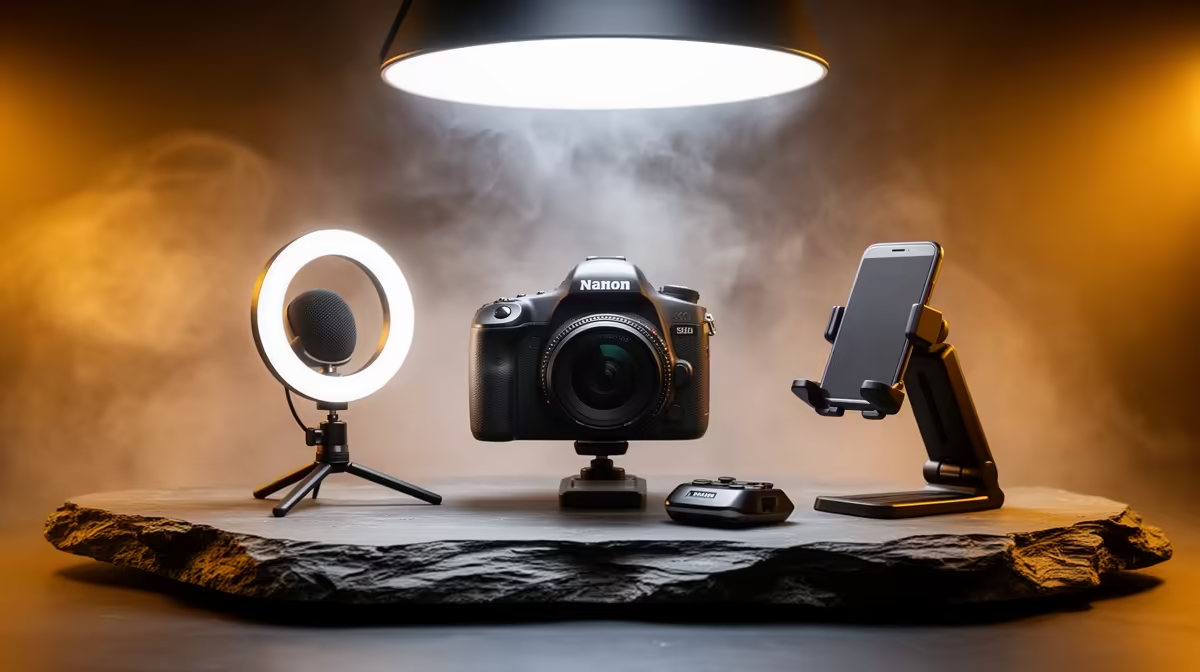
Compare microphones, power accessories, and mounting ideas in the streaming essentials range. Check the webcam section only when your workflow includes a fixed indoor handover or secondary PC camera. A standard desktop webcam is not a substitute for weather-ready mobile capture.
Start with the phone and platform path
Confirm that the phone, operating system, streaming application, and account can broadcast with the features you need. Platform access rules, minimum account requirements, supported resolutions, and background behaviour can change. Run a private or unlisted test before planning an outing.
Use the rear camera when image quality matters and the framing can be monitored safely. The front camera makes self-framing easier. Lock orientation before starting and clean the lens with a suitable cloth.
Choose a conservative resolution and frame rate for the available network and battery. A stable 720p or 1080p stream can look better than a higher target that freezes. Test motion, low light, stabilisation, and heat during a session as long as the planned broadcast.
Keep private notifications, contact names, maps, and lock-screen information out of the capture. Use the operating system's focus controls and a streaming account configured for public work. Never show home addresses, access codes, or live travel details that create a safety risk.
Mount the camera for safe movement
A hand grip is the lowest-complexity route for walking streams. Add a wrist strap when the mount supports it. Keep your free hand available for balance and stop moving before reading chat or changing settings.
A gimbal can smooth walking footage but adds weight, battery management, calibration, and a balance step. Confirm phone dimensions and mass with the case attached. An overloaded gimbal may vibrate or overheat its motors.
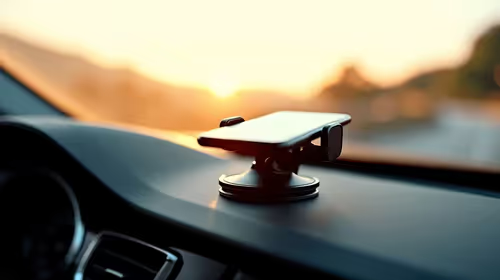
A chest or backpack mount keeps hands free but changes the viewing angle and can make viewers feel every step. Test it on the intended route. Do not attach equipment where it obstructs your view, movement, vehicle controls, or other people.
Use only mounts rated for the device and activity. A desk clamp or indoor arm is not outdoor safety hardware. Keep a simple grip fallback when the stabiliser fails.
Put the microphone close to the speaker
The phone microphone can work in a quiet place, but wind, traffic, crowds, and arm's-length distance reduce speech clarity. A compatible lavalier or wireless clip-on system puts the capsule close to your voice.
Check the phone connector, operating-system support, application input selection, and any required receiver. USB-C describes a connector, not universal audio support. Test that the stream uses the external microphone rather than the phone after every reconnection.
Use a compatible windscreen outdoors. Clip the microphone where hair, fabric, necklaces, and bag straps will not rub it. Record yourself walking, turning, and breathing hard. A clean static test does not expose movement noise.
Wireless systems add transmitter and receiver batteries plus radio conditions. Keep the devices within their supported path and watch for dropouts around crowds or dense buildings. Local backup recording on a supported transmitter can help, subject to storage and consent.
Calculate data from bitrate and time
Streaming bitrate is normally expressed in megabits per second. To estimate gigabytes for one hour, multiply the total bitrate by 3,600 seconds and divide by eight to convert bits to bytes, then divide again by about one thousand for a decimal gigabyte estimate.
For example, use the actual combined video and audio target shown by the application, not a remembered label such as 1080p. Protocol overhead, bitrate variation, reconnects, and platform behaviour can increase real usage. Measure a ten-minute private stream against the mobile account's own usage reading and scale from that result with margin.
Check current network-bundle terms, expiry, throttling, and out-of-bundle behaviour with the mobile provider. Do not begin a long stream based on an old tariff screenshot. Keep enough data for maps, messaging, and an emergency after the broadcast.
Avoid displaying account balances or provider dashboards on stream. Set data alerts before leaving and monitor them off-camera. A dedicated streaming connection can make usage easier to track, but it should not remove your normal emergency contact route.
Test the route, not just a speed result
A single speed test at the starting point does not represent the whole walk. Buildings, crowds, hills, network handovers, and indoor sections can change upload quality. Walk the intended route at the same time of day and record signal behaviour without broadcasting private details.
Leave upload headroom above the stream bitrate. High peak speed with packet loss or sharp drops can still fail. Use the application's adaptive bitrate feature when supported and understand what it changes.
Plan a safe stop point where you can end or restart the stream. Do not troubleshoot while crossing a road, driving, cycling, or entering a crowded hazard. Have another person monitor the technical feed when the production requires constant attention.
Respect venue rules, privacy, and consent. Avoid filming people in private spaces or focusing on bystanders who have not agreed. Current platform guidance and applicable South African law should inform the route and moderation plan.
Budget power around heat
Video capture, encoding, screen brightness, mobile upload, stabilisation, and external devices draw power. Run a full-duration rehearsal and note battery use. Capacity labels alone do not predict real runtime once conversion losses and device heat enter the picture.
Choose a reputable power bank and cable that support the phone's required charging mode. Secure both so the connector does not carry the battery's weight. Keep the power bank ventilated and out of direct sun; stop using any pack that swells, leaks, smells unusual, or becomes unsafe to touch.
Charging while streaming can add heat. Remove an unnecessary thick case only when the mount remains secure, and reduce screen brightness to a usable level. Stop when the phone gives a temperature warning. A live show is not worth damaging the battery or device.
Pack for failure without carrying a studio
Take a short known-good cable, microphone wind protection, lens cloth, safe power bank, water, and weather protection suited to the equipment. Keep electronics dry and follow their stated environmental limits.
Save a low-bandwidth stream profile before leaving. Keep a local-recording option when the phone has storage and the application supports it. If the network fails, tell viewers through a safe channel after you have stopped moving.
Assign moderation to someone off-camera for a busy public stream. They can remove private information, flag technical problems, and watch platform health while you concentrate on the surroundings.
FAQ
How much data does an hour of IRL streaming use?
It depends on the combined video and audio bitrate, overhead, and reconnect behaviour. Calculate from the application's actual target, then verify with a short private stream and the provider's usage record.
Do I need a gimbal?
No. A secure hand grip or supported fixed mount can work. Add a gimbal when walking shake is a proven problem and you can manage its weight, balance, battery, and safe operation.
Can I use any wireless lav with my phone?
No. Confirm the connector, phone operating system, application support, receiver path, and power needs for the exact model. Test that the stream selects the external microphone.
Rehearse your IRL route with the exact bitrate, power, mount, and microphone, then go live only after the safety and data tests hold.