


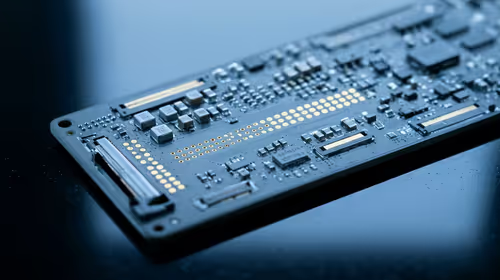
Hot-Swappable PCB Architecture in Modern Keyboards: Guide
Learn hot-swappable PCB architecture in modern keyboards—what it is, how sockets and traces work, and how to pick the right board. Speed up swaps, reduce risk, and upgrade faster 🔧⚡
Read moreThe mATX form factor alone decides whether an mATX gaming case fits the build, more than RGB or branding. Verify GPU length, radiator mounts and front I/O before checkout; Type-C and ARGB hubs add real convenience.
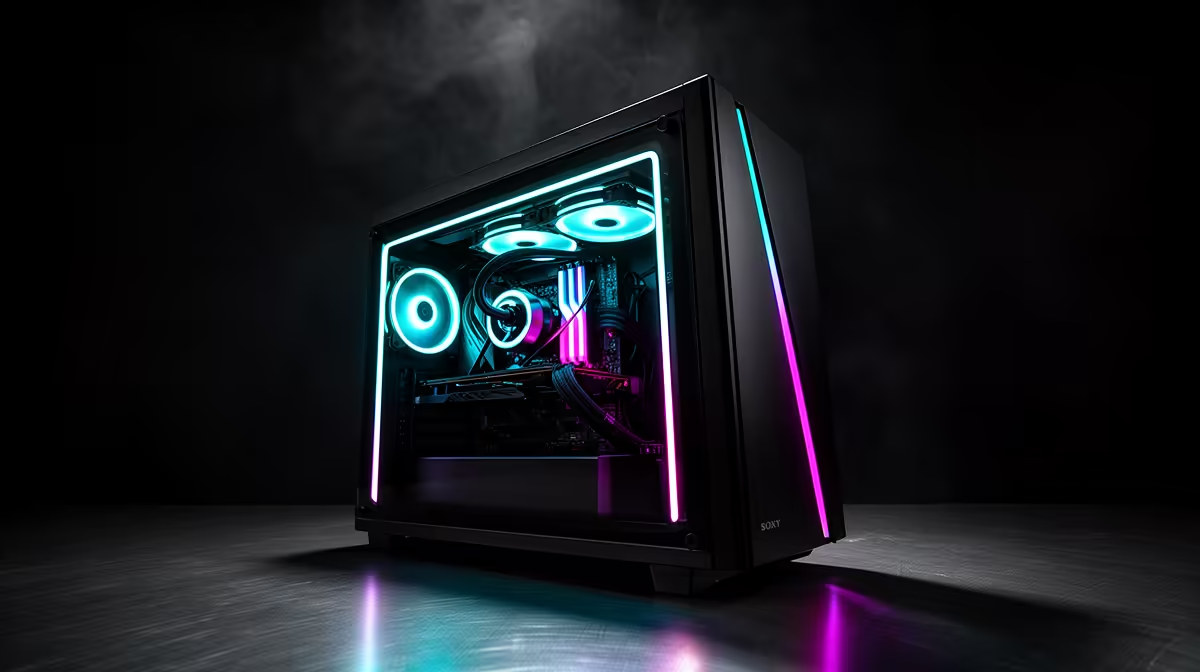
An mATX case saves 25 to 40 percent of desk or shelf footprint versus a full ATX tower and costs R300 to R800 less at equivalent quality tiers. You give up two PCIe expansion slots, typically one or two storage bays, and some radiator size options. For a gaming build with one GPU and standard storage, mATX is the smarter choice in most South African home setups.
mATX boards measure 244mm by 244mm versus ATX boards at 305mm by 244mm. The shorter height means mATX cases can be 60mm to 80mm shorter while maintaining the same internal width for GPU clearance. A typical ATX mid-tower like the Fractal Design Meshify 2 stands around 474mm tall; a comparable mATX case such as the DeepCool CH370 stands around 387mm tall. On a South African gaming desk where space is shared with a monitor, peripherals, and possibly study materials, that 90mm height difference is meaningful. mATX cases typically start at R900 to R1,400 for a decent steel-and-mesh build, while full ATX mid-towers at a similar quality tier start at R1,200 to R1,800.
Full ATX cases routinely support up to 420mm or dual 360mm radiators plus multiple fan mounting positions, while compact mATX cases typically cap at a single 360mm front or top mount and three to four fan positions. For a single-GPU gaming build pushing a Ryzen 7 9700X and RTX 5070 Ti, a 360mm AIO and two case fans are more than adequate to maintain temperatures below 80°C under sustained gaming loads. Where ATX cases win decisively is in multi-radiator or extreme overclocking setups, which represent a small fraction of SA gaming builds. Airflow in mATX cases is actually more efficient per litre of volume when the case uses a full-mesh front panel, as the shorter internal distance between intake and exhaust means less turbulence.
ATX boards carry four PCIe slots; mATX boards carry two or three. For most gamers this is irrelevant since a single discrete GPU occupies one slot and an NVMe SSD plugs into the motherboard. The expansion argument only matters if you plan to add a PCIe capture card, 10GbE network card, or secondary GPU for compute work. SA content creators who do 4K video editing and game capture simultaneously might genuinely need four slots, but for esports, streaming with NVENC, or standard gaming, two slots is sufficient. Storage expansion on mATX is handled by M.2 slots on the board, of which modern mATX boards typically offer three to four, more than enough for a multi-drive setup.
For a budget of R15,000 to R25,000, an mATX build with a mid-range board saves R500 to R900 versus a full ATX equivalent, money better directed toward a faster GPU or more RAM. The smaller case also ships less expensively if you ever need warranty repair or relocation.
Yes, most modern mATX cases support 320mm to 360mm GPU lengths, which covers all current RTX 50-series and RX 9000-series cards. Always verify the case's stated GPU clearance against the specific GPU length in the manufacturer's specifications before purchasing.
Yes. Memory support and overclocking capability are determined by the chipset and CPU, not board size.
Absolutely. The smaller, lighter chassis is a significant advantage for local LAN events at venues like Rush Gaming Lounge or home LAN gatherings. Pair the mATX case with a top-handle or luggage-carry accessory bracket for easier transport without risking component damage.
Trying to decide between mATX and ATX for your next build? Evetech stocks both form factors across all major case brands. Browse the cases category to compare dimensions, radiator support, and pricing side by side before you commit.
Learn hot-swappable PCB architecture in modern keyboards—what it is, how sockets and traces work, and how to pick the right board. Speed up swaps, reduce risk, and upgrade faster 🔧⚡
Read more
Mechanical switch lifespan explained—what the 50 million keystroke rating really means, plus tips to extend switch life and reduce double-press issues 🔧⌨️
Read more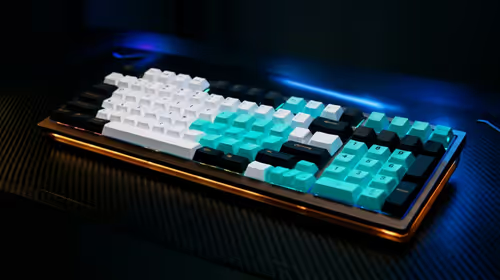
60-percent vs full-size mechanical keyboard layouts—learn what each layout includes, who it suits, and how to choose the right fit 🧩⌨️ for typing, gaming, and productivity.
Read more
Double injection keycaps last far longer than standard printed keycaps in most setups. Learn typical lifespan ranges, what shortens them, and how to maximize durability for smoother daily typing and gaming 😊⌨️
Read more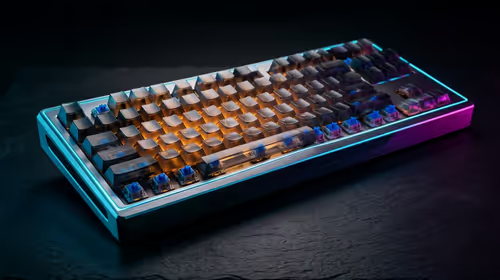
Full-key anti-ghosting: does it stop missed inputs during fast-paced gaming? We break down latency, polling, and key matrix limits so you can buy smarter 🎮⚡
Read more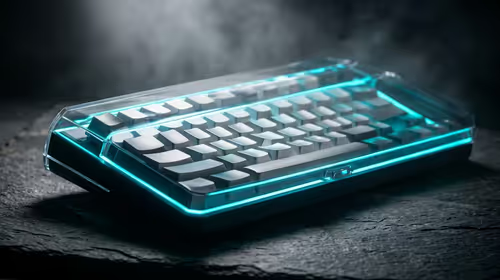
Protect mechanical keyboard switches from South African dust and summer humidity with practical cleaning and storage habits. Keep your switches smooth, reduce failures, and extend lifespan. 🌬️💧
Read more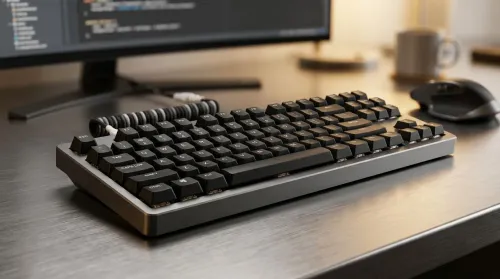
Wondering if a TKL wireless mechanical keyboard is worth it for everyday productivity? We break down latency, battery life, comfort, and workflow gains for real work. ⚡⌨️

Maximise battery life on a fanless 15-inch laptop using efficiency core architecture. Cut idle drain, tune power profiles, and improve thermals for longer runtime. 🔋⚙️
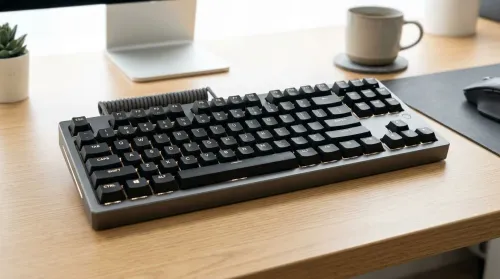
Learn how to reduce desk clutter with a TKL wireless keyboard using fewer cables, smart placement, and tidy essentials. Get a faster, calmer workspace with better ergonomics. ✅🧼
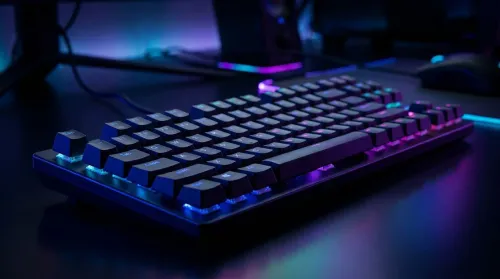
RGB keyboard lighting too distracting? Learn how to manage backlight modes, set brightness, and reduce distraction for focus and productivity 😌🖱️

Are themed gaming keyboards worth the extra cost? Compare build quality, switch options, features, and resale value to find the best fit for your setup 🎮⌨️

Full-Size vs Tenkeyless mechanical keyboards for gaming: find out if a smaller layout truly improves aim, speed, and comfort. We break down layout, desk space, latency-feel, and keybinds 🎮⌨️

Dedicated media rollers vs function key shortcuts: learn which setup gives you better workflow control, faster media access, and fewer mistakes. 🖱️🎧

Best Mechanical Switch Type for Gaming: Clicky vs Linear vs Tactile. Find your feel, speed, and noise balance with practical guidance for FPS, MOBA, and productivity 😄🎮

Direct mouse answer: Mouse not keeping up with your work? Everything that matters about dual-mode 2.4GHz + BT 5.0: DPI behaviour, channel switching, battery curves and per-app button mapping. Covers when 2.4GHz USB wins (low-latency desk) and when BT 5.0 wins (laptop, d

Plain wireless mouse guide: Mouse not keeping up with your work? Everything that matters about wireless productivity mouse: DPI behaviour, channel switching, battery curves and per-app button mapping. Includes DPI tuning tips, channel switch shortcuts, and ZAR-aware fea
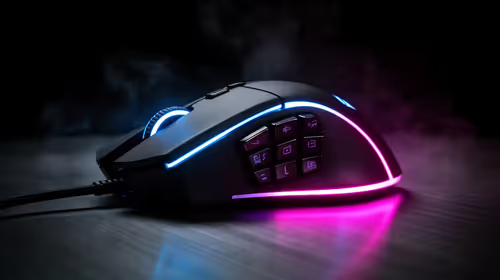
Real productivity numbers: Set up your wireless mouse in this order: everything that matters about wireless productivity mouse: DPI behaviour, channel switching, battery curves and per-app button mapping. Includes DPI tuning tips, channel switch shortcuts, and ZAR-aware
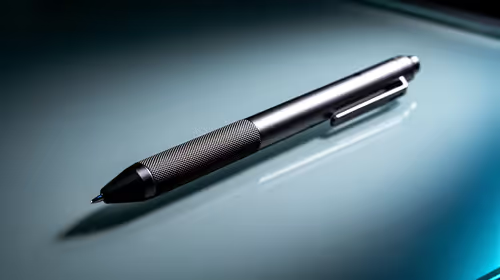
Pen not feeling like paper? Stylus lag and skipping usually trace to old drivers, dirty nibs, or display refresh mismatches, not the pen itself. Covers pressure curve tuning, tilt thresholds, nib swap timing, and SA pricing brackets.