


PCIe 5.0 vs PCIe 4.0 for Strategy and Sim Games in SA
PCIe 5.0 and PCIe 4.0 differ most in lane support, compatibility, and upgrade value for strategy and sim games. SA buyers should match the choice to their actual hardware and games.
Read moreMilitary-grade caps and chokes hold tolerance under heat and vibration far longer than standard grade equivalents. Wattage, efficiency tier, and ATX 3.1 readiness shape both your daily power bill and your transient stability.
"Military-grade" in PSU marketing refers to components meeting MIL-SPEC or equivalent high-reliability standards, primarily wide-temperature-range capacitors and conformal-coated PCBs. These components genuinely improve durability in harsh conditions, but most premium consumer PSUs from reputable brands achieve equivalent practical reliability using high-grade commercial components without the military labelling.
The term typically references MIL-STD-810 environmental testing or MIL-PRF standards for specific components. For capacitors, it means units rated and tested across a wider temperature range, often minus 55 to plus 125 degrees Celsius for military-grade versus minus 25 to plus 85 or 105 degrees Celsius for commercial-grade. For PCBs, it means FR4 substrate with full conformal coating rather than selective lacquer. Consumer PSU manufacturers that market military-grade typically use extended-spec components on primary-side switching circuits. This is genuinely useful in South African conditions where Johannesburg can swing from 5 degrees Celsius in winter nights to 38 degrees Celsius in summer days.
The important distinction is not between "military-grade" and "standard-grade" labels but between units from reputable manufacturers using verified high-grade components versus budget units making vague claims without substantiation. A Seasonic Prime PX-850 uses Japanese-branded 105-degree Nichicon capacitors and publishes full specifications. A budget unit claiming "military-grade capacitors" without specifying capacitor brand or temperature rating is a red flag. Prioritise published capacitor brand and temperature rating over marketing terminology when evaluating PSUs at Evetech.
For South African buyers in specific environments, higher-spec components genuinely matter. A PC in a coastal workshop with high humidity and salt air benefits from full conformal coating and corrosion-resistant component leads. A workstation in a non-air-conditioned room in Limpopo or the Northern Cape, where summer indoor temperatures can reach 35 to 40 degrees Celsius, benefits from capacitors rated to 125 degrees Celsius. For a typical home gaming setup in a Johannesburg suburb with moderate climate control, the difference is negligible over a five to seven year lifecycle.
the spec sheet for the capacitor manufacturer: Nichicon, Rubycon, Nippon Chemi-Con, or Panasonic indicate premium Japanese components. Generic or unspecified capacitor brands behind a military-grade label do not provide the durability being implied.
It can be, but the premium varies widely. Genuine high-grade components add R300 to R800 to manufacturing cost. Some units claiming military-grade are priced at a premium without the underlying component quality to justify it. Compare specification detail, not just the label.
Yes. Dust cleaning, airflow maintenance, and periodic checks apply regardless of component grade. Military-spec components tolerate harsher conditions, but dust-induced thermal insulation and moisture accumulation still degrade components over time.
Partially. Check if the manufacturer publishes component specifications in the official data sheet. For units stocked at Evetech, the product listing or support team can often confirm capacitor brand for premium models before purchase.
Want a PSU built to last in South African conditions? Evetech stocks power supplies from manufacturers known for using high-quality, verified components. Browse the PSU range at Evetech to find units with published specifications backing their durability claims.
PCIe 5.0 and PCIe 4.0 differ most in lane support, compatibility, and upgrade value for strategy and sim games. SA buyers should match the choice to their actual hardware and games.
Read more
AM5 vs AM4 for video editing in 4K Difference explained is mostly about compatibility, budget, upgrade path, and setup fit. SA buyers should check device support and real needs before expecting a clear win from either option.
Read more
OLED vs QD-OLED for strategy and sim games buyers - what changes is mostly about compatibility, budget, upgrade path, and setup fit. SA buyers should check device support and real needs before expecting a clear win from either option.
Read more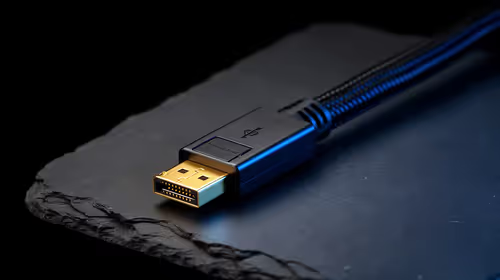
DisplayPort 2.1 and 1.4 differences matter when SA PC builders match GPUs, monitors, and refresh targets. Use this difference between displayport 2 1 and displayport 1 4 explained pc builders guide to avoid mismatched parts.
Read more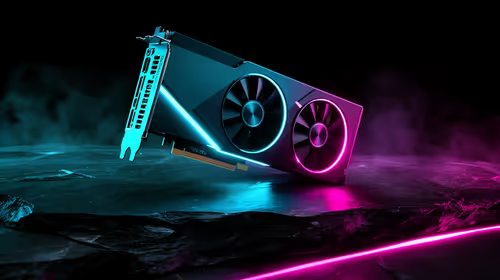
Ray tracing vs Path tracing depends on Strategy and sim games needs, platform limits, and budget fit. Compare compatibility, latency, upgrade path, and real setup constraints before choosing for an SA build.
Read more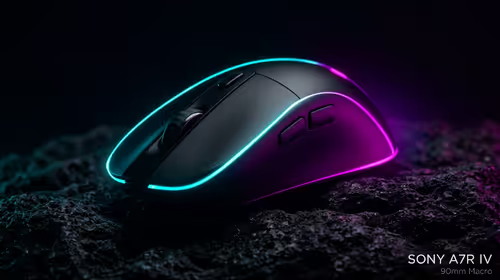
wireless mouse guide for Gqeberha gamers should be shortlisted around the job it must do. South African buyers should compare sensor, shape, weight, and wireless latency, warranty path, and upgrade room before treating any pick as best.
Read more
From 1 October 2026, WhatsApp Business Platform service replies in South Africa are expected to cost about $0.0076, or 12 cents, per delivered message.
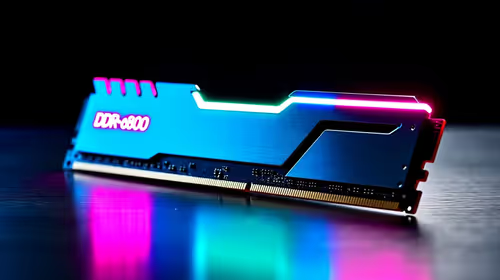
DDR5-8000 RAM Kits pros and cons depend on the build, budget, and workload. Weigh gaming needs, platform fit, power, cooling, warranty support, and South African pricing context before shortlisting it.
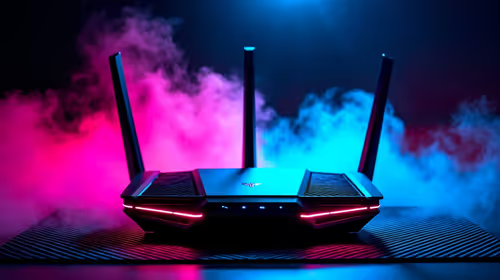
Wi-Fi 6E vs Wi-Fi 6 depends on AAA single-player gaming needs, platform limits, and budget fit. Compare compatibility, latency, upgrade path, and real setup constraints before choosing for an SA build.
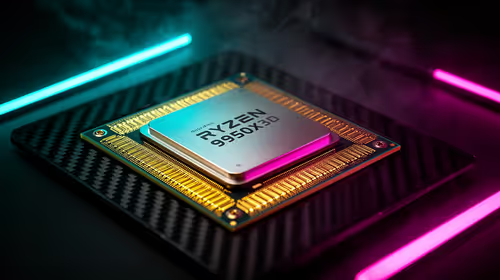
Ryzen 9 9950X3D dead pixel checks should isolate the panel first. Run colour fills, inspect the monitor menu, test another cable or input, and capture proof before linking it to the SA CPU upgrade.

YouTube will count public views from the first frame across video formats from 24 August, while earnings and eligibility remain tied to engaged viewing.
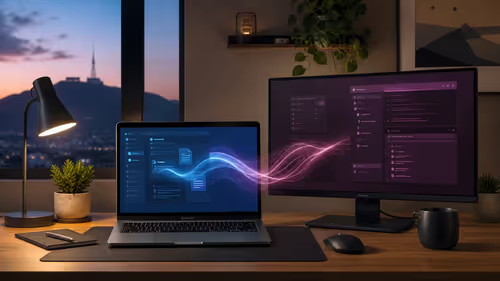
Canonical expects Ubuntu on WSL users to outnumber native Ubuntu desktop users before the end of 2026. The software is open source and runs inside supported Windows PCs.
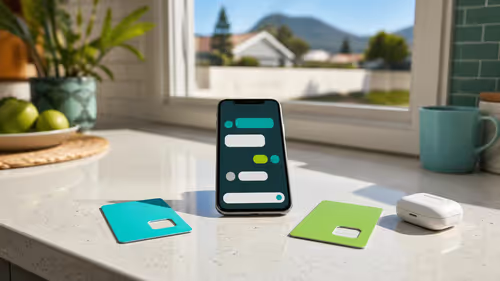
Telkom's daily bundles pair WhatsApp access with 10 all-network voice minutes. The R15 option includes 300MB, while the R17 option uses a fair-use threshold.

A 10,000-hour test found similar image retention across older and newer OLED TVs, while newer panels were brighter and more efficient. Local OLED monitors started at R9,999.

Windows 11 update KB5121003 is linked to crashes in several multiplayer games on versions 24H2 and 25H2. Check the build, report the fault and avoid risky file or update changes unless the problem is confirmed on your PC.

Comsol's standalone 5G network covers about one million Gauteng homes and starts commercial ISP service in September. Early packages range from R275 to R875 a month, but coverage and fair-use rules still decide the real value.

Sennheiser's Momentum True Wireless 5 adds user-replaceable batteries, 12-hour playback and a $299.95 launch price. There is no confirmed South African date, so compare longevity with live earbuds from R199 to R2,999.

AVerMedia's GC531 and GC535 are professional HDMI capture devices for continuous streaming, with RGB24 capture up to 2K30 and 4K30. South African creators should compare them with live 4K capture cards from R2,099.