



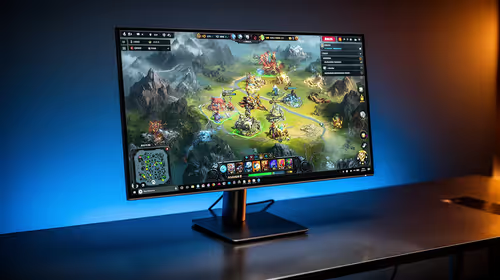
IPS vs VA for Strategy and Sim Games in SA
IPS vs VA for strategy and sim games should be judged by fit, not a single winner. Compare compatibility, latency, capacity, upgrade path, cost planning, and South African setup needs.
Read moreOLED monitors for color grading offer unparalleled contrast and color accuracy, essential for professional work. Discover why their true black levels and vibrant colors make them the top choice for video editors and colorists. Dive into our expert insights to find the perfect display for your workflow! 🖥️✨
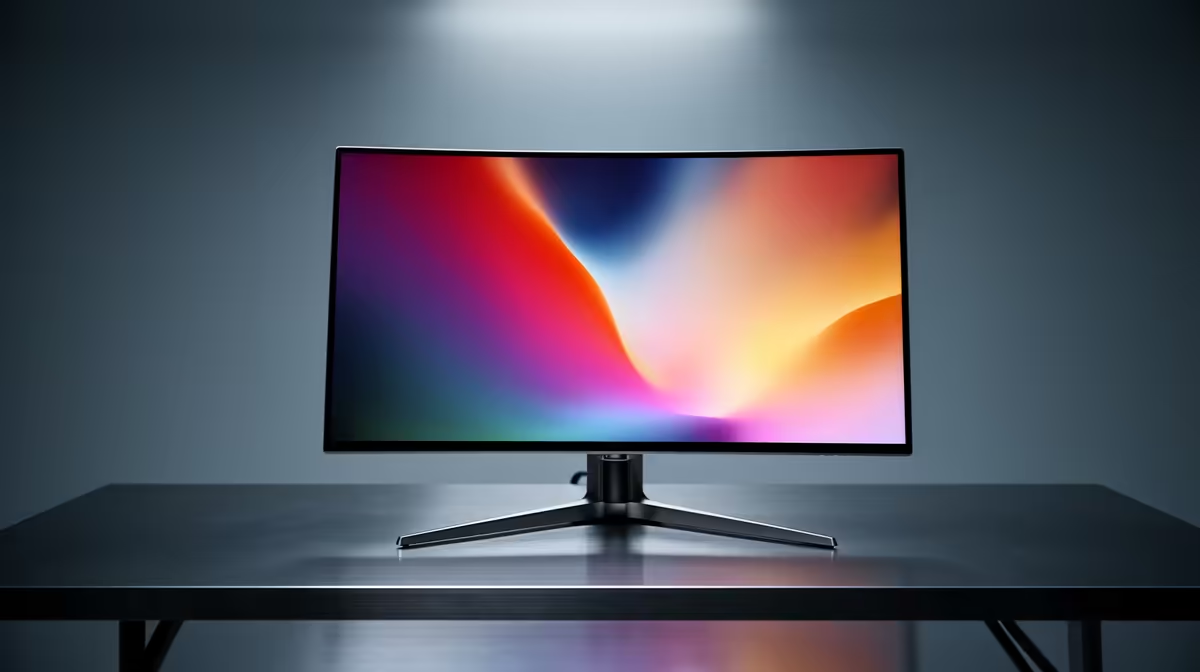
Ever spent hours perfecting a colour grade, only to see it look washed out or completely wrong on another screen? For South African video editors, photographers, and digital artists, that frustration is all too common. Your client sees one thing, you see another... and your credibility is on the line. The solution lies in a display technology that delivers unparalleled accuracy: OLED. Using an OLED monitor for colour grading isn't just a luxury; it's a professional necessity.
What makes an OLED display the gold standard for colour-critical work? It comes down to one simple, powerful concept: per-pixel lighting.
Unlike traditional LCD/LED monitors that use a backlight shining through a panel of pixels, each individual pixel in an OLED screen is its own light source. This means when a pixel needs to be black, it simply turns off. Completely. This creates an infinite contrast ratio and a "true black" that back-lit displays can only dream of.
This perfect black level is the foundation for everything else. It allows for an incredibly vibrant and accurate representation of colours, revealing subtle details in the shadows and highlights that are often lost on lesser screens. When you're working on a complex grade, this level of precision is non-negotiable. It's the difference between a good result and a flawless one. For professionals, browsing the available PC monitors and choosing an OLED is a crucial first step.
Not all OLEDs are created equal, especially for professional use. When you're ready to invest in an OLED monitor for colour grading, here’s what to look for:
This tells you what percentage of a specific colour space the monitor can display. Look for high coverage of professional standards:
A 10-bit panel can display over a billion colours, compared to the 16.7 million of an 8-bit panel. This results in smoother gradients and eliminates distracting colour banding. Furthermore, look for monitors that come factory-calibrated or support hardware calibration, ensuring your colours are accurate right out of the box and stay that way. The best 5K or 4K monitors often include these professional-grade features.
Even the best monitor needs regular calibration to account for changes over time. Invest in a hardware calibration tool like a Datacolor SpyderX or Calibrite ColorChecker. Run a calibration every month or two to ensure your OLED monitor maintains its professional-grade colour accuracy. It’s a small step that protects your work and reputation.
While the primary reason to choose an OLED monitor for colour grading is accuracy, the benefits don't stop there. The same technology that produces perfect colours also delivers an incredible experience for everything else. 🚀
Because pixels can turn on and off almost instantly, OLEDs have near-instantaneous response times (often 0.03ms). This completely eliminates motion blur and ghosting, making them some of the absolute best gaming monitors on the market. After a long day of editing, you can switch over to your favourite game and enjoy an unbelievably fluid and immersive experience. Many newer OLEDs are also available as stunning curved monitors, wrapping the vibrant picture around your field of view.
Investing in a professional monitor is a significant decision. You need a display that not only performs but also fits into your workflow, whether you're in a studio in Johannesburg or working remotely from the coast. For those who need colour accuracy on location, even specialised portable monitors are beginning to feature this superior technology.
Ultimately, an OLED monitor provides the confidence that what you see is what everyone else will see. It’s about consistency, accuracy, and producing your best possible work. Before making a final decision, it's always wise to check out the best PC monitor deals in South Africa to find a screen that matches your professional needs and your budget.
Ready to See True Colour? Stop guessing and start grading with confidence. An OLED monitor isn't just an upgrade... it's an investment in your craft. Explore our massive range of professional monitors and find the perfect display to bring your vision to life.
Yes, OLED monitors are exceptional for color grading. Their per-pixel illumination creates perfect blacks and an infinite contrast ratio, delivering unmatched color accuracy.
The primary concern is the potential for screen burn-in from static UI elements in editing software, though modern panels include technology to mitigate this risk.
Absolutely. Many high-end post-production studios and professional colorists rely on reference-grade OLED displays for their superior image fidelity and color precision.
QD-OLED technology can offer higher peak brightness and a wider color gamut, making it an excellent choice for projects involving HDR color grading.
Yes, regular calibration is crucial for any professional display, including OLEDs. This ensures consistent color accuracy and compensates for any panel changes over time.
OLED is often superior for its perfect blacks and contrast, which benefits photo editing. However, premium IPS panels may offer better brightness uniformity and have no burn-in risk.
IPS vs VA for strategy and sim games should be judged by fit, not a single winner. Compare compatibility, latency, capacity, upgrade path, cost planning, and South African setup needs.
Read more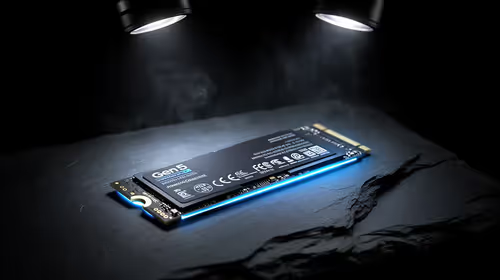
Gen 5 NVMe SSD guide for Bloemfontein gamers should be shortlisted around the job it must do. South African buyers should compare capacity, speed, thermals, and motherboard support, warranty path, and upgrade room before treating any pick as best.
Read more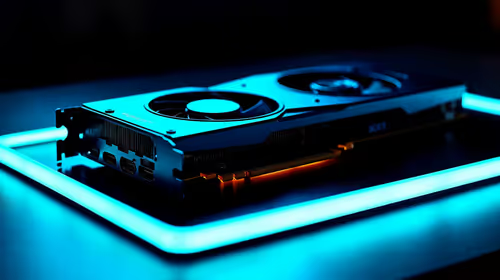
Skip the RTX 5070 if your first-time builder budget needs better balance. Better SA picks can free room for the right CPU, PSU, case, monitor, storage, and cooling while still giving a strong first gaming PC experience this year in South Africa.
Read more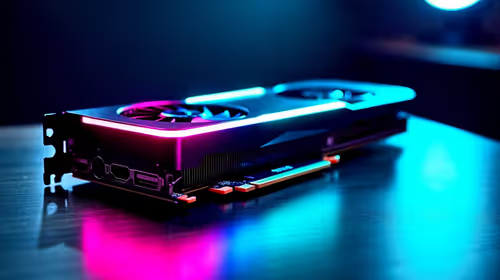
RTX 5080: weighing the pros and cons for SA should be shortlisted around the job it must do. South African buyers should compare GPU tier, VRAM, cooling, and PSU headroom, warranty path, and upgrade room before treating any pick as best.
Read more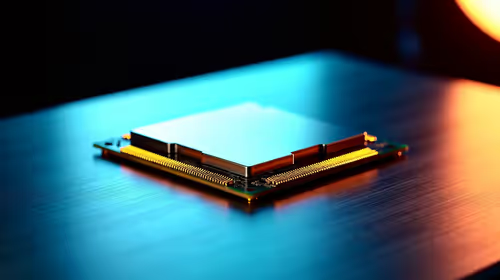
Core i5-13400F gives South African PC builders a capable mid-range CPU choice with clear limits. Check its gaming fit, discrete GPU requirement, LGA1700 platform costs, and upgrade path before locking in your parts list.
Read more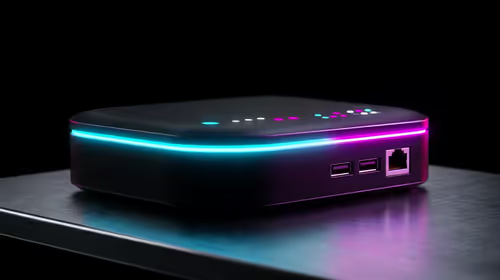
Pros and cons of the Wi-Fi 7 routers for SA should be shortlisted around the job it must do. South African buyers should compare WiFi standard, coverage, latency, and device support, warranty path, and upgrade room before treating any pick as best.
Read more
Steam content servers unreachable needs a download-path check, not an immediate reinstall of every game. Restart the client, inspect download settings and compare another connection when practical. Clearing the download cache is separate from deleting installed games.
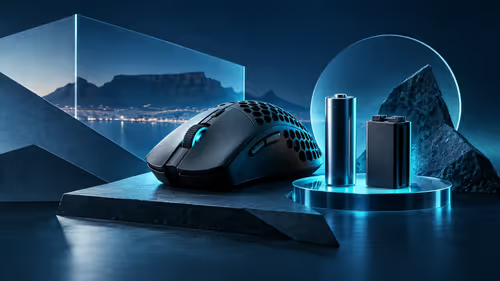
Keychron G6 HE has built-in and swappable battery versions with different weights. The product brief lists 42g and 46g respectively, each with a 3g tolerance. Choose by grip and battery preference before treating one headline weight as universal.
Corsair HS80 v2 MAX supports 2.4GHz wireless and Bluetooth. Its maximum battery figures use RGB-off conditions and differ by connection. Check microphone routing, comfort and the exact device support before assuming every wireless mode behaves alike.
Windows taskbar notification badges can be shown or hidden in Taskbar behaviours. This changes the small app indicators, not the underlying messages. Choose a calmer desktop while keeping a deliberate routine for checking important conversations and app updates.
Windows taskbar notification badges can be shown or hidden in Taskbar behaviours. This changes the small app indicators, not the underlying messages. Choose a calmer desktop while keeping a deliberate routine for checking important conversations and app updates.
Windows USB device in use can mean a program still has the drive open. Finish transfers and close files before retrying ejection. Better performance caching requires safe removal; a replacement drive is not the first fix for an open-file warning.
Windows Nearby Sharing not working starts with feature, Bluetooth and visibility checks on both PCs. My devices only depends on matching Microsoft accounts. Test a small harmless file before buying networking hardware or changing your home router.
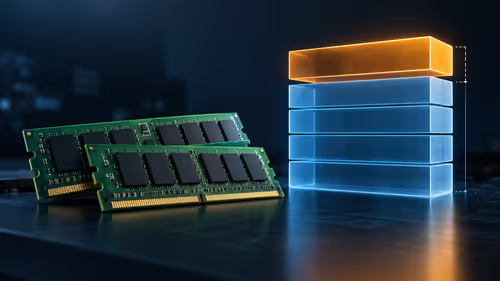
Windows hardware reserved RAM is different from memory used by applications. Compare installed memory with firmware detection and the usable amount before buying modules. Reservations and reporting limits vary by system; no universal setting restores every byte.

Windows title bar window shake can minimise other open windows when you shake the active window by its title bar. Inspect the Multitasking setting and switch it off if that gesture interrupts your work. The preference costs R0 and does not require new hardware.

Windows Print Screen opens Snipping Tool when its keyboard preference is enabled. Change the option under Accessibility, Keyboard to choose another workflow. Test whether you need a clipboard image or a saved file.

Windows desktop icons missing may be a visibility setting. Right-click the desktop, choose View and inspect Show desktop icons. If only system icons are absent, use Desktop icon settings. Check the Desktop folder before assuming files were deleted.

Windows set time zone automatically greyed out calls for a location and device-policy check. Automatic time-zone selection relies on location services. A manual time-zone choice is separate from synchronising the clock; check both before replacing hardware.