


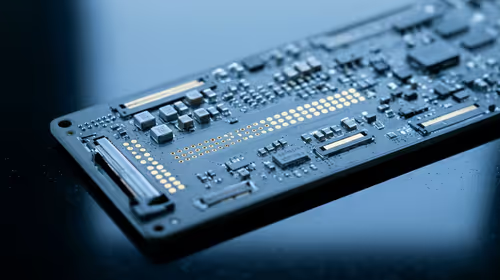
Hot-Swappable PCB Architecture in Modern Keyboards: Guide
Learn hot-swappable PCB architecture in modern keyboards—what it is, how sockets and traces work, and how to pick the right board. Speed up swaps, reduce risk, and upgrade faster 🔧⚡
Read moreRight, treat gaming PC use as the headline check before any rand goes toward a modern PC case. Confirm compatibility, then balance performance against warranty and SA-stock availability. Compare picks against your CPU and case spec before paying.
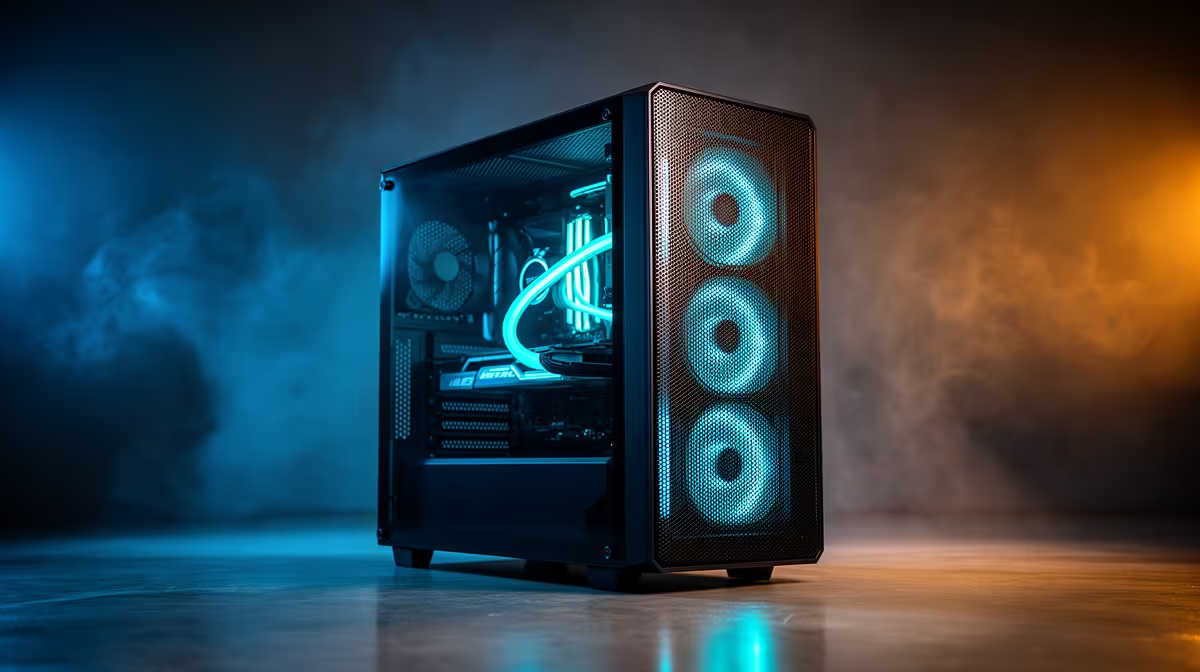
South African indoor gaming rooms regularly reach 28°C to 35°C in summer, adding 8°C to 15°C to component temperatures compared to the 21°C conditions used in most international benchmark reviews. This makes correct case airflow setup, not just a powerful cooler, essential for maintaining safe GPU and CPU temperatures.
Thermal physics dictates that GPU and CPU temperatures are always relative to ambient air temperature. A GPU that runs at 72°C in a 21°C room will run at 80°C to 86°C in a 30°C South African summer room under identical load. Most modern GPUs and CPUs throttle clock speeds once junction temperatures reach 90°C to 95°C.
Case placement within the room has a greater impact on temperatures than many SA gamers realise. A PC placed inside a closed desk cabinet or pressed against a wall on the exhaust side recirculates hot air back into the intake stream, raising temperatures by 5°C to 12°C. Place the case on an open desk surface or open shelf with at least 100mm of clearance on all sides. In Highveld regions where dry winter air creates significant static electricity, grounding your desk surface and using a case with a dedicated ground lug prevents electrostatic discharge events during hardware installation. During KwaZulu-Natal summer months, high humidity adds to component stress; positive pressure fan configurations that minimise moist air infiltration through unfiltered gaps help here.
Positive pressure intake, with more intake fan volume than exhaust, is the recommended configuration for dusty and warm SA conditions. Two or three 120mm front intake fans running at 900 to 1,100 RPM plus one rear exhaust fan provides enough air exchange to keep a mid-range gaming system below safe thermal limits even in 32°C ambient conditions. A 360mm AIO on the CPU helps significantly by moving the CPU heat directly to the radiator fans rather than dumping it into the case air. When purchasing fans for SA conditions, prioritise models with dusty-environment ratings or sealed bearing systems like fluid dynamic bearings (FDB) that tolerate dry, dusty air better than sleeve-bearing variants.
Run a 30-minute GPU stress test in October before summer begins and record your peak temperatures. If GPU temp exceeds 85°C with ambient below 25°C, your airflow setup needs adjustment before outdoor temperatures climb further. Adding one extra intake fan now is far cheaper than dealing with thermal throttling or component failure during peak gaming season.
No. Removing the side panel disrupts the engineered airflow path and introduces turbulent unguided air that often raises temperatures rather than reducing them. It also eliminates dust filtration entirely.
Passive heat in standby state is less of a concern than active load heat because all modern CPUs and GPUs enter deep power states that drop heat output to 5W to 15W in sleep or idle. However, ambient temperatures above 40°C in a closed room can stress capacitors and VRM components over very long periods.
White reflective surfaces absorb slightly less radiant heat than black surfaces, so white cases in sunlit rooms are marginally cooler on the exterior. The internal temperature difference is negligible, however, as case airflow is the dominant thermal factor, not surface colour.
Setting up a gaming PC that handles SA summer conditions? Evetech stocks airflow-focused cases, high-static-pressure fans, and AIO coolers that keep your system cool through Highveld summer temperatures.
Learn hot-swappable PCB architecture in modern keyboards—what it is, how sockets and traces work, and how to pick the right board. Speed up swaps, reduce risk, and upgrade faster 🔧⚡
Read more
Mechanical switch lifespan explained—what the 50 million keystroke rating really means, plus tips to extend switch life and reduce double-press issues 🔧⌨️
Read more
60-percent vs full-size mechanical keyboard layouts—learn what each layout includes, who it suits, and how to choose the right fit 🧩⌨️ for typing, gaming, and productivity.
Read more
Double injection keycaps last far longer than standard printed keycaps in most setups. Learn typical lifespan ranges, what shortens them, and how to maximize durability for smoother daily typing and gaming 😊⌨️
Read more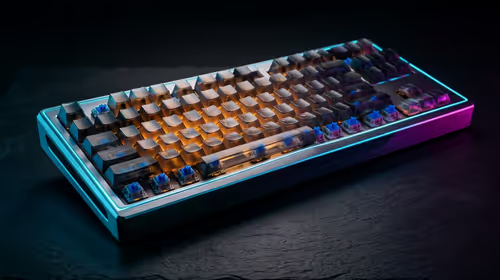
Full-key anti-ghosting: does it stop missed inputs during fast-paced gaming? We break down latency, polling, and key matrix limits so you can buy smarter 🎮⚡
Read more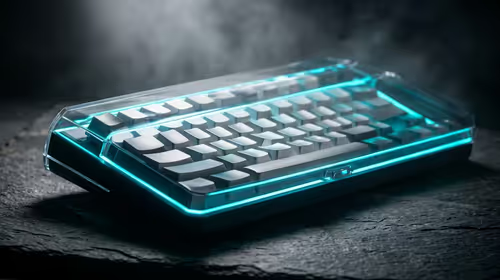
Protect mechanical keyboard switches from South African dust and summer humidity with practical cleaning and storage habits. Keep your switches smooth, reduce failures, and extend lifespan. 🌬️💧
Read more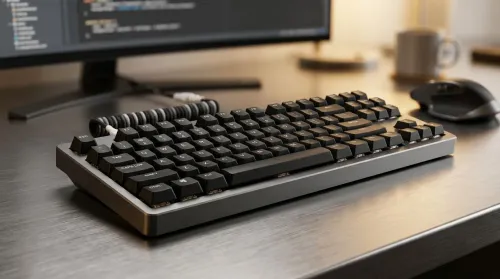
Wondering if a TKL wireless mechanical keyboard is worth it for everyday productivity? We break down latency, battery life, comfort, and workflow gains for real work. ⚡⌨️

Maximise battery life on a fanless 15-inch laptop using efficiency core architecture. Cut idle drain, tune power profiles, and improve thermals for longer runtime. 🔋⚙️
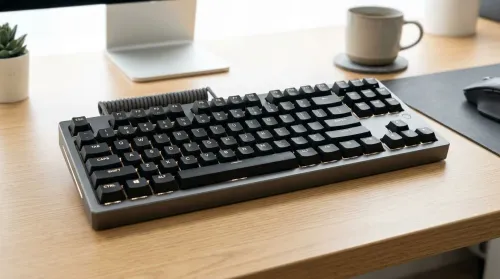
Learn how to reduce desk clutter with a TKL wireless keyboard using fewer cables, smart placement, and tidy essentials. Get a faster, calmer workspace with better ergonomics. ✅🧼
RGB keyboard lighting too distracting? Learn how to manage backlight modes, set brightness, and reduce distraction for focus and productivity 😌🖱️
Are themed gaming keyboards worth the extra cost? Compare build quality, switch options, features, and resale value to find the best fit for your setup 🎮⌨️
Full-Size vs Tenkeyless mechanical keyboards for gaming: find out if a smaller layout truly improves aim, speed, and comfort. We break down layout, desk space, latency-feel, and keybinds 🎮⌨️
Dedicated media rollers vs function key shortcuts: learn which setup gives you better workflow control, faster media access, and fewer mistakes. 🖱️🎧
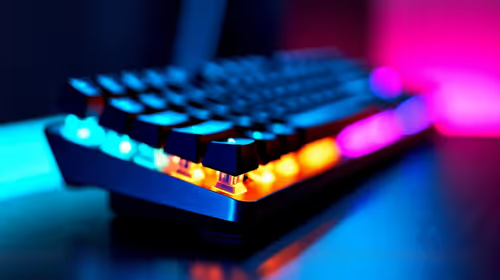
Best Mechanical Switch Type for Gaming: Clicky vs Linear vs Tactile. Find your feel, speed, and noise balance with practical guidance for FPS, MOBA, and productivity 😄🎮
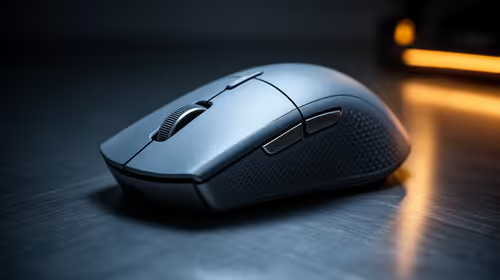
Direct mouse answer: Mouse not keeping up with your work? Everything that matters about dual-mode 2.4GHz + BT 5.0: DPI behaviour, channel switching, battery curves and per-app button mapping. Covers when 2.4GHz USB wins (low-latency desk) and when BT 5.0 wins (laptop, d

Plain wireless mouse guide: Mouse not keeping up with your work? Everything that matters about wireless productivity mouse: DPI behaviour, channel switching, battery curves and per-app button mapping. Includes DPI tuning tips, channel switch shortcuts, and ZAR-aware fea
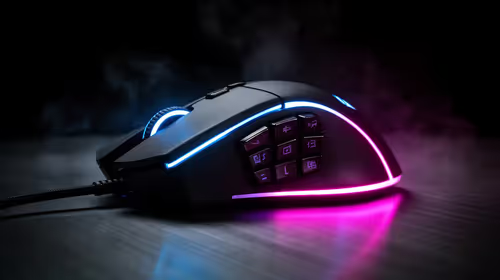
Real productivity numbers: Set up your wireless mouse in this order: everything that matters about wireless productivity mouse: DPI behaviour, channel switching, battery curves and per-app button mapping. Includes DPI tuning tips, channel switch shortcuts, and ZAR-aware
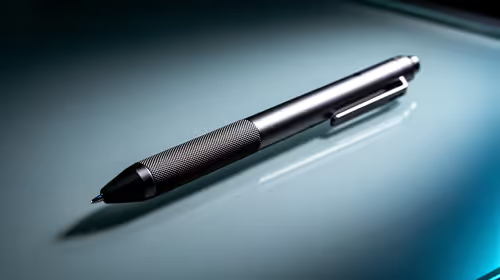
Pen not feeling like paper? Stylus lag and skipping usually trace to old drivers, dirty nibs, or display refresh mismatches, not the pen itself. Covers pressure curve tuning, tilt thresholds, nib swap timing, and SA pricing brackets.