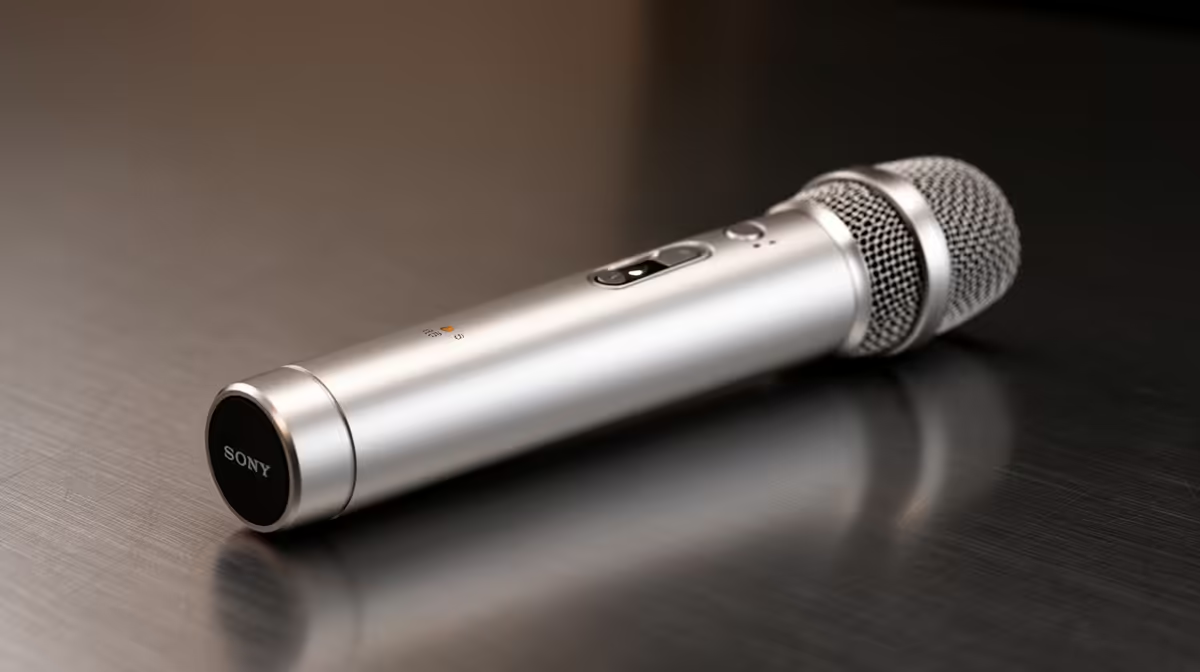
The gear question every solo creator eventually faces is not about sound quality in isolation. It is about the full cost of getting audio from your voice to the final file: time, complexity, money, and what happens when something goes wrong on location. Plug-and-play wireless microphones and audio interfaces are genuinely different tools for different workflows, and the answer shifts based on how you actually shoot, not how you imagined you would when you started.
Quick Answer
For most solo creators, a plug-and-play wireless system is the better starting point. It pairs in seconds, needs no drivers, and fits in a jacket pocket. An audio interface earns its place once you need multiple XLR inputs, high-end studio preamps, or a condenser mic for music vocals. One presenter and one camera rarely needs the interface's extra capability.
🎙️ What Plug-and-Play Wireless Actually Delivers
The category has matured significantly. Current-generation wireless microphone systems for solo creators capture audio at 24-bit depth, which is the same resolution target used in professional broadcast. The built-in preamps in compact transmitters have improved to the point where, for a single presenter speaking at conversational volume, the audible difference between a good wireless system and a mid-range interface with a wired condenser is not discernible to most viewers.
The practical advantages are not theoretical. A system that pairs by placing both units in a charging case together and powering them on requires no driver installation, no ASIO configuration, no USB interface recognition troubleshooting. It works on Windows, Mac, Android, and iOS without modification because it connects to a 3.5mm camera input or a USB-C phone port rather than relying on OS-level audio driver support.
For a creator who shoots at multiple locations, this matters every single session. A run-and-gun vlogger filming in Cape Town one day and Joburg the next does not want to carry a USB interface, an XLR cable, a phantom power supply, and a large-diaphragm condenser. That chain of dependencies, each one a potential point of failure, is the exact problem the pocket wireless system eliminates.
The Setup Time Reality
Interfaces are quick at a fixed desk. They are not quick when the environment changes each session. A transmitter clipped to a collar and a receiver on the camera hot shoe is a 30-second operation done while the subject is being briefed. An interface requires a flat surface, a powered USB port, driver recognition, and cable routing before gain has even been touched. For solo operators managing camera, lighting, and audio simultaneously at a new location each time, that difference is not small.
🔌 Where the Interface Wins Decisively
The audio interface exists because it solves problems that wireless systems cannot. The most significant is phantom power: most studio condenser microphones, including the large-diaphragm cardioid designs used for music vocals, spoken-word narration, and ASMR recording, require 48V of power delivered down the XLR cable to operate. A plug-and-play wireless system does not supply phantom power. An interface does.
If your content involves singing, acoustic instrument recording, or any audio application where a studio condenser's frequency response and sensitivity genuinely improve the result, the interface is the correct tool. The gap between a wireless capsule and a quality XLR condenser is real at the top end of vocal performance, particularly for music where overtone detail and dynamic range matter more than they do in speech-level content.
Multiple inputs are the second advantage. A standard wireless kit handles one or two presenters. An interface with four to eight XLR inputs handles a podcast panel, a band, or a multi-presenter live production from a single unit. If your format involves three or more simultaneous audio sources on XLR microphones, no consumer wireless kit currently replaces what a mixer interface provides.
The third is gain structure control. An interface allows precise preamp gain adjustment per channel, low-cut filtering, and direct monitoring with near-zero latency. For creators who are also recording engineers handling complex audio sessions, that granular control is functional, not cosmetic.
The Music Vocal Case
A studio condenser on XLR through a two-channel interface captures vocal dynamics, breath, and room character that a compact wireless capsule cannot replicate. For a YouTube music channel or a voiceover artist at broadcast quality, the interface earns its place. On a talking-head video in a Sandton lounge, the same setup carries capability the format never uses.
🎯 Matching the Tool to How You Actually Work
The decision framework is simpler than most gear guides make it seem. Ask three questions. First: does your format involve XLR microphones, phantom-power condenser mics, or more than two simultaneous audio sources? If yes to any of those, the interface belongs in your kit.
Second: do you change shooting location often, operate without a dedicated assistant, or film formats where setup time and portability are actively limiting your output? If yes, the wireless system solves real problems the interface does not address.
Third: what is your actual current bottleneck? If your audio sounds thin because of room reflections and inconsistent mic distance, neither a wireless system nor an interface fixes that. Room treatment and mic technique are the solution. Buying more hardware to solve a positioning problem is a common and expensive detour.
For a South African creator starting a channel, a dual-channel wireless kit around R2,500 to R5,000 covers the vast majority of solo and two-person formats without demanding a permanent setup. The interface arrives when the format genuinely requires what it provides.
Pro Tip ⚡
you are unsure which path you need, record the same segment with your current setup and listen back through good headphones. Identify the specific problem in the audio: is it distortion, thin high-frequency detail on music, room echo, or just inconsistent level? Each of those points to a different solution. A wireless mic fixes level and dropout issues. An interface fixes phantom power and multiple-source mixing. Neither fixes a bad-sounding room.
Frequently Asked Questions
Can a plug-and-play wireless mic match the voice quality of an audio interface setup?
For spoken dialogue at normal presentation volumes, the gap has narrowed considerably. A 24-bit wireless capsule through a clean preamp captures voice content that most viewers cannot distinguish from a mid-range interface and wired condenser. The interface pulls ahead on music vocals, close-miked instrument recording, and any source where dynamic range and frequency extension genuinely matter to the listener.
Do wireless microphone kits work natively with Android phones?
Yes, kits that include a USB-C receiver work as plug-and-play audio inputs on most Android devices without any driver installation or app configuration. The phone recognises the receiver as a USB audio device and routes input accordingly. Check that the kit explicitly lists USB-C receiver compatibility rather than relying on a 3.5mm cable, since many current Android phones have removed the headphone jack.
What is the main reason a solo vlogger would not need an audio interface?
An interface's primary advantages are phantom power for XLR condensers, multiple simultaneous inputs, and granular preamp control. A solo presenter using one microphone, shooting to camera, and delivering spoken content at conversational level does not use any of those capabilities. The interface's inputs sit unused on every single shoot, which means the investment adds cost and setup time without adding to the final product.
Does a wireless system only make sense for outdoor or run-and-gun shoots?
No. Removing the cable between presenter and camera reduces trip hazards and handling noise in any setting, studio included. The benefits are less dramatic indoors but still real: no cable to route around furniture, no rustling when the presenter moves, and no extra pack-down at the end of the session.
When should a creator invest in an audio interface instead of upgrading a wireless kit?
When the format shifts to music vocal performance, when three or more simultaneous XLR inputs are genuinely needed, or when professional voiceover work requires broadcast-quality specifications. Those are the inflection points where the interface earns its complexity. Before any of those, a quality wireless kit remains the more practical investment.
Ready to choose the right audio path for your solo setup?
Browse the wireless microphone and audio interface range at Evetech to find the recording solution that fits your actual shooting format and budget.