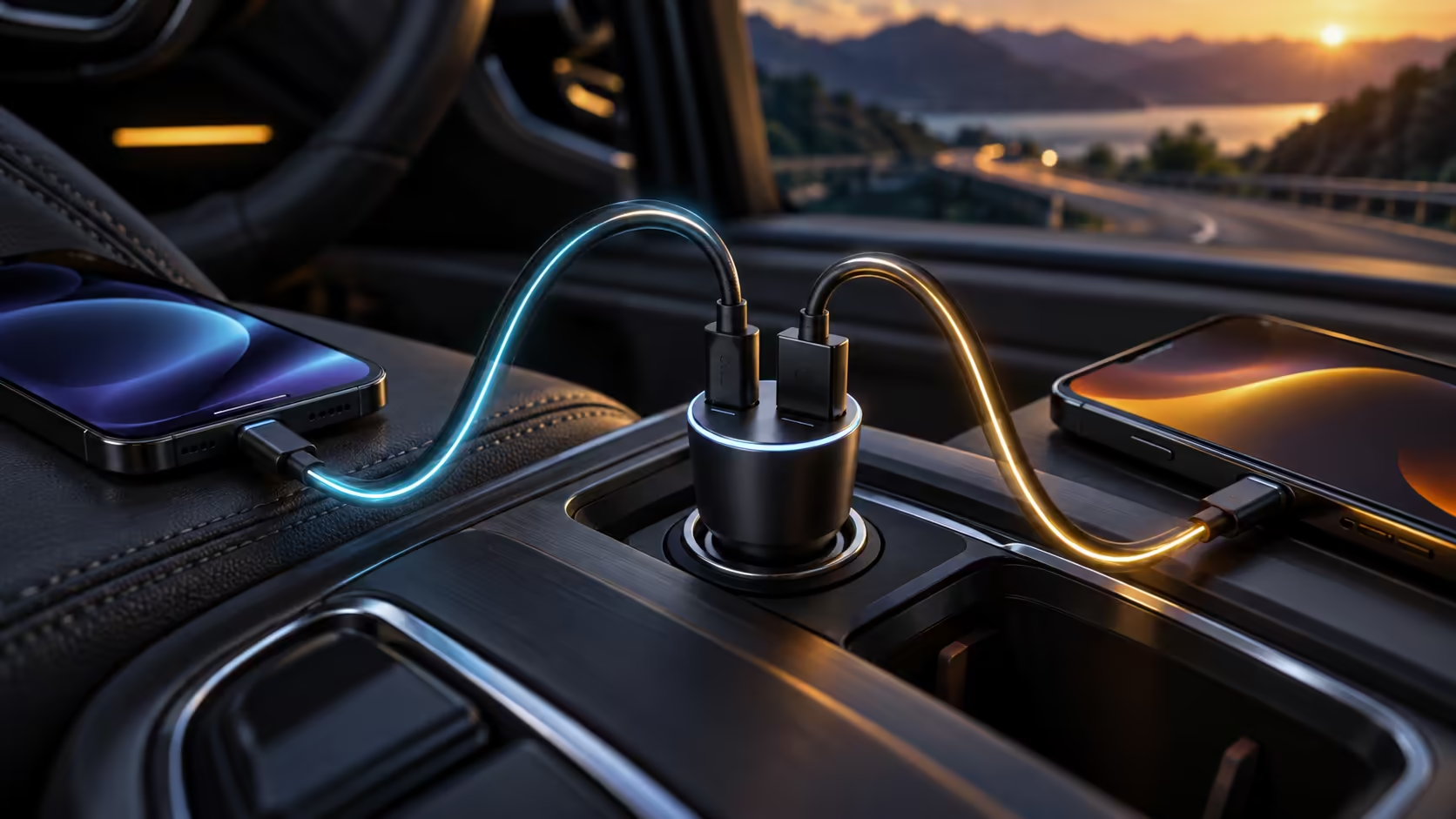
Ask a charger to power everything from an old feature phone to a current flagship off the same two ports, and it needs a way to work out what each device actually wants before it sends anything. PowerIQ 3.0 is Anker's name for that detection layer, and knowing what it checks is the key to why one port can treat two very different devices so differently.
Quick Answer
PowerIQ 3.0 is the layer that reads what a connected device is asking for and matches the output to it, rather than pushing one fixed voltage at everything regardless of what is plugged in. A phone with USB Power Delivery negotiates a specific voltage up to the port's ceiling, while older or simpler devices are met with whichever legacy scheme they expect instead. It runs on Anker's R349 two-port charger, alongside a 30W USB-C PPS output and a 22.5W USB-A output.
🔍 The problem a multi-protocol charger has to solve
USB charging has accumulated several different negotiation schemes over the years, not one universal standard. USB Power Delivery is the modern approach most current phones use over USB-C, but plenty of older devices, and the USB-A port itself, rely on earlier schemes that signal what they want in different ways entirely.
A single charger built to serve both a modern phone and an older accessory has to speak more than one of these languages, and it has to work out which one applies before it sends any meaningful current. Getting that detection wrong either short-changes a device that could have taken more power, or risks pushing a voltage a simpler device was never built to expect.
⚡ How the detection actually works
On the USB-C side, detection happens through the Configuration Channel pin built into the connector, which both ends use to exchange a digital handshake before real power flows. That is the same channel Power Delivery and PPS negotiations run over, so a PowerIQ-style layer here is mostly about correctly running that standard PD conversation and matching the resulting voltage to what the phone requested.
Legacy USB-A detection works differently, historically relying on specific voltage patterns applied to the data pins, since older USB-A devices never had a Configuration Channel to negotiate through. A detection layer supporting older Apple devices, Qualcomm Quick Charge accessories or generic 5V-only gadgets over USB-A has to recognise which pattern a connected device expects and respond with the matching one, entirely separately from how the USB-C side operates.
🔋 Why this matters more with two ports than one
A single-port charger only ever has to solve this problem once per session, for whatever is plugged into its one socket. A two-port unit runs the detection independently on each side, and it also has to divide its shared internal supply between whatever the two negotiations conclude.
That is where PowerIQ-style detection and power sharing meet. If the USB-C side negotiates a PD phone up near its ceiling while the USB-A side is only asked for a modest 5V by an older accessory, the two ports are not drawing anywhere near equally, and a well-designed detection layer accounts for that rather than treating both sockets identically regardless of what is actually plugged in. A power bank charging alongside a phone is a good example, since a power bank's own charging circuit typically asks for a modest, steady rate that barely registers as a claim on the shared supply.
🔌 What this does not do
Detection decides what voltage and current a device is offered; it does not raise the charger's overall ceiling or invent power the converter does not have. A phone correctly identified as PD-capable still only gets up to the port's stated maximum, and two devices detected correctly on both ports still share whatever combined budget the charger's internal converter can actually produce.
It is also not a substitute for a properly rated cable, since correct detection followed by a worn or thin lead still results in a slower or unstable charge; the negotiation and the physical current path are two separate things. The same detection logic sits behind a desk USB hub serving a mix of devices from one supply, which is worth knowing if the same question comes up away from the car.
🕰️ Why this used to be a much simpler problem
Older cigarette-lighter USB adapters, the kind that predate any of this negotiation, sidestepped detection by not bothering with it at all: every port sat at one unchanging voltage, usually 5V, and whatever plugged in simply helped itself to whatever current it was built to take. That worked fine because almost nothing on the market back then asked for more than a modest 5W or so, so there was genuinely nothing to negotiate over.
Detection became necessary once phones started asking for meaningfully more power than that flat baseline, and once several competing fast-charging schemes appeared at roughly the same time rather than one clear successor emerging first across the whole market. A charger built only for one of those schemes charges everything else at the old baseline rate, which is the gap a multi-protocol detection layer like this one exists to close for good.
Frequently Asked Questions
Does PowerIQ 3.0 make charging faster than a generic PD charger?
Not by itself. It ensures the right protocol is used for whatever is connected, which avoids under-charging a device the port could have served better, rather than raising the port's own ceiling.
Do I need to configure anything for detection to work?
No. It runs automatically the moment a device connects, based on the pins and signals that device presents.
Can this detection layer be fooled by an unusual accessory?
Rarely with common devices, since the major protocols are well established, though a highly nonstandard or faulty accessory can occasionally negotiate a lower, safer fallback rather than its intended rate.
Does detection work the same way on both ports?
No. USB-C detection runs over the Configuration Channel pin as part of Power Delivery; USB-A detection relies on older voltage-pattern signalling, since that port predates the newer standard and never had access to that dedicated channel for a proper digital handshake.
Ready to charge a mix of devices from one port?
Have a look at the car charger range for a unit built to handle more than one protocol.