Quick Answer
A quiet work-from-home PC in South Africa needs fluid dynamic bearing fans, a properly configured PWM curve, and tidy cable management to keep noise below 25 dBA at idle. These three elements together produce a machine that is inaudible during video calls and comfortable to sit next to for an eight-hour workday.
Fan Selection for a WFH-Quiet Build ✨
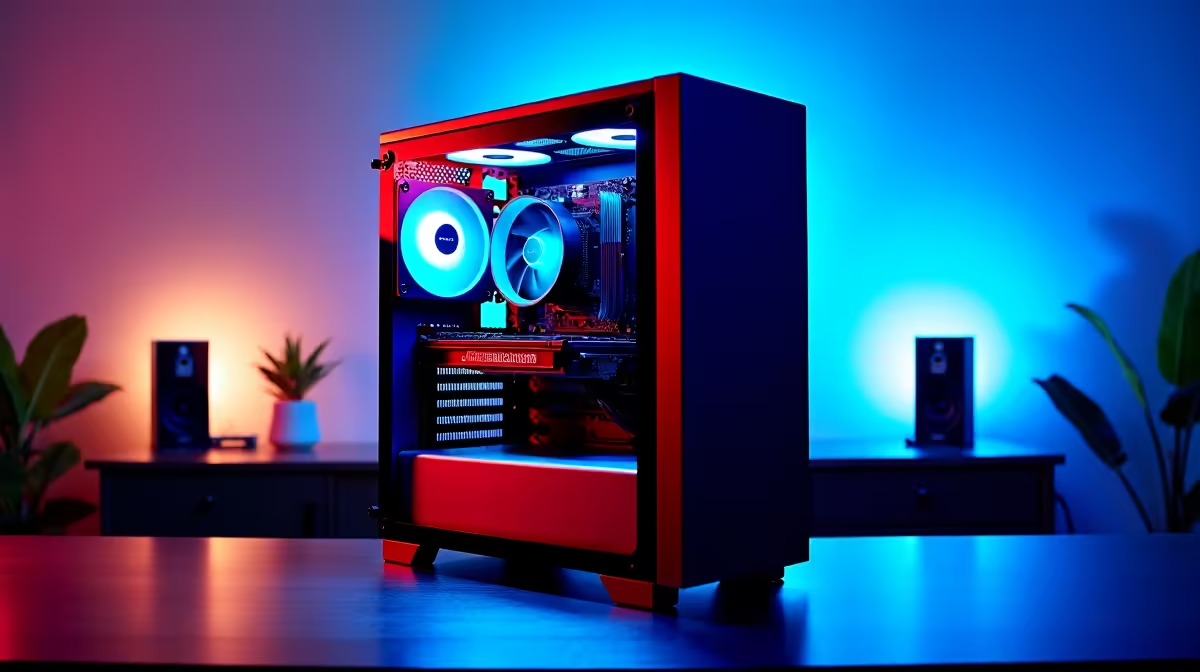
Work-from-home builds prioritise silence over peak performance. The target is a system that runs at 22 to 25 dBA during document work, web conferencing on platforms like Microsoft Teams or Google Meet, and light creative tasks. Achieve this by choosing 120mm or 140mm fans with FDB bearings, a minimum duty cycle of 15 to 20%, and a maximum noise rating below 28 dBA. Three fans in a quality mid-tower is adequate: two front intake and one rear exhaust. Pairing these with a Be Quiet! or Noctua-class CPU cooler (both available stocked locally) keeps the entire system audibly silent at idle even in a room with Openserve fibre routing equipment humming nearby.
Cable Management's Role in Thermal and Acoustic Performance 🔧
Cable clutter in the main chamber is not just unsightly; it directly reduces airflow and increases noise. A thick bundle of PSU cables sitting in front of the GPU creates a partial blockade that forces intake air to divert around it, increasing turbulence and the fan RPM needed to compensate. In a quiet build, this turbulence adds 3 to 6 dBA of broadband noise. Routing all modular PSU cables behind the motherboard tray, using cable combs for parallel runs, and securing SATA cables flat against the rear panel removes these blockages. Many modern cases designed for the South African mid-range market (R1,500 to R3,000) include cable routing channels, rubber grommets, and Velcro straps as standard.
PWM Curves for All-Day Quiet Operation 🖥️
For a WFH setup running a Ryzen 5 9600X or Ryzen 7 9700X on productivity tasks, CPU temperatures rarely exceed 55 degrees Celsius during normal workloads. Configure a fan curve that holds 25% duty cycle from startup to 50 degrees Celsius and ramps to 45% by 65 degrees. This keeps the entire case near-silent for the majority of the workday. Reserve the 70 to 100% duty range for thermal emergencies only. At 25% duty, a quality FDB 120mm fan spins at approximately 450 to 500 RPM, which is below the audible threshold of most adults in a quiet home office.
Place Your PC Tower Under the Desk ⚡
A PC placed on the desk amplifies fan noise directly toward your ears and microphone. Moving it to a carpeted floor under the desk reduces perceived loudness by 6 to 10 dBA through distance attenuation and desk-surface absorption. If carpet dust is a concern, elevate the case on a small wooden block or commercial PC stand to lift intake vents above the dust layer.
FAQ
What CPU cooler complements a quiet fan build for WFH use?
A 120mm tower cooler with an FDB fan, in the R600 to R900 price range, is the standard choice. It outperforms stock coolers at lower noise levels and keeps a Ryzen 5 or Ryzen 7 processor comfortably within thermal limits during long productivity sessions without audible fan ramp-up.
Do semi-modular PSUs help with cable management in WFH builds?
Yes. Semi-modular or fully modular PSUs let you run only the cables your build actually uses. Removing unused GPU power leads, extra SATA cables, and second ATX connectors can reduce the cable count in the main chamber by 40 to 60%, directly improving airflow and aesthetics.
Is a glass side panel quieter than a solid steel panel?
No. A glass panel transmits fan noise outward more efficiently than a damped steel panel with foam backing. For the quietest possible build, a solid steel side panel with adhesive foam damping material cuts radiated fan noise by 3 to 5 dBA compared to a glass panel of the same thickness.
Building a quiet PC for your SA home office?
Evetech stocks silent-rated fans, semi-modular PSUs, and cable management accessories suited to work-from-home builds. Browse the PC components section to plan your quiet build.