


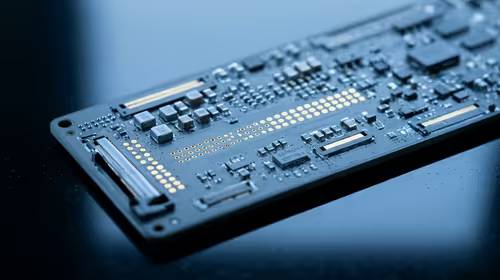
Hot-Swappable PCB Architecture in Modern Keyboards: Guide
Learn hot-swappable PCB architecture in modern keyboards—what it is, how sockets and traces work, and how to pick the right board. Speed up swaps, reduce risk, and upgrade faster 🔧⚡
Read moreRight, pick a modern PC case when the build genuinely needs gaming PC use and overclocking headroom. Mid-range 360mm AIOs land near R2,800 to R4,500, premium ARGB LCD models R5,500 to R9,000, flagship displays past R10,000.
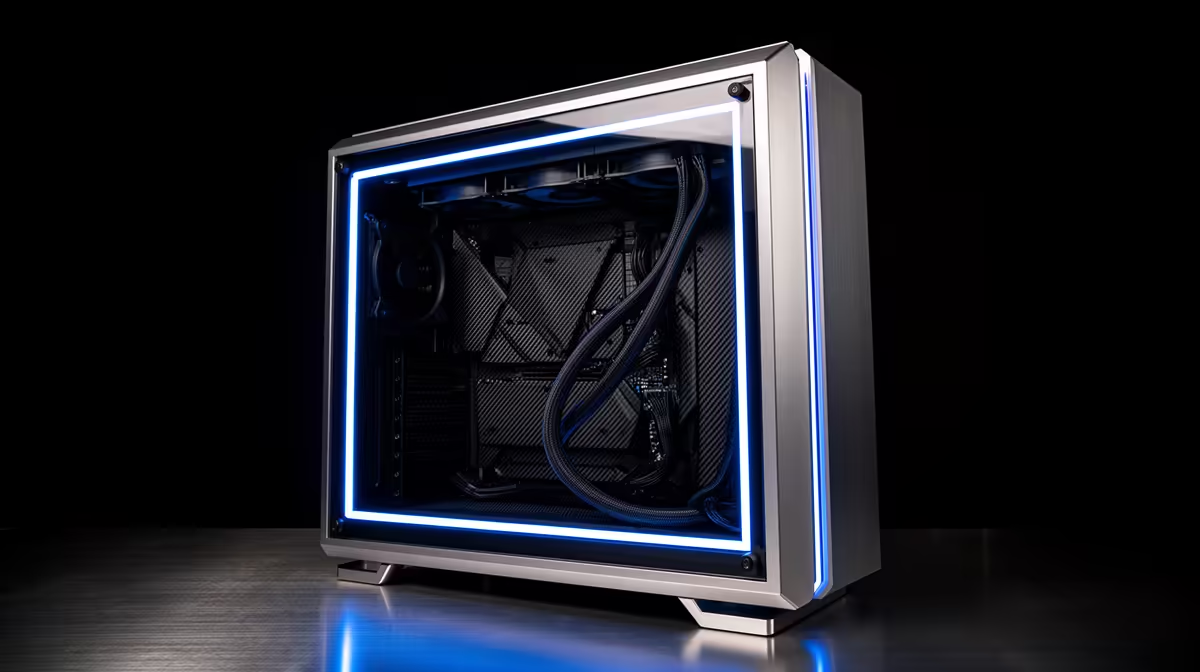
For SA builders watching the Rand, the premium case features worth paying for are: genuine mesh front panels, documented 360mm radiator support, USB-C front panel header, and at least 20mm of rear cable routing space. Features not worth the premium include aluminium side panels, curved tempered glass, and dual-chamber layouts unless those specifically match your use case.
A mesh front panel is the single most performance-impactful case feature. Compared to a solid or restricted-vent panel, a full hex-mesh front drops GPU temperatures by 5°C to 10°C under load, keeps fans running at lower RPMs, and extends component lifespan measurably. The premium for a genuine mesh case over an otherwise identical solid-front case is typically R200 to R500. At current South African GPU prices of R10,000 to R35,000 for a mid-range to flagship card, a R300 investment in better airflow is exceptional value. Documented 360mm AIO support is the second performance-relevant premium: a R400 upspend on a case that officially supports a 360mm radiator mount versus one that tops out at 240mm gives you a permanent thermal upgrade path as your hardware evolves.
USB-C is increasingly the primary connector for gaming headsets, controllers, and smartphones in the SA market. A case without a front USB-C header forces you to run cables to the rear I/O panel or use a hub, both inconvenient. The premium for a front USB-C panel on a case is R100 to R300 over otherwise equivalent cases without it. This is a one-time cost for a feature you will use daily. Verify the header type: USB 3.2 Gen 2 (10Gbps) front panel headers are standard on cases above R1,500. USB 3.2 Gen 2x2 (20Gbps) headers are available on premium cases above R2,000 but are overkill for most peripheral connections.
Tempered glass side panels at R150 to R300 premium over steel-panel equivalents are worthwhile for visibility and resale value. Aluminium panels at R400 to R800 premium are purely aesthetic and add negligible functional benefit for a typical gaming build. Dual-chamber layouts (where the PSU and storage sit in a separate compartment from the motherboard and GPU) improve cable management and airflow but add R600 to R1,200 to the case cost and a significant size increase. For SA builders prioritising Rand value, single-chamber cases with good routing channels deliver 90 percent of the cable management benefit at a fraction of the cost.
Some budget cases are marketed with a mesh aesthetic but use a perforated steel panel with only 20 to 30 percent open area behind a decorative mesh grille. Find the case's open area percentage in independent reviews before purchasing. Genuine hex-mesh panels are 60 to 75 percent open. This single figure separates true airflow cases from visual imitations.
Yes, when the extra R500 buys a documented spec sheet, verified fit for standard components, and accessible warranty support. Generic cases from unknown brands frequently have undocumented clearance figures that do not match advertised specifications, leading to fitment issues with GPUs, AIOs, or PSUs.
Generally yes. Cases above R1,800 often include PWM or ARGB fans rated at 1,500 to 2,000 RPM with FDB or fluid-bearing motors.
For a R30,000 build, allocate R1,800 to R2,500 for the case. This represents 6 to 8 percent of build cost, which is appropriate for a component that houses and protects everything else.
Getting maximum value from your PC build budget? Browse Evetech's case range across all price points with full spec details to find the best feature-to-Rand ratio for your next build.
Learn hot-swappable PCB architecture in modern keyboards—what it is, how sockets and traces work, and how to pick the right board. Speed up swaps, reduce risk, and upgrade faster 🔧⚡
Read more
Mechanical switch lifespan explained—what the 50 million keystroke rating really means, plus tips to extend switch life and reduce double-press issues 🔧⌨️
Read more
60-percent vs full-size mechanical keyboard layouts—learn what each layout includes, who it suits, and how to choose the right fit 🧩⌨️ for typing, gaming, and productivity.
Read more
Double injection keycaps last far longer than standard printed keycaps in most setups. Learn typical lifespan ranges, what shortens them, and how to maximize durability for smoother daily typing and gaming 😊⌨️
Read more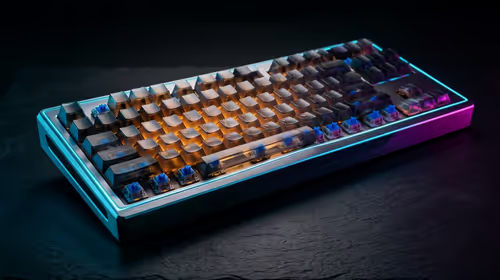
Full-key anti-ghosting: does it stop missed inputs during fast-paced gaming? We break down latency, polling, and key matrix limits so you can buy smarter 🎮⚡
Read more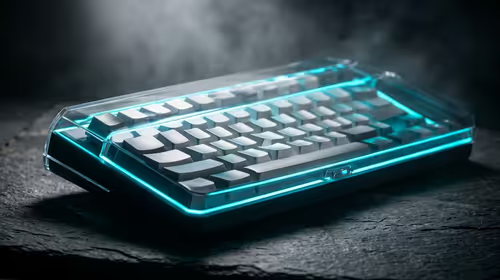
Protect mechanical keyboard switches from South African dust and summer humidity with practical cleaning and storage habits. Keep your switches smooth, reduce failures, and extend lifespan. 🌬️💧
Read more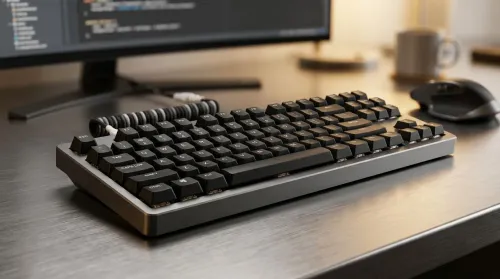
Wondering if a TKL wireless mechanical keyboard is worth it for everyday productivity? We break down latency, battery life, comfort, and workflow gains for real work. ⚡⌨️

Maximise battery life on a fanless 15-inch laptop using efficiency core architecture. Cut idle drain, tune power profiles, and improve thermals for longer runtime. 🔋⚙️
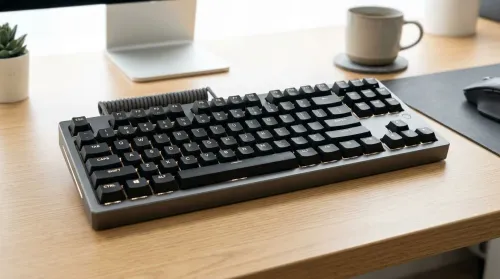
Learn how to reduce desk clutter with a TKL wireless keyboard using fewer cables, smart placement, and tidy essentials. Get a faster, calmer workspace with better ergonomics. ✅🧼
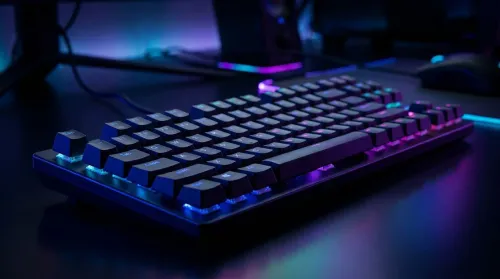
RGB keyboard lighting too distracting? Learn how to manage backlight modes, set brightness, and reduce distraction for focus and productivity 😌🖱️

Are themed gaming keyboards worth the extra cost? Compare build quality, switch options, features, and resale value to find the best fit for your setup 🎮⌨️
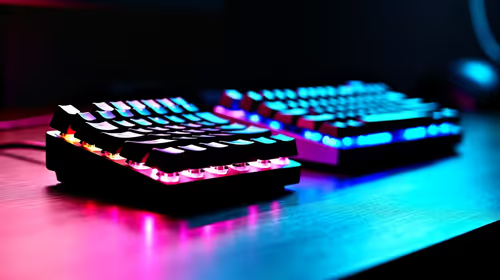
Full-Size vs Tenkeyless mechanical keyboards for gaming: find out if a smaller layout truly improves aim, speed, and comfort. We break down layout, desk space, latency-feel, and keybinds 🎮⌨️

Dedicated media rollers vs function key shortcuts: learn which setup gives you better workflow control, faster media access, and fewer mistakes. 🖱️🎧
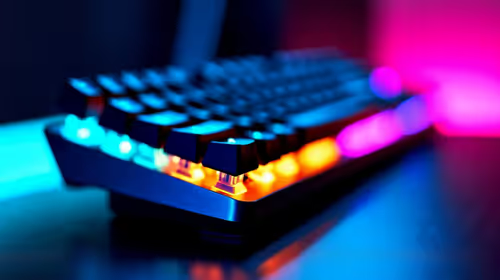
Best Mechanical Switch Type for Gaming: Clicky vs Linear vs Tactile. Find your feel, speed, and noise balance with practical guidance for FPS, MOBA, and productivity 😄🎮
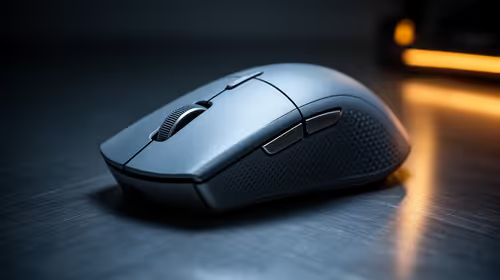
Direct mouse answer: Mouse not keeping up with your work? Everything that matters about dual-mode 2.4GHz + BT 5.0: DPI behaviour, channel switching, battery curves and per-app button mapping. Covers when 2.4GHz USB wins (low-latency desk) and when BT 5.0 wins (laptop, d

Plain wireless mouse guide: Mouse not keeping up with your work? Everything that matters about wireless productivity mouse: DPI behaviour, channel switching, battery curves and per-app button mapping. Includes DPI tuning tips, channel switch shortcuts, and ZAR-aware fea
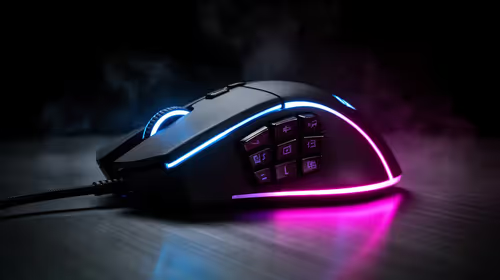
Real productivity numbers: Set up your wireless mouse in this order: everything that matters about wireless productivity mouse: DPI behaviour, channel switching, battery curves and per-app button mapping. Includes DPI tuning tips, channel switch shortcuts, and ZAR-aware
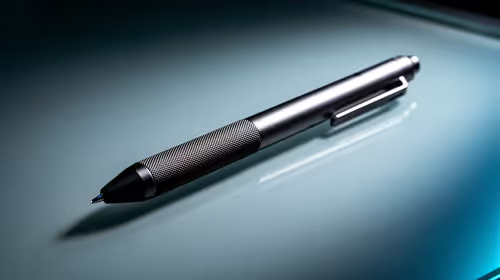
Pen not feeling like paper? Stylus lag and skipping usually trace to old drivers, dirty nibs, or display refresh mismatches, not the pen itself. Covers pressure curve tuning, tilt thresholds, nib swap timing, and SA pricing brackets.