


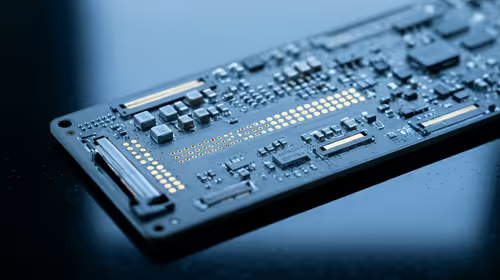
Hot-Swappable PCB Architecture in Modern Keyboards: Guide
Learn hot-swappable PCB architecture in modern keyboards—what it is, how sockets and traces work, and how to pick the right board. Speed up swaps, reduce risk, and upgrade faster 🔧⚡
Read moreUncover the ultimate 1440p champion: RTX 3080 vs RX 6950 XT showdown. 📊 GPU benchmarks, 🌟 120+ FPS insights + power efficiency secrets revealed ⚡
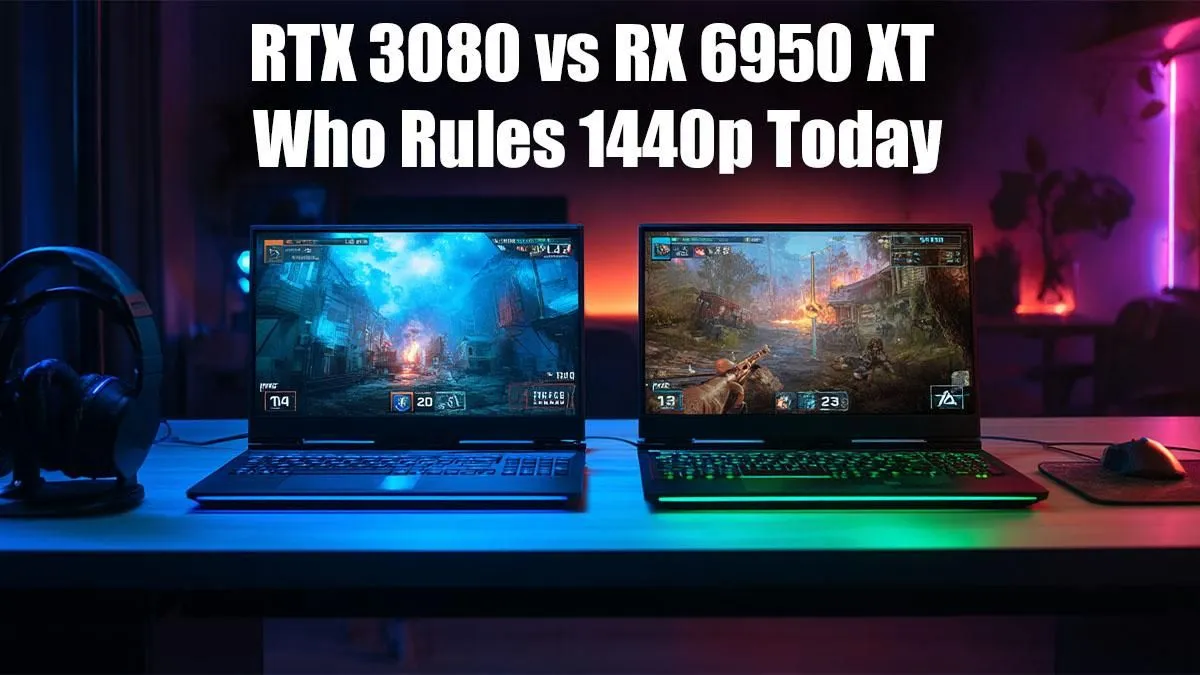
Alright, South African gamers, ever stare at your 1440p monitor, wondering if your rig is truly giving you the best visual feast? The hunt for buttery-smooth frame rates and stunning graphics at this sweet-spot resolution often boils down to a classic showdown. Today, we're pitting two titans against each other: the NVIDIA RTX 3080 and the AMD RX 6950 XT. This isn't just a spec sheet comparison; it's an RTX 3080 vs RX 6950 XT: 1440p Performance Clash to decide your next upgrade. Let’s dive in! 🚀
NVIDIA’s GeForce RTX 3080, launched as a high-end Ampere card, quickly became a favourite for serious 1440p and even entry-level 4K gaming. Boasting 10GB or 12GB of GDDR6X memory, it brought significant improvements over its predecessors, especially in ray tracing performance. For many, it represented the pinnacle of high-refresh-rate 1440p gaming without breaking the bank for the top-tier 3090. Its well-established driver support and robust ecosystem, including DLSS (Deep Learning Super Sampling), have kept it relevant even as newer generations emerge.
Enter AMD’s Radeon RX 6950 XT, the refreshed RDNA 2 flagship designed to directly challenge NVIDIA’s high-end offerings. With a hefty 16GB of GDDR6 memory and higher clock speeds than the original RX 6900 XT, this card was engineered for raw rasterisation power. AMD positioned it as a compelling alternative, especially for gamers prioritising traditional frame rates in non-ray-traced titles. Its FreeSync ecosystem and FidelityFX Super Resolution (FSR) technology provide excellent value for many South African gamers.
When we talk about an RTX 3080 vs RX 6950 XT 1440p performance clash, we’re looking at two cards that trade blows depending on the game. Generally, in traditional rasterisation (non-ray tracing) titles, the RX 6950 XT often holds a slight edge, sometimes delivering a few more frames per second. Games like Forza Horizon 5, Assassin's Creed Valhalla, and Cyberpunk 2077 (without ray tracing) can see the Radeon card stretch its legs.
However, the moment ray tracing is introduced, the tables often turn. The RTX 3080, with its dedicated RT Cores, typically offers a superior ray tracing experience, maintaining higher frame rates in titles like Control, Metro Exodus Enhanced Edition, and Cyberpunk 2077 with RT enabled. This is where NVIDIA's architecture truly shines.
Always check independent benchmarks for the specific games you play most. Driver updates and game patches can significantly shift performance metrics, sometimes giving one card an unexpected boost over the other. Adjusting in-game settings is also key to hitting that sweet 1440p spot.
Beyond raw frame rates, the supporting technologies are crucial.
It’s worth noting that while desktop GPUs are the focus here, the underlying technologies trickle down. If you're considering expanding your gaming setup, you can find fantastic deals on laptops that leverage similar performance principles. Check out the latest laptop specials for sale in South Africa at Evetech to complement your desktop rig.
Pricing is always a critical factor for South African gamers. While specific prices fluctuate, both the RTX 3080 and RX 6950 XT have seen varying availability and price points. Historically, the RX 6950 XT often represented strong performance-per-rand value, especially for those less concerned with cutting-edge ray tracing. The RTX 3080, on the other hand, often commanded a premium due to its ray tracing prowess and DLSS.
When weighing up the RTX 3080 vs RX 6950 XT for your 1440p setup, consider your budget and game library. Are you a competitive esports player primarily? Or do you chase the most visually stunning single-player experiences? For top-tier gaming on the go, Evetech also has some of the best gaming laptop deals that can offer incredible performance in a portable package. Whether you lean towards AMD laptops on special or powerful Intel laptops on special, there’s a solution for every gamer.
Ultimately, the winner of this RTX 3080 vs RX 6950 XT 1440p performance clash depends on your priorities.
Both cards are exceptional for high-refresh 1440p gaming, promising an incredible visual and fluid experience. The choice boils down to brand preference, specific game performance, and the features that matter most to your gaming style. ✨
Upgrade Your Arsenal Today! Ready to experience gaming like never before? Evetech has a wide selection of components and pre-built PCs to power your 1440p adventures. Shop now at Evetech for performance that leaves lag in the dust.
RTX 3080 typically runs cooler at 1440p under sustained load scenarios.
RX 6950 XT pushes 120+ FPS in titles like Cyberpunk 2077 @ 1440p ultra settings.
NVIDIA RTX 3080 crunches 1440p ray tracing with DLSS AI acceleration support.
Check price-to-performance trends – RTX 3080 often wins affordability in SA.
RX 6950 XT recommends minimum 750W vs RTX 3080's 650W for optimal 1440p performance.
Monitor temperature benchmark leaks – RTX 3080 maintains consistency past 80°C thresholds.
RX 6950 XT benefits from premium liquid cooling setups during extended 1440p gaming sessions.
Learn hot-swappable PCB architecture in modern keyboards—what it is, how sockets and traces work, and how to pick the right board. Speed up swaps, reduce risk, and upgrade faster 🔧⚡
Read more
Mechanical switch lifespan explained—what the 50 million keystroke rating really means, plus tips to extend switch life and reduce double-press issues 🔧⌨️
Read more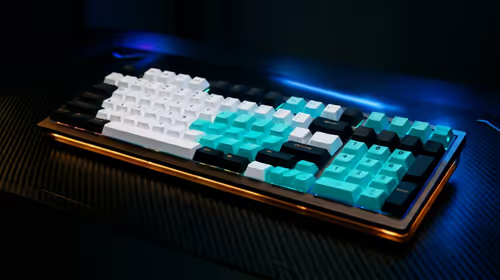
60-percent vs full-size mechanical keyboard layouts—learn what each layout includes, who it suits, and how to choose the right fit 🧩⌨️ for typing, gaming, and productivity.
Read more
Double injection keycaps last far longer than standard printed keycaps in most setups. Learn typical lifespan ranges, what shortens them, and how to maximize durability for smoother daily typing and gaming 😊⌨️
Read more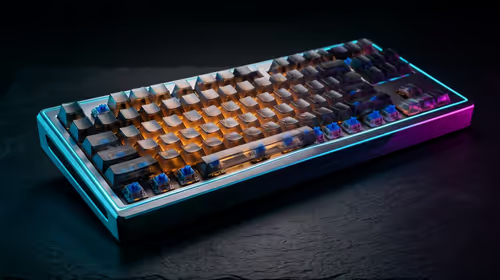
Full-key anti-ghosting: does it stop missed inputs during fast-paced gaming? We break down latency, polling, and key matrix limits so you can buy smarter 🎮⚡
Read more
Protect mechanical keyboard switches from South African dust and summer humidity with practical cleaning and storage habits. Keep your switches smooth, reduce failures, and extend lifespan. 🌬️💧
Read more
Wondering if a TKL wireless mechanical keyboard is worth it for everyday productivity? We break down latency, battery life, comfort, and workflow gains for real work. ⚡⌨️

Maximise battery life on a fanless 15-inch laptop using efficiency core architecture. Cut idle drain, tune power profiles, and improve thermals for longer runtime. 🔋⚙️

Learn how to reduce desk clutter with a TKL wireless keyboard using fewer cables, smart placement, and tidy essentials. Get a faster, calmer workspace with better ergonomics. ✅🧼

RGB keyboard lighting too distracting? Learn how to manage backlight modes, set brightness, and reduce distraction for focus and productivity 😌🖱️

Are themed gaming keyboards worth the extra cost? Compare build quality, switch options, features, and resale value to find the best fit for your setup 🎮⌨️

Full-Size vs Tenkeyless mechanical keyboards for gaming: find out if a smaller layout truly improves aim, speed, and comfort. We break down layout, desk space, latency-feel, and keybinds 🎮⌨️

Dedicated media rollers vs function key shortcuts: learn which setup gives you better workflow control, faster media access, and fewer mistakes. 🖱️🎧

Best Mechanical Switch Type for Gaming: Clicky vs Linear vs Tactile. Find your feel, speed, and noise balance with practical guidance for FPS, MOBA, and productivity 😄🎮

Direct mouse answer: Mouse not keeping up with your work? Everything that matters about dual-mode 2.4GHz + BT 5.0: DPI behaviour, channel switching, battery curves and per-app button mapping. Covers when 2.4GHz USB wins (low-latency desk) and when BT 5.0 wins (laptop, d

Plain wireless mouse guide: Mouse not keeping up with your work? Everything that matters about wireless productivity mouse: DPI behaviour, channel switching, battery curves and per-app button mapping. Includes DPI tuning tips, channel switch shortcuts, and ZAR-aware fea

Real productivity numbers: Set up your wireless mouse in this order: everything that matters about wireless productivity mouse: DPI behaviour, channel switching, battery curves and per-app button mapping. Includes DPI tuning tips, channel switch shortcuts, and ZAR-aware

Pen not feeling like paper? Stylus lag and skipping usually trace to old drivers, dirty nibs, or display refresh mismatches, not the pen itself. Covers pressure curve tuning, tilt thresholds, nib swap timing, and SA pricing brackets.