Quick Answer
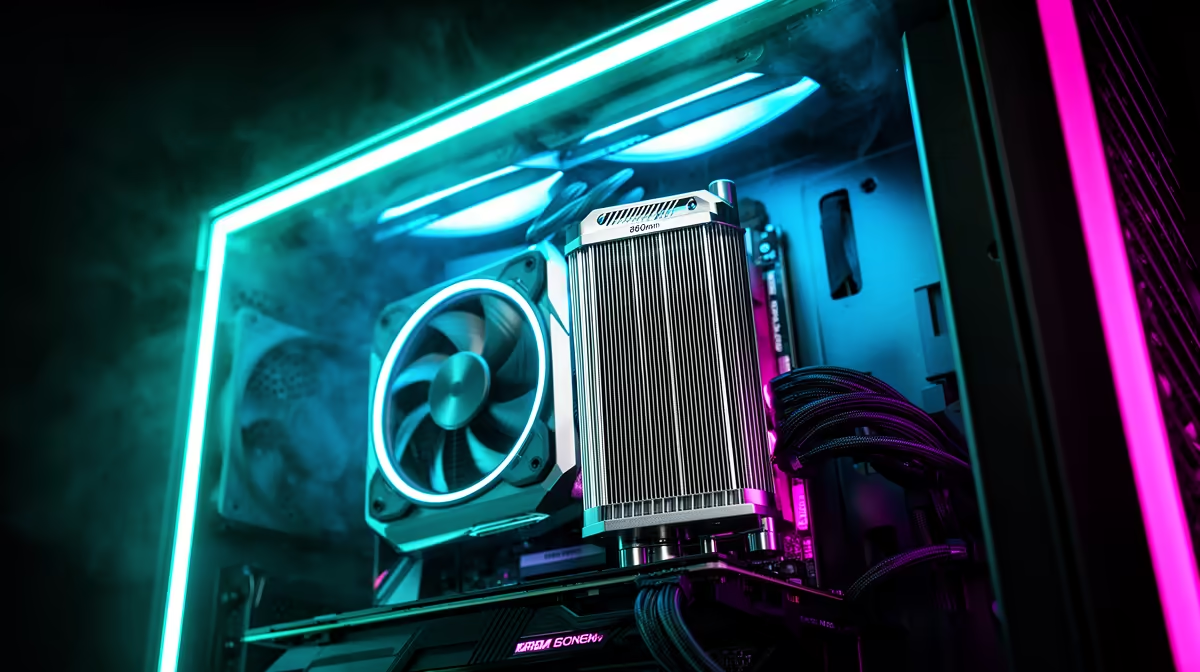
Mount the 360mm radiator at the front of the case as an intake, not the top. Front mounting keeps the radiator outside the GPU's vertical clearance zone entirely, eliminates any risk of blocking the graphics card, and improves thermal performance by pulling cool ambient air through the fins before it enters the chassis.
Why Front Mounting Solves GPU Clearance 🔧
Top-mounted 360mm radiators in mid-tower cases often conflict with tall GPU backplates or the GPU power connectors on modern RTX 50-series and RX 9000-series cards, which route cables upward from the card rather than sideways. When the radiator sits at the front, it occupies the front intake zone, which sits ahead of the GPU mounting slot entirely, so there is zero physical interaction between the radiator and the graphics card.
Radiator Thickness and Fan Stack Considerations 💨
Standard 360mm radiators are 27mm thick. Adding a 25mm fan on the intake side produces a combined stack of 52mm, which is within the tolerance of most front panels that advertise 360mm radiator support.
Tube Routing and Pump Head Positioning 🖥️
With a front-mounted radiator, AIO tubes route from the front of the case toward the CPU socket, which typically results in tubes running along the bottom or side of the case interior. Most 400mm to 450mm tube lengths on 360mm AIOs reach an ATX motherboard CPU socket from the front without tension, but verify the measurement for your specific case before committing. Position the pump head so tubes route downward rather than upward, which prevents air pockets in the pump from accumulating over time. Mounting with tubes at the six-o-clock position is the most common and most reliable orientation for long-term pump reliability according to manufacturer guidance from Corsair and NZXT.
Pre-Route Tubes Before Motherboard Install ⚡
Install the 360mm radiator and route the tubes through the case before the motherboard is in place. With the motherboard absent you can confirm tube path, check for pinch points near case fans or PSU cables, and attach the pump head bracket to the CPU socket area without fighting for space inside a fully assembled build.
FAQ
Can I mount a 360mm radiator at the top of a mid-tower ATX case safely?
Yes, if your case has 360mm top radiator support and the GPU height with its backplate clears the top radiator by at least 20mm. Check the case specification for top radiator support and GPU height clearance simultaneously. Many mid-tower cases list top 360mm support but with a noted GPU height restriction of around 300mm to 320mm, which excludes some triple-slot AIB cards.
Do I need to bleed the AIO after front-mounting the radiator?
Modern sealed AIOs do not require bleeding in the traditional sense. Running the pump at full speed for the first 15 to 30 minutes after installation allows any small air bubbles introduced during installation to consolidate in the radiator reservoir area. Audible gurgling that persists beyond 30 minutes of full-speed pump operation may indicate a larger air pocket and warrants checking tube routing for any high points where air can accumulate.
Does front intake radiator placement negatively affect case airflow?
A front intake radiator pre-heats the air before it enters the case by 3 to 6 degrees Celsius compared to ambient, which slightly raises GPU and motherboard VRM temperatures compared to a case using open mesh fans at the front. For most builds this is negligible. If your GPU is particularly heat-sensitive, adding a top exhaust fan to pull warm air out of the case faster offsets the small pre-heated air effect from the front radiator.
Need a case that fits your 360mm AIO properly?
Browse mid-tower ATX cases at Evetech with confirmed 360mm front radiator support and sufficient GPU clearance for modern graphics cards.