



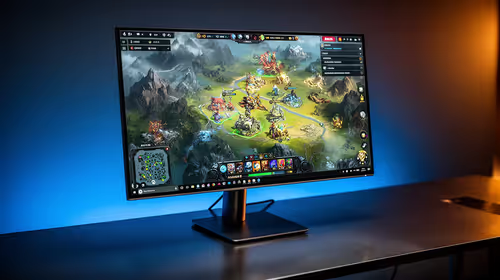
IPS vs VA for Strategy and Sim Games in SA
IPS vs VA for strategy and sim games should be judged by fit, not a single winner. Compare compatibility, latency, capacity, upgrade path, cost planning, and South African setup needs.
Read moreDeciding on the winner of **SteamOS vs Windows handheld** gaming? SteamOS offers seamless UI and battery efficiency, while Windows unlocks Game Pass and anti-cheat titles. 🎮 Discover which operating system powers your perfect playstyle! 🚀

So, you’re eyeing a new gaming handheld in South Africa? Awesome! But you’ve hit the big fork in the road: the sleek, simple SteamOS or the familiar, flexible Windows? The choice between a Steam Deck and a ROG Ally or Legion Go isn't just about hardware… it's a battle of philosophies. Let's break down the SteamOS vs Windows handheld debate to help you find the perfect portable powerhouse for your gaming sessions.
Think of SteamOS as a custom-built console interface. It’s a Linux-based operating system designed by Valve with one primary goal: to get you into your Steam games as quickly and smoothly as possible. On the Steam Deck, it's a dream. The user interface is clean, controller-friendly, and features like Quick Resume let you suspend and jump back into a game in seconds. ✨
The magic behind its compatibility with a Windows-heavy gaming world is a tool called Proton. It’s a compatibility layer that translates Windows games to run on Linux, and it works surprisingly well for thousands of titles.
However, the walled garden can feel a bit restrictive. Want to play a game from the Epic Games Store or, more importantly for many South Africans, Xbox Game Pass? It’s possible, but it requires some technical tinkering that can be a real headache. For pure, plug-and-play Steam gaming, though, SteamOS is tough to beat.
This is where devices like the ASUS ROG Ally and Lenovo Legion Go shine. They run a full version of Windows 11, the same OS you likely have on your desktop or laptop. The biggest advantage? Unmatched compatibility. If a game runs on a Windows PC, it will run on a Windows handheld. Xbox Game Pass, Battle.net, the EA App, Epic Games… everything just works. 🚀
This flexibility turns your handheld into a true portable PC. You can browse the web, manage files, and even do some light productivity work. These devices often pack serious power, leveraging the same cutting-edge components you'd find in top-tier Intel laptops on special or their powerful AMD laptop counterparts, giving you incredible performance in the palm of your hand.
The downside? Windows wasn't designed for a 7-inch touchscreen and a controller. Navigation can feel clunky, and the OS has more background processes, which can sometimes impact battery life and performance compared to the lean SteamOS.
a more console-like feel on a Windows handheld, install a frontend launcher like Playnite or GOG Galaxy. These apps unify all your game libraries (Steam, Epic, Game Pass) into a single, controller-friendly interface. It's a great way to get the best of both worlds: Windows' compatibility with SteamOS's simplicity.
When comparing SteamOS vs Windows handheld performance, it's not always a straight line. SteamOS is highly optimised for its specific hardware (the Steam Deck), allowing it to squeeze out impressive performance from its components. The shader cache pre-compilation also helps reduce stutter in many verified games.
On the other hand, Windows gives you direct access to the latest graphics drivers and more granular control over settings. For gamers who love to tweak every last setting to perfection, Windows offers more freedom. While handhelds are fantastic for gaming on the go, if you're chasing the highest frame rates and graphical settings, the raw power found in the best gaming laptop deals still holds the crown.
The right choice really comes down to you, the gamer.
Ultimately, the debate over the best OS for gaming on a handheld highlights a fantastic time for PC gamers. We have more choice than ever to play our favourite titles wherever we are.
Ready to Unleash Your Games? The SteamOS vs Windows handheld debate is complex, but for maximum power, game compatibility, and value in South Africa, a dedicated gaming machine is hard to beat. Explore our massive range of laptop specials and find the perfect rig to conquer your world, at home or on the go.
Yes, Valve provides drivers for Windows 10 and 11, allowing you to replace SteamOS or dual boot to access non-Steam launchers and Game Pass.
Generally, yes. SteamOS is highly optimized for the hardware, offering better power management and sleep features compared to a standard Windows handheld install.
Not natively due to anti-cheat incompatibility. To play games like Fortnite or Call of Duty, you must stream them or install Windows on your handheld.
Windows 11 offers maximum game compatibility, including Xbox Game Pass, but the user interface is not fully optimized for small touchscreens like SteamOS is.
SteamOS offers a console-like 'pick up and play' experience, making it much more user-friendly for pure gaming compared to the desktop environment of Windows.
Most do, but you should check for the 'Deck Verified' badge. Windows handhelds can technically run any PC game, assuming the hardware specs are sufficient.
IPS vs VA for strategy and sim games should be judged by fit, not a single winner. Compare compatibility, latency, capacity, upgrade path, cost planning, and South African setup needs.
Read more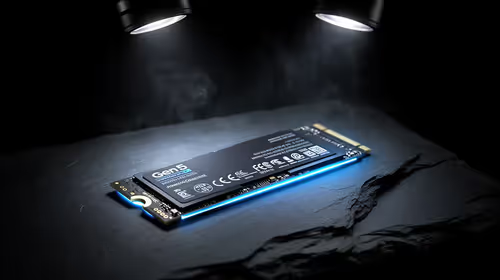
Gen 5 NVMe SSD guide for Bloemfontein gamers should be shortlisted around the job it must do. South African buyers should compare capacity, speed, thermals, and motherboard support, warranty path, and upgrade room before treating any pick as best.
Read more
Skip the RTX 5070 if your first-time builder budget needs better balance. Better SA picks can free room for the right CPU, PSU, case, monitor, storage, and cooling while still giving a strong first gaming PC experience this year in South Africa.
Read more
RTX 5080: weighing the pros and cons for SA should be shortlisted around the job it must do. South African buyers should compare GPU tier, VRAM, cooling, and PSU headroom, warranty path, and upgrade room before treating any pick as best.
Read more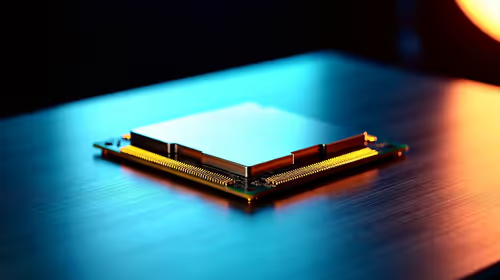
Core i5-13400F gives South African PC builders a capable mid-range CPU choice with clear limits. Check its gaming fit, discrete GPU requirement, LGA1700 platform costs, and upgrade path before locking in your parts list.
Read more
Pros and cons of the Wi-Fi 7 routers for SA should be shortlisted around the job it must do. South African buyers should compare WiFi standard, coverage, latency, and device support, warranty path, and upgrade room before treating any pick as best.
Read more
Steam content servers unreachable needs a download-path check, not an immediate reinstall of every game. Restart the client, inspect download settings and compare another connection when practical. Clearing the download cache is separate from deleting installed games.
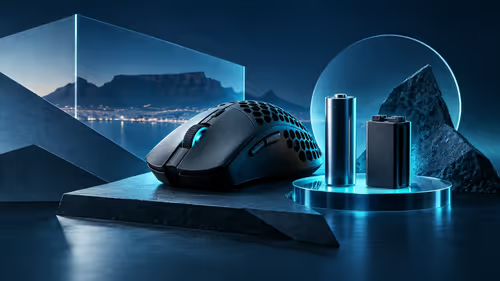
Keychron G6 HE has built-in and swappable battery versions with different weights. The product brief lists 42g and 46g respectively, each with a 3g tolerance. Choose by grip and battery preference before treating one headline weight as universal.
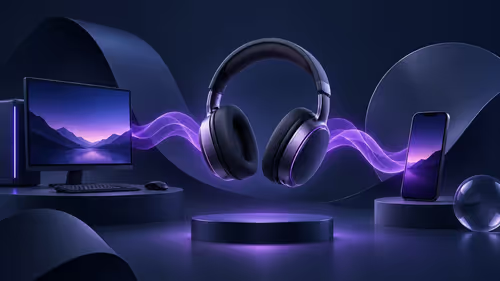
Corsair HS80 v2 MAX supports 2.4GHz wireless and Bluetooth. Its maximum battery figures use RGB-off conditions and differ by connection. Check microphone routing, comfort and the exact device support before assuming every wireless mode behaves alike.
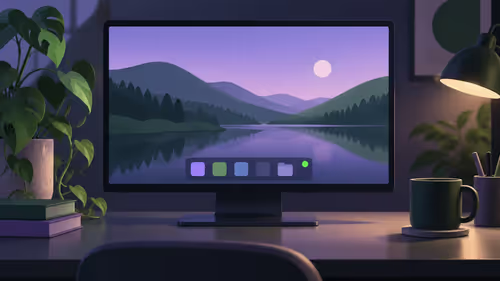
Windows taskbar notification badges can be shown or hidden in Taskbar behaviours. This changes the small app indicators, not the underlying messages. Choose a calmer desktop while keeping a deliberate routine for checking important conversations and app updates.
Windows taskbar notification badges can be shown or hidden in Taskbar behaviours. This changes the small app indicators, not the underlying messages. Choose a calmer desktop while keeping a deliberate routine for checking important conversations and app updates.
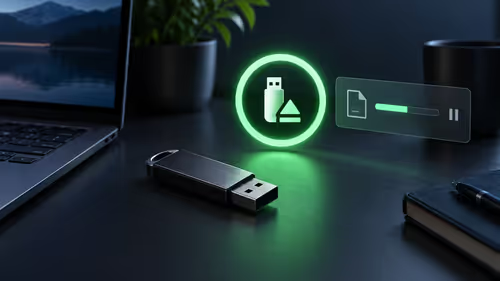
Windows USB device in use can mean a program still has the drive open. Finish transfers and close files before retrying ejection. Better performance caching requires safe removal; a replacement drive is not the first fix for an open-file warning.
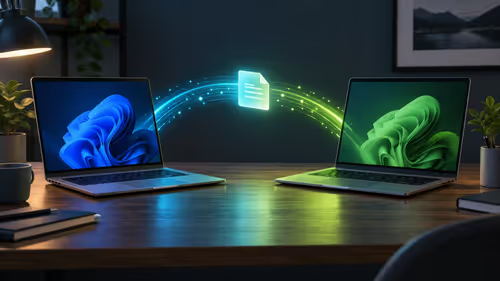
Windows Nearby Sharing not working starts with feature, Bluetooth and visibility checks on both PCs. My devices only depends on matching Microsoft accounts. Test a small harmless file before buying networking hardware or changing your home router.
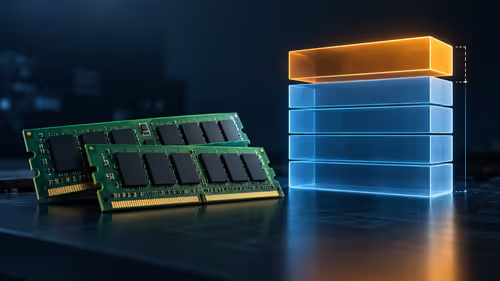
Windows hardware reserved RAM is different from memory used by applications. Compare installed memory with firmware detection and the usable amount before buying modules. Reservations and reporting limits vary by system; no universal setting restores every byte.
Windows title bar window shake can minimise other open windows when you shake the active window by its title bar. Inspect the Multitasking setting and switch it off if that gesture interrupts your work. The preference costs R0 and does not require new hardware.
Windows Print Screen opens Snipping Tool when its keyboard preference is enabled. Change the option under Accessibility, Keyboard to choose another workflow. Test whether you need a clipboard image or a saved file.

Windows desktop icons missing may be a visibility setting. Right-click the desktop, choose View and inspect Show desktop icons. If only system icons are absent, use Desktop icon settings. Check the Desktop folder before assuming files were deleted.

Windows set time zone automatically greyed out calls for a location and device-policy check. Automatic time-zone selection relies on location services. A manual time-zone choice is separate from synchronising the clock; check both before replacing hardware.