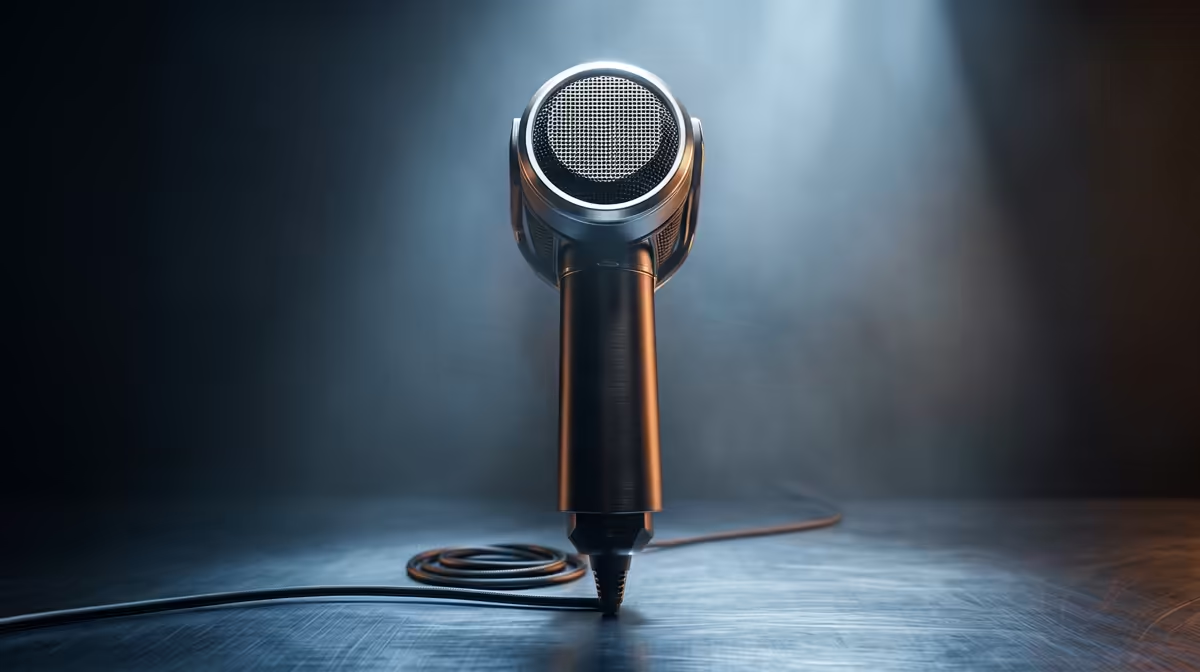
A streaming microphone is the highest-impact audio upgrade you can make, and in shared housing the cardioid pickup pattern matters more than any other spec.
Quick Answer
For the matric-to-varsity jump, the streaming-mic buying order is: must-have is a cardioid USB mic (HyperX SoloCast, around R1,500); nice-to-have is a boom arm and pop filter (about R600 together); skip XLR interfaces until you're serious. A USB mic plugs straight into a laptop and sounds far better than any built-in.
Start with a cardioid USB mic
The single biggest audio upgrade for a student streamer, podcaster or online-class user is a cardioid USB microphone. A HyperX SoloCast (R1,500) or Blue Yeti-class mic (R2,500) picks up your voice clearly while rejecting room noise, and plugs straight into a laptop with no interface. For matric presentations through varsity group calls, that clarity is the must-have first buy.
Nice-to-haves, then what to skip
Add a desk boom arm and pop filter (around R600 together) next - they cut keyboard thumps and plosives and keep the mic at a consistent distance. Skip XLR mics and audio interfaces until you're doing serious music or pro podcasting; for streaming and study, a USB mic is all you need. Buy in that order and every Rand improves your sound where it's heard.
FAQ
USB or XLR mic for a student streamer?
USB - it plugs straight into a laptop, needs no interface and sounds excellent. A HyperX SoloCast (~R1,500) is the ideal first mic; save XLR for serious music or pro podcasting later.
Do I need a boom arm and pop filter?
They're worthwhile nice-to-haves (around R600 together) that cut desk noise and plosives and keep the mic at a steady distance. Buy them after the mic itself.
What's the cheapest worthwhile streaming mic?
A cardioid USB mic around R1,500, like the HyperX SoloCast, transforms your sound over any laptop or webcam mic and needs nothing else to work.
Buy a cardioid USB mic first, add a boom arm and pop filter next, and skip XLR until you genuinely need it - that order puts your budget where it's heard.