Quick Answer
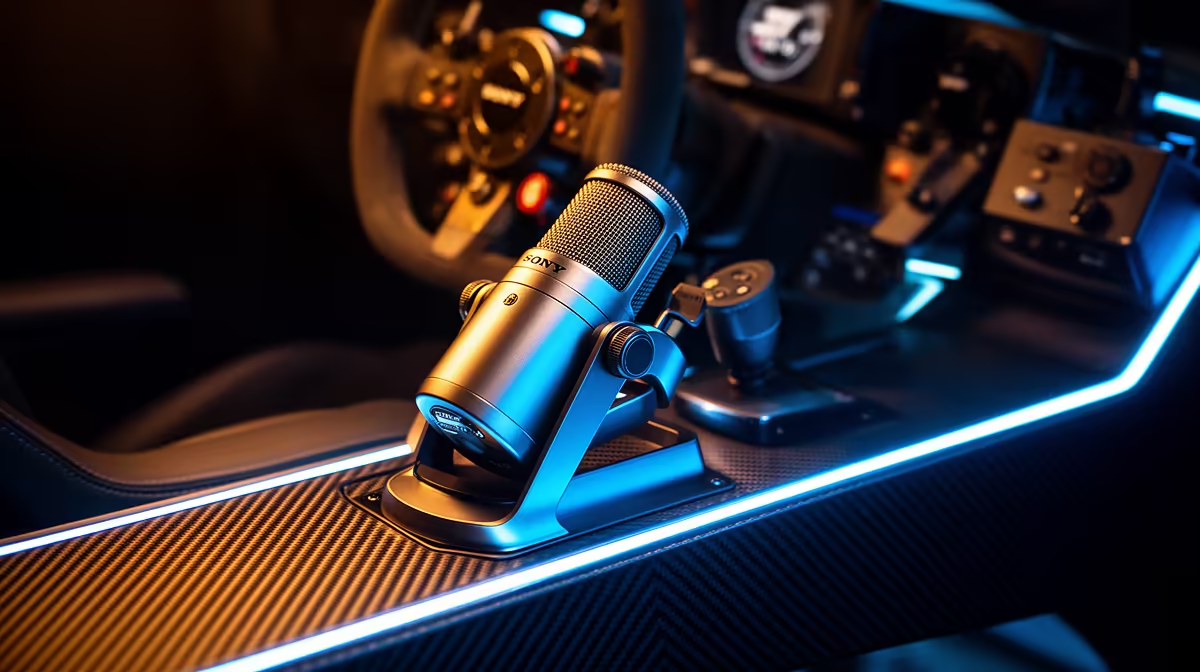
In a racing-wheel cockpit, a streaming mic must reject wheel and pedal noise, so a cardioid mic on a boom arm, not a desk stand, is the upgrade path. Start with a R900 to R1,500 USB cardioid mic clamped to the rig, then add a R450 to R900 boom arm to position it near your mouth and away from the wheelbase rumble.
Why a cockpit changes the mic choice
A racing cockpit is a noisy place: the wheelbase rumbles, pedals clunk, and force feedback adds vibration. A desk-stand mic picks all of that up. The upgrade path starts with a R900 to R1,500 USB cardioid mic, whose tight pickup pattern rejects sound from the sides and rear, exactly where the rig noise comes from. Clamp it to the cockpit frame rather than a flat surface so vibration doesn't travel into the mic body, which keeps your commentary clear over the mechanical noise.
Boom arm and positioning are the real fix
The biggest gain is a R450 to R900 boom arm mounted to the cockpit, floating the mic near your mouth so your voice stays loud relative to the rig. Position it just off-axis to avoid breath pops, and keep it above the wheel so your hands don't block it. With the mic close, you can lower the gain, which automatically reduces how much wheelbase rumble it captures. Skip multi-pattern mics here, since a single voice in cardioid is all you need; spend instead on a solid arm mount and good placement.
FAQ
Why use a cardioid mic in a racing cockpit?
Because cardioid rejects sound from the sides and rear, which is where wheelbase and pedal noise come from. That keeps your commentary clear over the rig's mechanical rumble, unlike an omnidirectional mic.
Should the mic mount to the cockpit or a desk?
Mount it to the cockpit frame with a boom arm, so it floats near your mouth and away from the noisiest parts. A desk stand transmits vibration and sits too far from your voice in a cockpit.
Do I need a multi-pattern mic for cockpit streaming?
No. A single voice is captured in cardioid, which also rejects rig noise. Spend on a sturdy boom arm and good positioning rather than switchable patterns you won't use in a cockpit.
cardioid mic on a boom arm to the cockpit frame, position it just off-axis near your mouth, and lower the gain so wheelbase rumble stays out of your stream.