Quick Answer
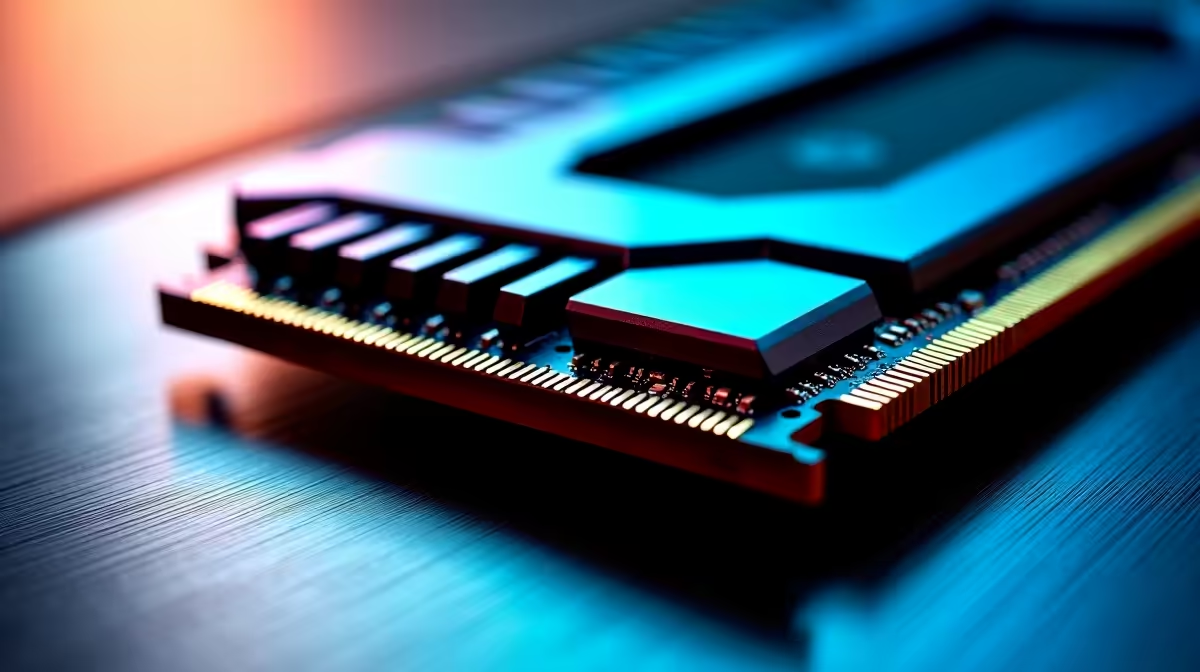
For backup and storage planning, the DDR5 short list leads with capacity over speed: a 16GB stick (R600-R900) for a light backup PC, a 32GB DDR5-5600 kit (R1,200-R1,600) for sync, compression and a few apps, and 64GB (around R2,800) for a busy file server or ZFS caching. RAM speed barely affects storage tasks, so buy gigabytes, not megahertz.
The short list, ranked by workload
Top for a simple backup target is 16GB, enough to run scheduled backups and a few apps. Next, 32GB DDR5-5600 is the volume pick for a machine that also syncs to cloud, compresses archives and serves files to a couple of devices. At the top, 64GB suits a household file server or a ZFS box whose ARC cache uses spare RAM to speed reads. Across all three, a standard 5600 speed is fine, since transfers are limited by drives, not memory clock. Buy a matched dual-channel kit for steady throughput.
Why capacity wins for storage
Backup and storage work uses RAM as a cache and a staging buffer, so more capacity speeds repeated reads and concurrent transfers, while a faster clock changes almost nothing. The money is better spent on capacity plus reliable storage drives and a fast NVMe cache than on high-speed RAM. A balanced backup build is 32GB DDR5-5600 with a 2TB NVMe cache and large storage drives sized to your data and a generation of growth. Confirm the kit on your board's QVL before ordering.
FAQ
How much RAM for a backup and storage PC?
16GB for a simple backup target, 32GB for sync, compression and serving a few devices, and 64GB for a busy file server or ZFS caching. Capacity matters far more than RAM speed here.
Does RAM speed matter for backups?
No. Backup and transfer tasks are limited by drive speed and capacity. A standard DDR5-5600 kit is fine, so spend the saving on storage drives and a fast NVMe cache instead.
Should I buy one stick or a matched kit for a storage PC?
A matched dual-channel kit gives steady throughput for concurrent transfers. Even on a storage box, two sticks beat one for bandwidth, so buy a 2x8GB or 2x16GB pair rather than a single module.
builds, buy capacity over speed, 32GB DDR5-5600 for most, and put the rest of the budget into a 2TB NVMe cache and reliable storage drives sized for growth.