Spec sheets read like alphabet soup until someone translates what each line actually changes for your build. This guide walks through every feature on the ASUS B860M MAX Gaming AX, from chipset and socket down to rear I/O and durability extras, so you know exactly what R4,499 buys before committing to a Micro-ATX build.
Quick Answer
This board is a R4,499 Micro-ATX design built on the Intel B860 chipset with an LGA 1851 socket, offering a PCIe 5.0 x16 graphics slot, triple PCIe 5.0 M.2 storage, DDR5 support up to 8666MT/s as an overclock, a rear USB-C port pushing 20Gbps with a DisplayPort feed built in, plus 2.5Gb Ethernet. It targets gaming, streaming, and content-creation builds that want a compact footprint without trimming connectivity.
🧠 The platform underneath: chipset, socket, and form factor
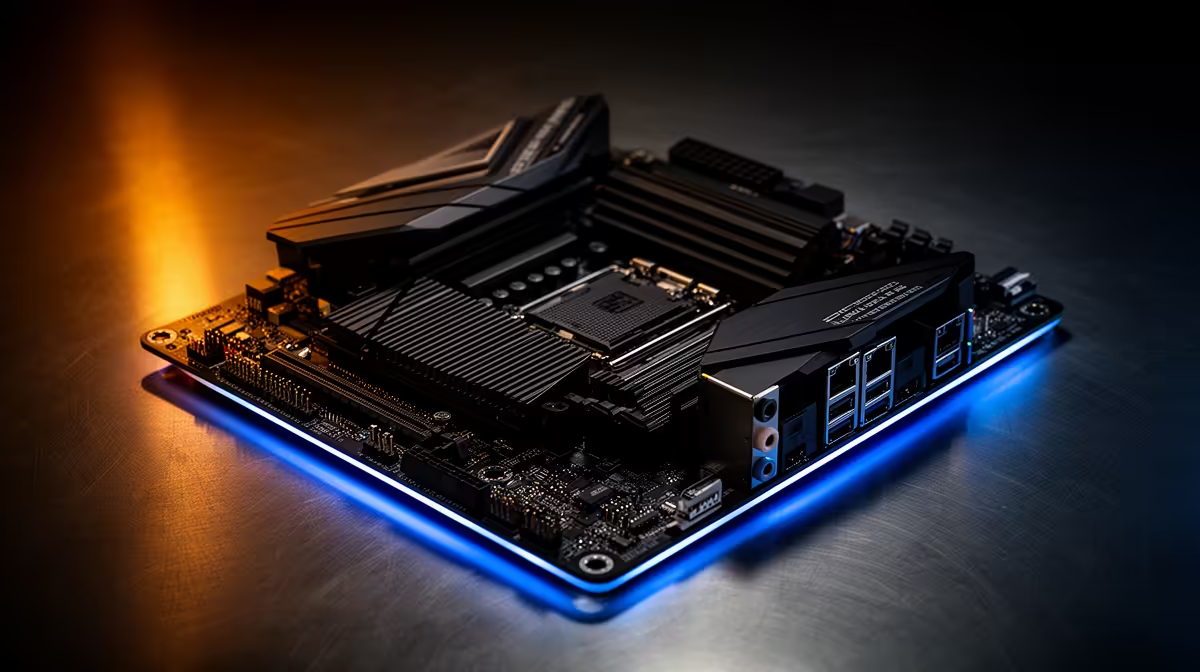
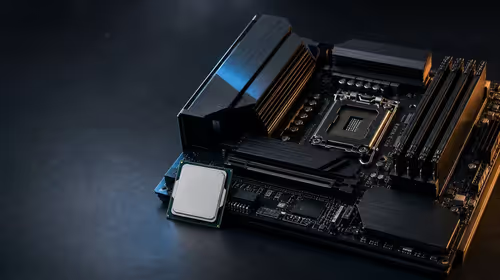
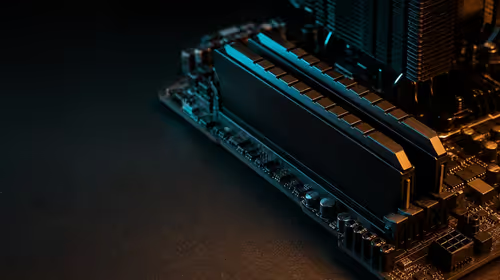
At the centre sits the Intel B860 chipset paired with an LGA 1851 socket, laid out on a Micro-ATX footprint. That combination suits builders wanting a smaller case than full ATX without giving up the features a gaming or creator rig actually uses day to day. Full specification detail, including chipset feature support, sits on this board's dedicated listing.
Why Micro-ATX instead of a full-size board
Micro-ATX trims expansion slots compared with a larger board, usually meaning fewer PCIe slots and sometimes fewer memory slots. This design compensates by packing capability directly onto the chipset rather than leaning on add-in cards, a theme that runs through the rest of its feature list. For anyone building into a smaller case to save desk space, that choice matters more than it looks on paper, since it removes the usual excuse to buy a bigger board purely for extra ports.
The practical result is that a compact case paired with this layout does not feel like a compromise build. Cable routing is simpler with fewer slots competing for space, and case options at this size tend to be cheaper and easier to fit into a room than a full tower.
💾 Expansion and storage: PCIe 5.0 x16 plus triple M.2
The graphics slot runs at PCIe 5.0 x16, twice the per-lane throughput of the PCIe 4.0 generation before it, which matters less for today's graphics cards and more as insurance against needing a new board once future GPUs demand more bandwidth. Storage gets the same treatment: three M.2 slots, all on PCIe 5.0, enough for an operating system drive, a games library, and a scratch or backup drive without a SATA cage or an add-in storage card anywhere in the build.
Memory headroom to 8666MT/s
DDR5 support tops out at 8666MT/s, reached as an overclock rather than a boot default, which is a genuinely high ceiling for this chipset tier. In practice, the payoff shows up more in steadier frame delivery than in a bigger average-fps number, so it is worth chasing once the rest of a build, the graphics card especially, is already well matched.
🔌 Connectivity and rear I/O
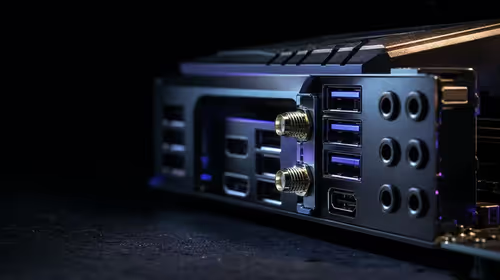
Rear connectivity centres on a USB-C port running at 20Gbps, with DisplayPort video riding along the same connection so one cable handles high-speed data and a monitor link on compatible screens. That pairs with 2.5Gb Ethernet for wired networking, which speeds up local transfers and downloads more than it changes actual internet speed, since a South African fibre package sets that ceiling regardless of port speed.
Who this connectivity mix suits
Together, the fast USB-C port and 2.5Gb LAN make this a reasonable fit for streaming and content-creation setups as well as straightforward gaming, since both workloads gain from quick external drive transfers and stable, fast wired networking.
Matching the board to a build
For a pure gaming rig, a PCIe 5.0 graphics slot, quick NVMe storage, and DDR5 headroom cover what matters most: a strong GPU, fast game loading, and enough memory bandwidth to avoid bottlenecks. Streamers gain from 2.5Gb LAN for steadier upload during broadcasts plus extra M.2 capacity for recording footage without eating into the games drive. Content creators editing video or juggling large project files benefit from that same triple-drive layout, splitting active projects, a scratch drive, and long-term storage across three separate NVMe drives instead of one crowded volume.
None of these use cases need a full-size board to be well served, which is really the point of the design: a compact footprint that does not force a compromise on any of the three.
🛡️ Build quality, durability, and extras
Beyond raw performance specs, the board includes ASUS Q-Design for tool-free building and upgrades, 5X Protection III for added electrical durability, Aura Sync for RGB lighting control, and BIOS FlashBack for firmware updates without a CPU or memory installed. None of these show up on a benchmark chart, but they cut the friction of actually building and maintaining a system, especially BIOS FlashBack, which can spare a troubleshooting headache when setting up a new CPU platform.
Frequently Asked Questions
What chipset and socket does this board use?
It uses the Intel B860 chipset with an LGA 1851 socket.
Can it take a full-size graphics card?
Yes, the PCIe 5.0 x16 slot is built to standard full-length graphics card dimensions.
How many NVMe drives can it hold?
Three, through its triple PCIe 5.0 M.2 slots, all running without a separate storage card.
Does the board support memory overclocking?
Yes, DDR5 is supported up to 8666MT/s as an overclock above the standard out-of-the-box speed.
What does BIOS FlashBack actually do?
It updates the motherboard's firmware from a USB drive without a CPU or memory installed, handy when setting up a new platform.
Is 2.5Gb Ethernet an internet speed upgrade?
No, it mainly speeds up local network transfers and downloads; actual internet speed still comes down to your fibre package.
Does the USB-C port replace a monitor cable?
On screens with a compatible USB-C input supporting DisplayPort alt mode, yes, one cable can carry both video and data.
For the wider selection on this chipset, the B860 lineup at Evetech is worth comparing, and for every other Intel platform in stock, see the full Intel board lineup.
Ready to see everything this board offers?
The ASUS B860M MAX Gaming AX resides in our Intel B860 motherboard range, built to put its full feature set on display in one Micro-ATX package.