Quick Answer
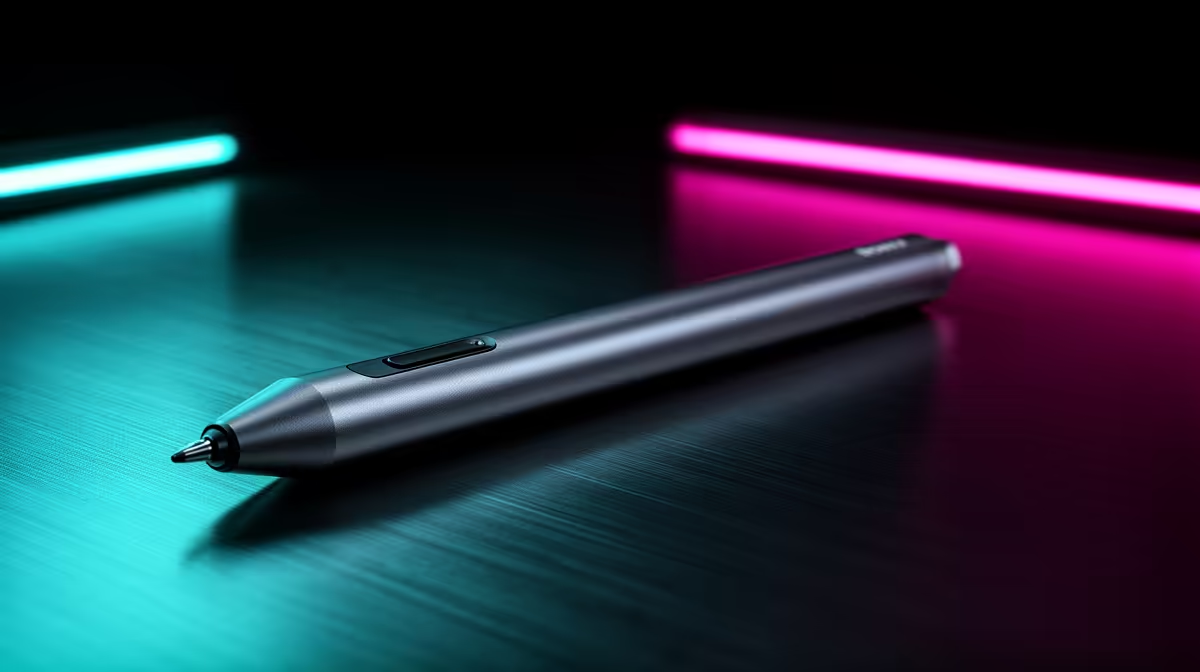
Low-lag stylus performance comes from three interacting factors: the pen's polling rate, the screen's digitiser refresh rate, and the latency in the driver and software stack. The target for an imperceptible writing experience is below 10 ms end-to-end; best-in-class pens and screens in 2026 achieve 7 to 9 ms.
What Creates Stylus Lag in the First Place 🔧
Lag in a stylus system is not a single delay; it is a chain of small delays added together. First, the pen samples its pressure and position at a set rate (polling rate), typically 200 to 300 Hz on mid-range pens. Then the digitiser beneath the screen reads the pen's signal, which adds a frame of delay tied to the digitiser's own refresh rate. The operating system's input driver processes and forwards the event, adding a few more milliseconds. Finally, the drawing or notes app renders the stroke to the display. A 60 Hz display refreshes every 16.7 ms, meaning the rendered stroke can appear up to 16.7 ms after the input, even if the digitiser read it instantly.
Evaluating Pen Specs for Latency 📋
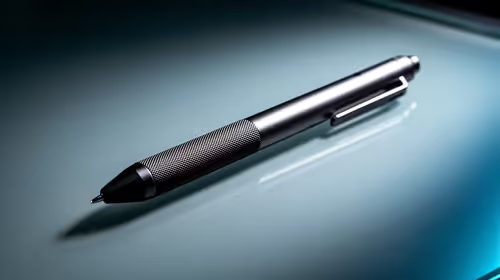
When comparing pens, look for two specific latency figures: end-to-end latency (the full chain from tip contact to pixel appearing on screen) and pen-side polling rate. Pens rated at 240 Hz or higher polling send position updates 240 times per second, providing a new data point every 4 ms. This high-frequency sampling means the stroke on screen closely follows the physical pen tip even at fast writing speeds. Microsoft's Surface Slim Pen 2 achieves 9 ms end-to-end on compatible Surface hardware. Lenovo's Precision Pen 3 targets similar figures on the Yoga 9i lineup.
Software's Role in Reducing Perceived Lag 💻
Modern drawing and notes apps use stroke prediction algorithms to reduce perceived latency. The app analyses the trajectory and speed of the current stroke and draws a predicted continuation slightly ahead of where the sensor data says the pen is. When the real data arrives and confirms the prediction, the rendering is already there. When the prediction is wrong (during sharp directional changes), you see a brief correction. OneNote, Clip Studio Paint, and Krita all implement prediction algorithms that can make a 15 ms hardware system feel subjectively closer to 10 ms.
Enable Windows Ink Workspace for Consistent Latency ⚡
On Windows 11 devices, confirm that Windows Ink is enabled in Settings under Bluetooth and Devices, then Pen and Windows Ink. Some performance-tuning guides suggest disabling it to free resources, but for stylus use this increases driver latency and removes stroke smoothing. Leave Windows Ink on for the best low-lag experience in any compatible app.
FAQ
Does USB-C charging affect stylus latency?
No. Whether a pen uses a AAAA battery or charges via USB-C has no measurable effect on its operating latency. The power source only affects convenience and usage habits, not the communication timing between pen and digitiser.
Is a high-refresh-rate screen necessary for low-lag stylus use?
It helps significantly. At 60 Hz the display-side contribution to total latency is 16.7 ms per frame. At 120 Hz it drops to 8.3 ms, which often makes the difference between noticeable and imperceptible lag during fast handwriting. If you write quickly during lectures, a 120 Hz 2-in-1 screen is a worthwhile investment.
Can I reduce lag in software without buying new hardware?
Yes. Lowering the resolution the drawing app renders at (not the screen resolution, but the canvas resolution) reduces GPU processing time per frame. Closing background applications frees CPU cycles for input processing. Both adjustments reduce software-side latency without any hardware purchase.
Want a stylus system that keeps up with your writing speed?
Evetech stocks active stylus pens with high polling rates and low-latency design, compatible with leading 2-in-1 laptops. Check current availability to find a pen that matches your device and workflow.