Quick Answer
For a Core Ultra 9 285K, choose a board with a strong VRM and good cooling support: a quality B860 around R5,000-R6,000 covers gaming, while Z890 (R7,000-plus) suits overclocking and multi-drive creator builds. Both deliver PCIe 5.0 and DDR5-6400; the deciding factor is whether you push all-core workloads or just game.
Sizing The Board To A 24-Core Chip
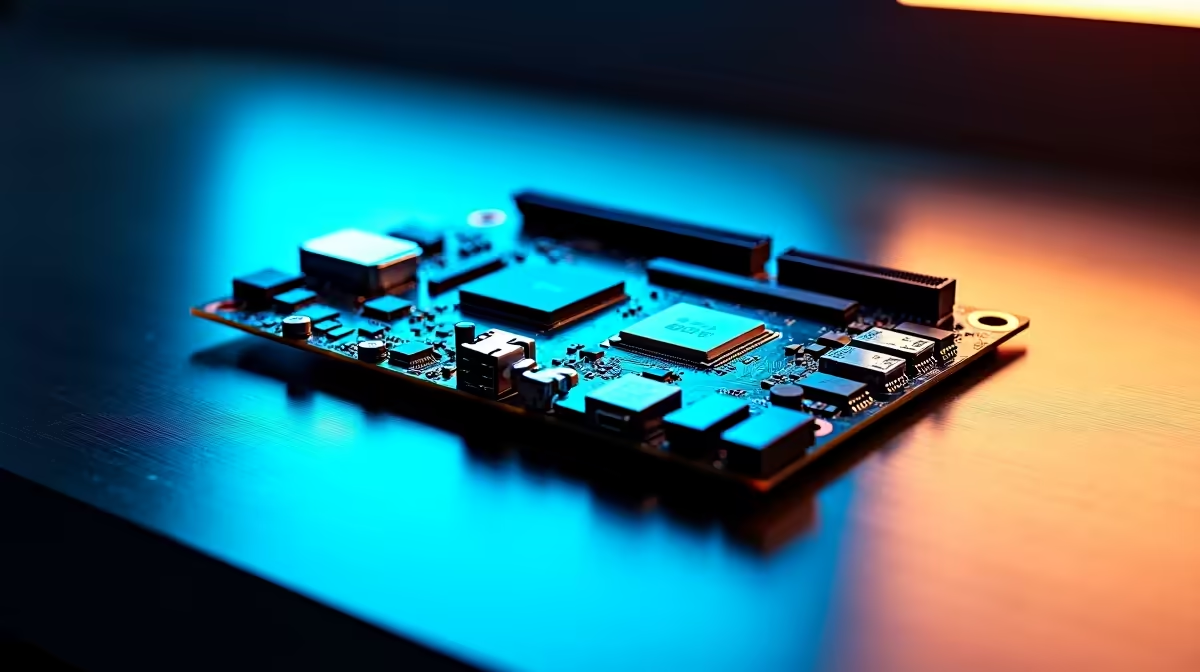
The 285K's 24 cores pull real power under load, so a 16-phase-plus VRM with heatsinks is the baseline. A capable B860 board feeds it cleanly for gaming and light content work. Z890 adds overclocking headroom, extra Gen5 M.2 slots and stronger I/O for heavy rendering and encoding. For frame rates alone, B860 plus a better GPU is the smarter allocation.
Memory, Storage And Cooling
Run DDR5-6400 CL32 (32GB around R2,500-R3,000, 64GB for content work) and verify the kit on the QVL. Two Gen5 M.2 slots help if you keep a fast OS drive plus a scratch disk. A 360mm AIO is the practical cooler, since the chip runs warm during sustained all-core tasks.
Warranty And Buying Notes
Buy from a local stockist so the board and CPU carry a proper warranty and the firmware is current for Core Ultra Series 2. A board that boots the 285K first time saves a frustrating setup detour.
FAQ
Is B860 enough for a Core Ultra 9 285K?
For gaming, yes. A strong B860 board with a 16-phase VRM runs the 285K at full stock performance. Z890 adds overclocking and extra lanes for creators.
How much does a suitable board cost?
A capable B860 board sits around R5,000-R6,000, while Z890 flagships run R7,000 and up depending on VRM, I/O and storage options.
Does the 285K need liquid cooling?
A 360mm AIO is strongly recommended. Under sustained all-core loads the chip generates heat that air coolers can struggle to dissipate.
Pair the Core Ultra 9 285K with a 16-phase board and 360mm AIO at Evetech, and choose B860 for gaming or Z890 for heavy creator work.