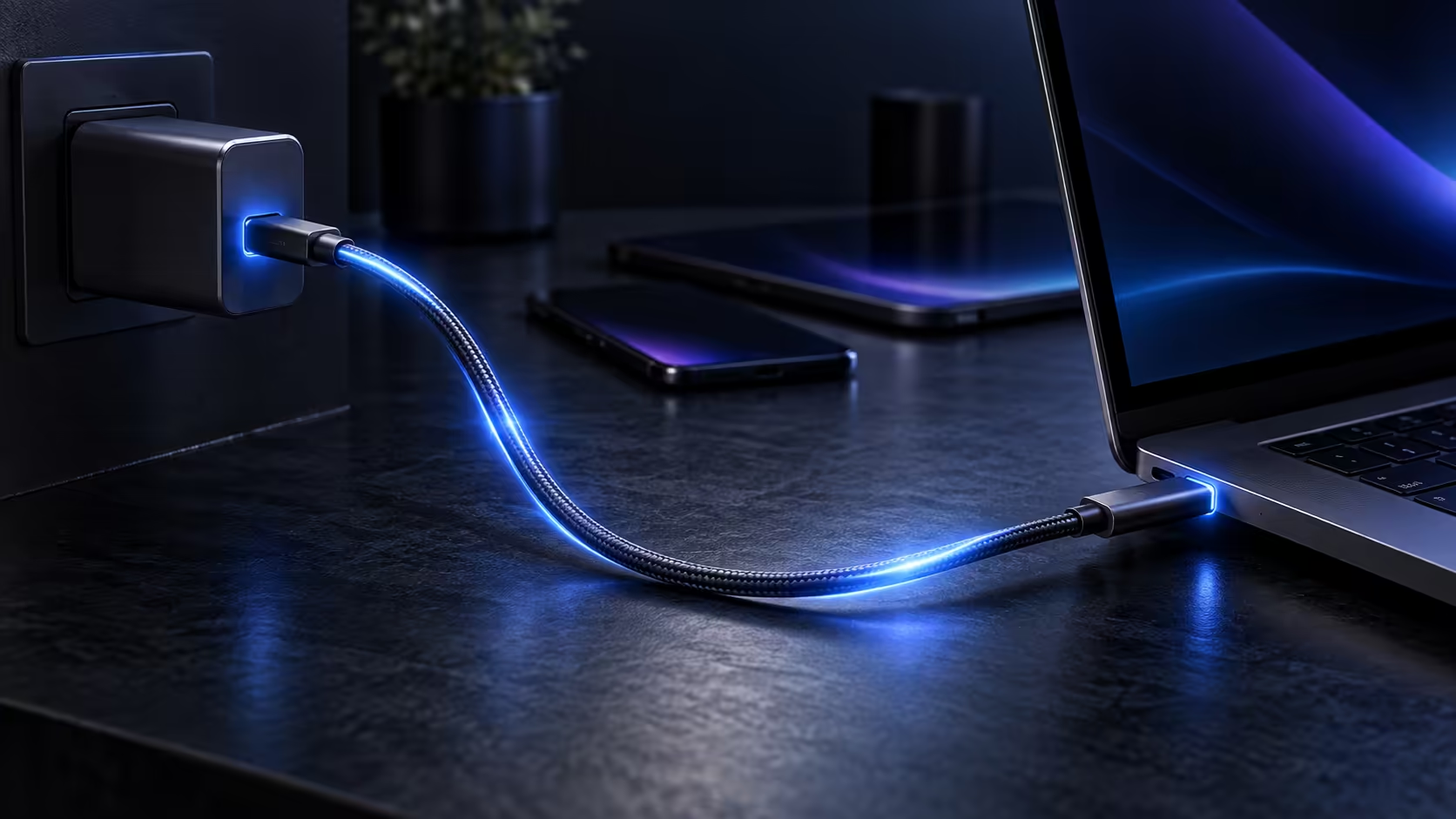
USB-C cable power ratings matter for one reason that consistently surprises most buyers: the cable is not merely a passive wire in this system, it is an active participant that actually tells the charger how much current it is allowed to send through it.
Quick Answer
In USB Power Delivery the cable is an active participant, not a passive pipe. Its e-marker declares what it can carry and the charger obeys, which is why a 240W charger and a 3A cable still produce 60W, and why a certified R399 cable changes the result at once.
🔌 A cable that talks back to the charger
Older charging standards treated a cable as a dumb conductor, simply carrying whatever voltage and current a charger pushed down it. USB Power Delivery changed that fundamentally: any cable built for more than 60W carries its own e-marker chip, and that chip actively reports a safe current limit to the charger during the handshake, with the charger built to respect whatever it hears rather than push past it. This is a deliberate safety mechanism, not an oversight, and it is the reason a cable's own rating matters just as much as the charger's.
⚡ Why a powerful charger alone is not enough
A 240W-capable charger connected through a basic 3A cable still produces only 60W, because the charger asks the cable what it can safely handle and receives an answer far below its own maximum output. This genuinely surprises people who assume the charger's own rating is the only number that matters, when in practice the system is only ever as capable as its weakest declared link, and that link is frequently the cable rather than the charger or the device being charged. A drawer full of old cables collected over several years, each bought before higher wattages became common, is exactly where this mismatch quietly hides until someone finally buys a genuinely fast charger and cannot work out why nothing has changed.
🔧 What actually changes with a certified cable
Swap that same 3A cable for a genuine 5A-rated, USB-IF certified one, take the R399 Anker 544 sitting in the comprehensive cable range, and the negotiation changes immediately: the cable now declares a much higher safe limit, and the charger and laptop can agree on a figure that actually uses the charger's own capability. Nothing about the charger or the laptop needs to change at all for this to happen, since the cable was the one and only component holding the whole connection back from the very start. This same negotiation runs identically from a power bank as it does from a wall charger, so a certified cable is worth pairing with either.
📅 How recently this changed matters more than people realise
Cables bought even a few years ago, before charging speeds climbed past 60W in most households, were rarely built with an e-marker chip at all, since there was no need for one at the power levels common at the time. This means a genuinely old cable pulled from a drawer is not just outdated, it may be structurally incapable of the negotiation this article describes, regardless of what a charger it is paired with today can offer. Checking a cable's actual age and origin, not just its current physical condition, is worth doing before assuming an old favourite is still up to the job.
🧩 Why this design choice actually protects your hardware
Putting intelligence into the USB-C cable rather than relying solely on the charger to self-limit means the safety check travels with the cable itself, regardless of which charger or laptop it happens to be plugged into on a given day. A charger cannot possibly know in advance how much current a specific cable can safely carry, so having the cable declare that figure for itself closes a gap that would otherwise depend on every charger manufacturer simply guessing conservatively, or every cable being sold bundled with its own dedicated matching charger.
Frequently Asked Questions
Does a cable's e-marker chip work the same way in both directions?
Yes. The same chip reports its rating regardless of which end is plugged into the charger and which is plugged into the device, since USB-C connectors are reversible and the cable's declared capability does not change with orientation.
Why does USB-C put intelligence into the cable at all?
Because charging speeds have grown well beyond what older standards' passive cables could ever safely carry on their own, so an active negotiation process protects both the cable itself and the connected devices from receiving more current than the internal wiring was ever designed to handle safely.
Can a charger override a cable's declared rating?
No. A properly functioning charger always respects the cable's declared limit as a safety measure, rather than ever attempting to push more current through than the cable has already confirmed it can safely carry.
Does every USB-C cable contain an e-marker chip?
No. Cables rated at or below 3A, or 60W, are not required to carry one, since that current level falls comfortably within a passive cable's basic safe limit without needing any active negotiation to protect it.
Is a cable's e-marker rating the same thing as its physical build quality?
No. The e-marker declares an electrical rating specifically, which is an entirely separate matter from the cable's own durability, bend resistance or choice of jacket material altogether.
Does the e-marker chip ever need a firmware update?
No. It reports a fixed rating set during manufacture and does not update or change over the cable's working life, unlike software in some other electronic devices.
Does a longer cable need a more capable e-marker chip than a shorter one?
No. The e-marker's job is to declare current capacity, which is set by conductor gauge rather than overall cable length, so a short cable and a much longer one built to the same conductor design can carry identical chips and identical declared ratings.
Can a faulty e-marker chip cause a cable to under-report its own rating?
In rare cases of a genuine manufacturing defect, yes, which is exactly the kind of fault USB-IF certification testing is specifically designed to catch before a product ever reaches store shelves.
Ready to stop your charger's full power going to waste?
Check the cable's own rating, since it decides just as much as the charger does.