


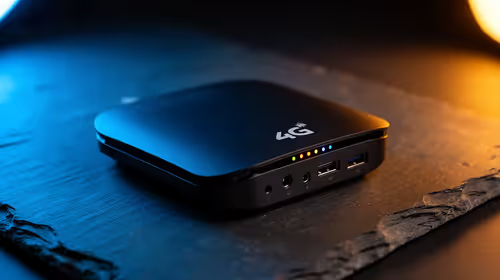
How to Use a Nano SIM 4G Router for Reliable Home Internet
Master using a Nano SIM 4G router as your primary internet solution. Get stable speeds and seamless connectivity for gaming and streaming at home! 🌐🚀
Read moreUSB 3.2 Gen 2x2 vs USB 3.2 Gen 2 explained ⚡📈 See the real-world speed gains, where 20Gbps helps, and when Gen 2 is still enough for fast storage.
Are you tired of staring at progress bars while transferring massive game files or 4K video projects? The USB naming convention is a notoriously confusing mess... but getting it right unlocks serious speed. If you are building a modern rig in South Africa, understanding USB 3.2 Gen 2x2 vs USB 3.2 Gen 2 is vital to ensure your external storage actually keeps up with your system.
Let us break down the technical jargon. USB 3.2 Gen 2 offers maximum theoretical speeds of up to 10Gbps. In real-world transfers, that translates to roughly 1,000 megabytes per second. It is plenty fast for everyday tasks and casual file sharing. However, USB 3.2 Gen 2x2 doubles down... literally. By utilising two separate 10Gbps lanes simultaneously, it pushes your peak bandwidth to a staggering 20Gbps.
To actually see these performance gains, you cannot rely on old mechanical hard drives. You need rapid internal storage to feed that external connection. Upgrading your primary solid state drives is the first necessary step to eliminating data bottlenecks and ensuring your system can handle the throughput.
What does that extra bandwidth mean for South African gamers and content creators? If you are moving a 150GB Steam library backup, a standard Gen 2 connection takes about two and a half minutes. A Gen 2x2 connection cuts that time in half. That is less time waiting and more time playing.
But there is a specific hardware catch. To achieve that 20Gbps sweet spot, every link in your chain must support the standard. That includes your motherboard, your external enclosure, and the drive inside it. Many tech enthusiasts prefer to buy a standard M.2 2280 NVMe drive and place it inside a compatible Type-C enclosure to build their own blazing-fast portable storage.
Always check your motherboard's rear I O specifications. Many modern boards feature a single dedicated 20Gbps Type-C port... plugging your Gen 2x2 drive into a standard 10Gbps port will instantly halve your speeds without throwing any error messages.
Your external transfer speeds will only ever be as fast as your slowest drive. If you are pulling data from a budget SATA drive, spending a few hundred extra ZAR on a 20Gbps USB port will not help you optimise your workflow. You need high-performance NVMe storage on both ends of the cable.
Reliable brands offer excellent sustained write speeds for these high-bandwidth setups. For instance, pairing a premium enclosure with high-end ADATA SSDs guarantees your transfers will not throttle halfway through a massive 4K video export. Alternatively, rugged Kingston drives provide fantastic durability and thermal performance... which is crucial since running sustained transfers at 20Gbps generates noticeable heat.
If you are building a completely new ultra-enthusiast workstation, you might even be looking at the absolute bleeding edge of technology. Motherboards that fully support the USB 3.2 Gen 2x2 standard often also support the latest Gen 5 NVMe options, giving you more than enough internal bandwidth to saturate multiple external drives simultaneously.
Ready to Eliminate Loading Screens? Fast external storage is only half the battle. To truly experience the speed of modern gaming and content creation, your internal system needs to be up to the task. Explore our massive range of SSDs to find the perfect high-speed storage for your rig.
USB 3.2 Gen 2 offers 10Gbps, while USB 3.2 Gen 2x2 doubles that to 20Gbps for faster transfers on supported devices.
Yes, but only with compatible hardware. For large file transfers and external SSDs, Gen 2x2 can deliver noticeably better performance.
Not always. Many SSDs already saturate Gen 2 speeds, so USB 3.2 Gen 2 is enough unless your drive can exceed 10Gbps.
Yes, USB is backward compatible. A Gen 2x2 device will work, but it will fall back to Gen 2 speeds on a 10Gbps port.
In ideal conditions, it can nearly double bandwidth versus Gen 2, but drive speed, cable quality, and controller support also matter.
It is worth it if you move large files often or use a fast external SSD. For everyday peripherals, Gen 2 is usually sufficient.
Check motherboard or laptop support, cable rating, and SSD specs. Without full Gen 2x2 support, you may not get 20Gbps speeds.
Master using a Nano SIM 4G router as your primary internet solution. Get stable speeds and seamless connectivity for gaming and streaming at home! 🌐🚀
Read more
Confused by Cat4 vs Cat6 LTE routers? 🌐 We break down the technical differences to help you choose the right router for faster gaming and streaming. Get the speed you deserve today! 🚀
Read more
Learn how to setup a VPN server on your 4G LTE router to secure your remote access. Protect your data and browse safely from anywhere with our easy guide! 🌐🔐
Read more
Choosing the best 4G LTE router for South Africa ensures reliable internet when fibre is unavailable. Discover top connectivity tips for rural and urban areas. 🌐📶
Read more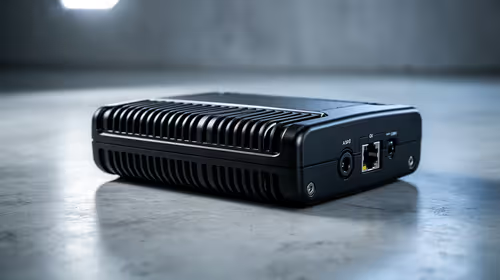
Discover what is passive PoE and how it streamlines outdoor router installations. Eliminate messy cabling and simplify your network setup with this efficient power delivery method. ⚡🌐
Read more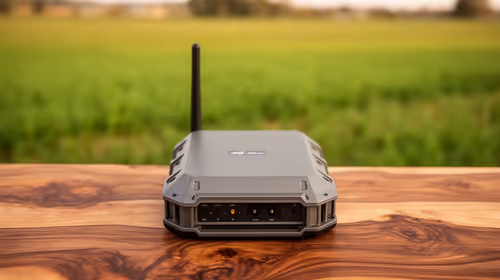
Need to extend internet coverage to outbuildings or farms? 📡 An outdoor 4G router is the ultimate solution for stable, high-speed connectivity in remote locations. Discover how to boost your range and stay connected anywhere on your property. 🌐
Read more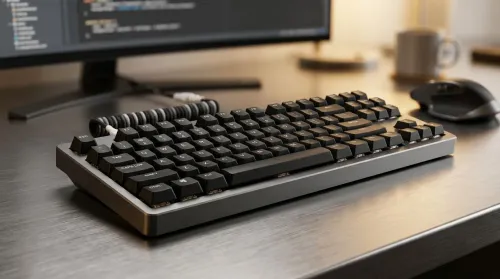
Wondering if a TKL wireless mechanical keyboard is worth it for everyday productivity? We break down latency, battery life, comfort, and workflow gains for real work. ⚡⌨️

Maximise battery life on a fanless 15-inch laptop using efficiency core architecture. Cut idle drain, tune power profiles, and improve thermals for longer runtime. 🔋⚙️
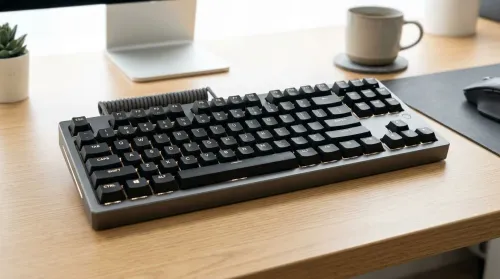
Learn how to reduce desk clutter with a TKL wireless keyboard using fewer cables, smart placement, and tidy essentials. Get a faster, calmer workspace with better ergonomics. ✅🧼

RGB keyboard lighting too distracting? Learn how to manage backlight modes, set brightness, and reduce distraction for focus and productivity 😌🖱️

Are themed gaming keyboards worth the extra cost? Compare build quality, switch options, features, and resale value to find the best fit for your setup 🎮⌨️

Full-Size vs Tenkeyless mechanical keyboards for gaming: find out if a smaller layout truly improves aim, speed, and comfort. We break down layout, desk space, latency-feel, and keybinds 🎮⌨️

Dedicated media rollers vs function key shortcuts: learn which setup gives you better workflow control, faster media access, and fewer mistakes. 🖱️🎧

Best Mechanical Switch Type for Gaming: Clicky vs Linear vs Tactile. Find your feel, speed, and noise balance with practical guidance for FPS, MOBA, and productivity 😄🎮

Direct mouse answer: Mouse not keeping up with your work? Everything that matters about dual-mode 2.4GHz + BT 5.0: DPI behaviour, channel switching, battery curves and per-app button mapping. Covers when 2.4GHz USB wins (low-latency desk) and when BT 5.0 wins (laptop, d

Plain wireless mouse guide: Mouse not keeping up with your work? Everything that matters about wireless productivity mouse: DPI behaviour, channel switching, battery curves and per-app button mapping. Includes DPI tuning tips, channel switch shortcuts, and ZAR-aware fea

Real productivity numbers: Set up your wireless mouse in this order: everything that matters about wireless productivity mouse: DPI behaviour, channel switching, battery curves and per-app button mapping. Includes DPI tuning tips, channel switch shortcuts, and ZAR-aware
Pen not feeling like paper? Stylus lag and skipping usually trace to old drivers, dirty nibs, or display refresh mismatches, not the pen itself. Covers pressure curve tuning, tilt thresholds, nib swap timing, and SA pricing brackets.