


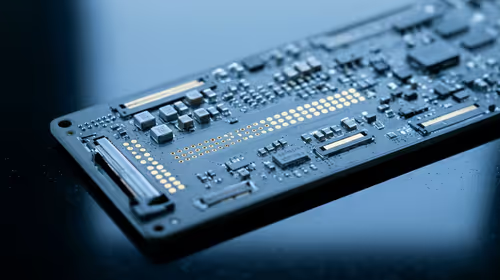
Hot-Swappable PCB Architecture in Modern Keyboards: Guide
Learn hot-swappable PCB architecture in modern keyboards—what it is, how sockets and traces work, and how to pick the right board. Speed up swaps, reduce risk, and upgrade faster 🔧⚡
Read moreUSB-C 10Gbps vs 5Gbps explained: we break down real-world gains, device limits, and when a 10Gbps hub justifies the price ⚡️🔍
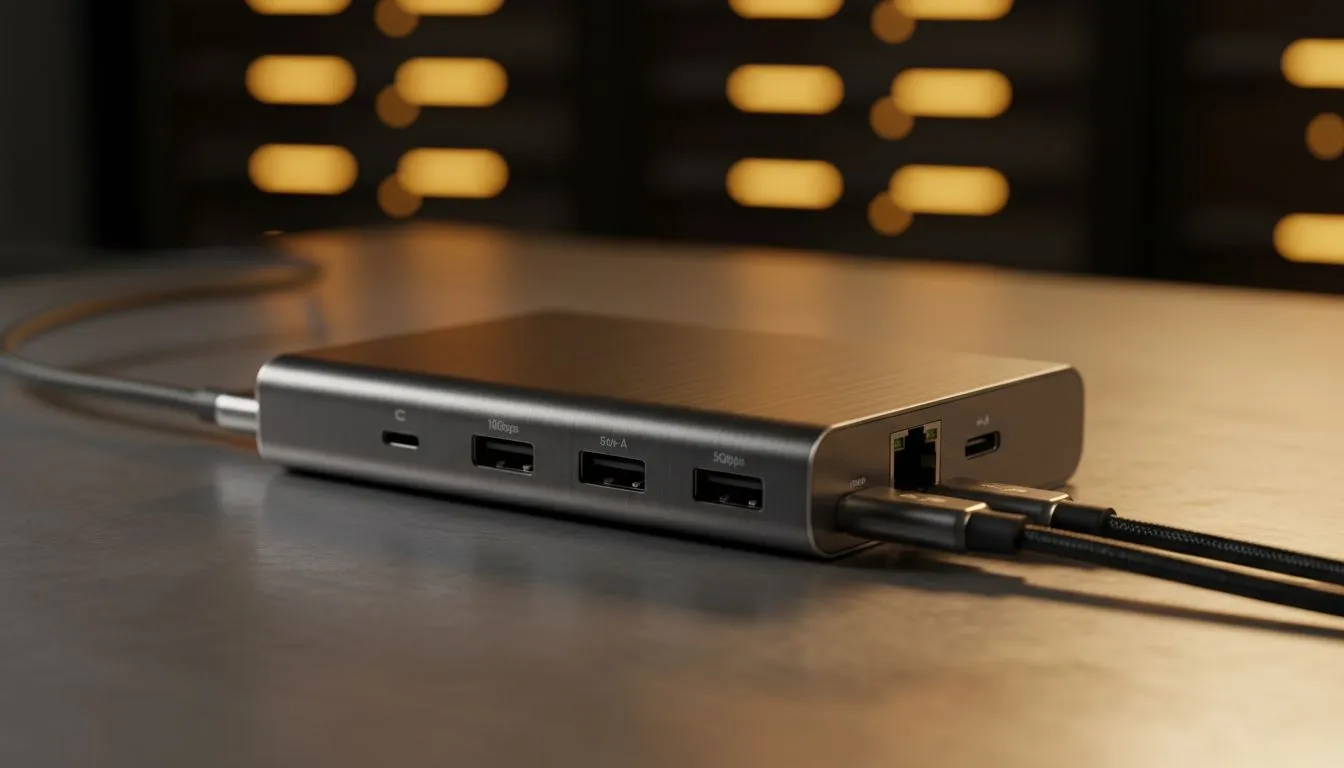
Staring at two USB-C ports on your new motherboard? One says 5Gbps, the other 10Gbps. In South Africa, where every rand counts, you have to wonder: does that speed difference really matter? Is paying extra for a 10Gbps external drive or cable just for bragging rights, or will it actually make a difference when you're transferring a massive game update or backing up your work? Let's break it down.
Let’s get the tech jargon out of the way first. Gbps stands for "Gigabits per second." It’s a measure of bandwidth... basically, how much data can move through the connection at once.
Think of it like the N1 highway during rush hour. A 5Gbps connection is a busy two-lane road, while 10Gbps is a clear four-lane highway. More lanes mean more data can travel simultaneously, reducing traffic jams. This speed is a critical factor when choosing high-performance PC components for a balanced build.
The real answer to the USB-C 10Gbps vs 5Gbps question comes down to your specific use case. For many tasks, you honestly won't notice the difference. But for others, it's massive.
If you're editing 4K video, managing massive photo libraries, or backing up entire projects, 10Gbps is a huge quality-of-life improvement. Transferring a 100GB video project to an external NVMe SSD could take under two minutes at 10Gbps, while a 5Gbps connection would have you waiting for over three. Those saved minutes add up, especially when a deadline is looming.
For most gamers, the debate is less clear-cut. If you're just connecting your mouse, keyboard, or headset, a 5Gbps port is more than enough—these devices use a tiny fraction of that bandwidth. However, if you run games directly from a fast external SSD to save space on your internal drive, 10Gbps can noticeably reduce loading times in huge open-world titles. For many, finding some great gaming accessories deals on reliable 5Gbps gear is the smarter financial move.
Not all USB-C cables are created equal. A cable must be specifically rated for 10Gbps (often marked with a SuperSpeed+ logo or 'SS 10') to deliver those top speeds. Using a standard 5Gbps or a simple charging cable with a 10Gbps port and drive will cap your speed at the cable's limit. Always check the specs before you buy!
Achieving top speed requires a perfect chain of hardware. The USB-C speed difference is meaningless if one component creates a bottleneck. To get true 10Gbps performance, you need three things to align:
Checking that all your gear is compatible is essential, and you can see how these standards apply across our full range of gaming accessories.
So, should you invest in 10Gbps hardware? Here’s the simple breakdown.
The speed jump from USB-C 5Gbps to 10Gbps is absolutely worth it if you are:
However, you can happily stick with 5Gbps and save some cash if you primarily use your USB-C ports for:
Ultimately, the choice depends on your workflow and budget. Don't pay for speed you won't use.
Ready to Speed Up Your Setup? Whether you need the blistering pace of 10Gbps for your creative work or a reliable 5Gbps connection for your gaming rig, having the right gear is key. Explore our massive range of PC components and accessories and find the perfect hardware to match your speed.
10Gbps doubles theoretical bandwidth vs 5Gbps, reducing bottlenecks for fast SSDs, multi-stream 4K, and heavy transfers. For low-bandwidth peripherals 5Gbps usually suffices.
Yes if your drive, cable, and host port support >500MB/s. If any component is gen1 or slower, transfers will remain similar.
If your external SSD sustains >500MB/s, choose 10Gbps. For SATA SSDs or slower NVMe, 5Gbps may limit peak speeds.
Buy 10Gbps if you edit 4K video, use fast NVMe drives, or want future proofing. For basic office use, 5Gbps saves money without noticeable loss.
Check your laptop specs for USB 3.1 Gen 2 or Thunderbolt support. Many older USB-C ports are limited to 5Gbps.
Expect big gains for multi-stream 4K and large backups when host and drives support 10Gbps; minor difference for single HD streams or web cams.
Creative pros benefit from 10Gbps—faster media transfers, smoother external RAID access, and fewer hiccups when multitasking with high bitrate files.
Learn hot-swappable PCB architecture in modern keyboards—what it is, how sockets and traces work, and how to pick the right board. Speed up swaps, reduce risk, and upgrade faster 🔧⚡
Read more
Mechanical switch lifespan explained—what the 50 million keystroke rating really means, plus tips to extend switch life and reduce double-press issues 🔧⌨️
Read more
60-percent vs full-size mechanical keyboard layouts—learn what each layout includes, who it suits, and how to choose the right fit 🧩⌨️ for typing, gaming, and productivity.
Read more
Double injection keycaps last far longer than standard printed keycaps in most setups. Learn typical lifespan ranges, what shortens them, and how to maximize durability for smoother daily typing and gaming 😊⌨️
Read more
Full-key anti-ghosting: does it stop missed inputs during fast-paced gaming? We break down latency, polling, and key matrix limits so you can buy smarter 🎮⚡
Read more
Protect mechanical keyboard switches from South African dust and summer humidity with practical cleaning and storage habits. Keep your switches smooth, reduce failures, and extend lifespan. 🌬️💧
Read more
Wondering if a TKL wireless mechanical keyboard is worth it for everyday productivity? We break down latency, battery life, comfort, and workflow gains for real work. ⚡⌨️

Maximise battery life on a fanless 15-inch laptop using efficiency core architecture. Cut idle drain, tune power profiles, and improve thermals for longer runtime. 🔋⚙️
Learn how to reduce desk clutter with a TKL wireless keyboard using fewer cables, smart placement, and tidy essentials. Get a faster, calmer workspace with better ergonomics. ✅🧼
RGB keyboard lighting too distracting? Learn how to manage backlight modes, set brightness, and reduce distraction for focus and productivity 😌🖱️

Are themed gaming keyboards worth the extra cost? Compare build quality, switch options, features, and resale value to find the best fit for your setup 🎮⌨️

Full-Size vs Tenkeyless mechanical keyboards for gaming: find out if a smaller layout truly improves aim, speed, and comfort. We break down layout, desk space, latency-feel, and keybinds 🎮⌨️

Dedicated media rollers vs function key shortcuts: learn which setup gives you better workflow control, faster media access, and fewer mistakes. 🖱️🎧

Best Mechanical Switch Type for Gaming: Clicky vs Linear vs Tactile. Find your feel, speed, and noise balance with practical guidance for FPS, MOBA, and productivity 😄🎮

Direct mouse answer: Mouse not keeping up with your work? Everything that matters about dual-mode 2.4GHz + BT 5.0: DPI behaviour, channel switching, battery curves and per-app button mapping. Covers when 2.4GHz USB wins (low-latency desk) and when BT 5.0 wins (laptop, d

Plain wireless mouse guide: Mouse not keeping up with your work? Everything that matters about wireless productivity mouse: DPI behaviour, channel switching, battery curves and per-app button mapping. Includes DPI tuning tips, channel switch shortcuts, and ZAR-aware fea

Real productivity numbers: Set up your wireless mouse in this order: everything that matters about wireless productivity mouse: DPI behaviour, channel switching, battery curves and per-app button mapping. Includes DPI tuning tips, channel switch shortcuts, and ZAR-aware
Pen not feeling like paper? Stylus lag and skipping usually trace to old drivers, dirty nibs, or display refresh mismatches, not the pen itself. Covers pressure curve tuning, tilt thresholds, nib swap timing, and SA pricing brackets.