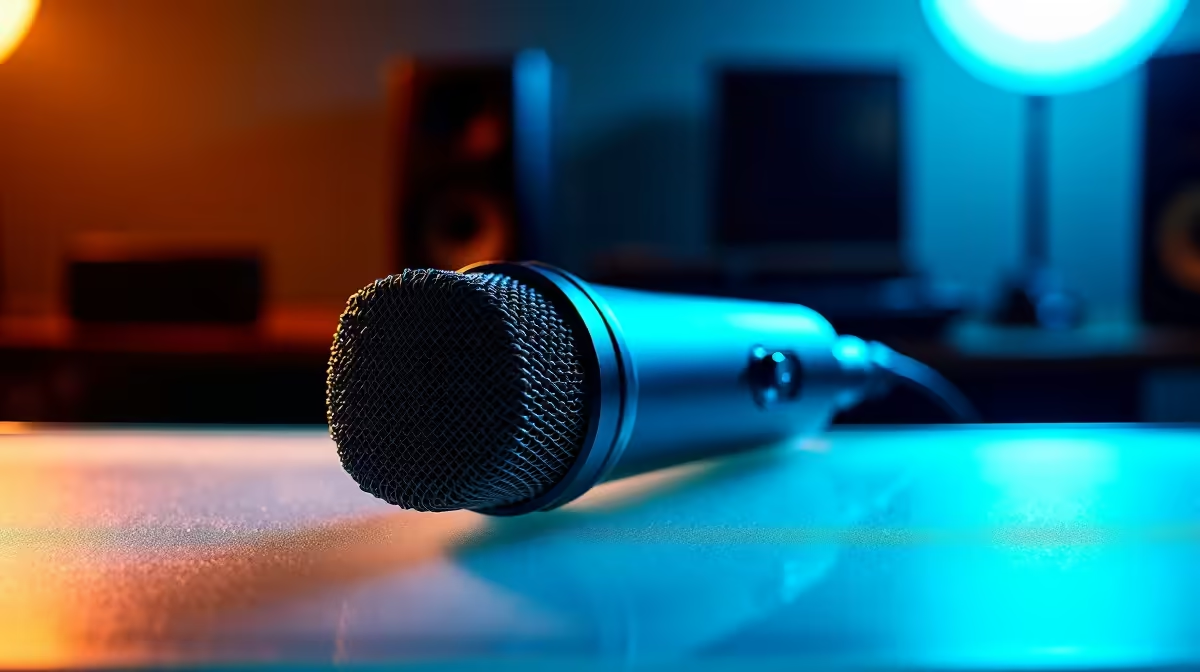
Reading a spec sheet for a microphone is surprisingly easy to get wrong. The numbers look technical, the terminology overlaps, and the marketing copy inflates whichever figure the manufacturer scored well on. Understanding what each USB condenser microphone specification actually means for recorded audio cuts through that and puts your budget toward the figures that matter.
Quick Answer
The specs that most affect audio quality are bit depth (aim for 24-bit), sample rate (48kHz is sufficient), frequency response (a flat 20Hz to 20kHz range), signal-to-noise ratio (70dB or above), and polar pattern (cardioid for most voice work). Capsule diameter and max SPL round out the picture.
🎙️ Bit Depth and Sample Rate
These two numbers appear together and are frequently misunderstood as a pair where bigger is always better. They are not the same thing, and they affect audio differently.
Bit depth determines the dynamic range, meaning the gap between the quietest sound the mic can capture cleanly and the loudest before it distorts. At 16-bit, that range is around 96 decibels. At 24-bit, it stretches to around 144 decibels. For vocal recording, the practical benefit of 24-bit is headroom. Quiet passages, breaths, and fading sentences stay above the noise floor rather than disappearing into hiss. Your editing software also has more information to work with when you need to adjust levels in post.
Sample rate is different. It determines how many times per second the analogue signal is measured and converted to digital. 44.1kHz captures all frequencies up to 22kHz, which already exceeds the upper range of human hearing at around 20kHz. Moving to 48kHz captures up to 24kHz, which matters for some music recording and video production workflows but has no audible benefit for a solo streaming voice. The common recommendation of 48kHz for streaming is partly practical: video editing software works natively in 48kHz, so matching the mic output to the project rate avoids conversion.
The combination to aim for is 24-bit at 48kHz. It covers all real-world vocal recording needs and adds minimal file size compared to 16-bit 44.1kHz.
Does Sample Rate Affect Latency?
Not meaningfully for USB microphones in streaming applications. The latency you experience while monitoring through headphones is almost entirely determined by your USB buffer settings and the host software, not the sample rate.
🔧 Frequency Response and Presence Peaks
Frequency response describes which frequencies the microphone captures accurately and at what level. A truly flat response from 20Hz to 20kHz means every frequency in the audible range is reproduced at the same output level, which is ideal for capturing a voice exactly as it sounds.
Few microphones are truly flat. Most introduce gentle curves, and the ones on vocal mics are usually deliberate. A slight rise in the 3kHz to 5kHz range, sometimes called a presence peak, adds clarity and definition to vocal consonants. This is why some voices recorded on a presence-peaked mic sound crisper and more intelligible than the same voice recorded through a completely flat response.
The downside of a strong presence peak is that it can make certain voices sound harsh or sibilant, particularly those already bright in the upper midrange. A gentle rise of around 3 to 5 decibels in that region typically helps more than it hurts. Peaks of 8 to 10 decibels start to sound unnatural on many voices.
Low-end response is also worth noting. Mics designed for close-up streaming often roll off below 80Hz to control proximity effect, where bass frequencies boost artificially as the source moves closer to the capsule. A gentle high-pass roll-off keeps the low end from sounding muddy when you lean into the mic.
How to Read a Frequency Response Chart
A flat line across the chart means consistent output across frequencies. Any bump upward means that frequency is boosted. A dip means it is attenuated. Look for the shape across the 80Hz to 16kHz range where voice content lives. The extremes below 80Hz and above 16kHz are less critical for most streaming and podcast applications.
⚡ Signal-to-Noise Ratio and Self-Noise
Signal-to-noise ratio (SNR) measures how much louder your voice signal is compared to the mic's own electronic hiss, called self-noise. A higher number is better. At 70dB SNR, the mic's floor hiss is 70 decibels below your voice, which is inaudible in normal conditions. At 55dB SNR, that hiss creeps into quiet passages and becomes noticeable when you boost the recording in edit.
For streaming and podcasting where you speak close to the mic, you can tolerate a slightly lower SNR because proximity boosts your signal naturally. For more distant placement or softer speech styles, a higher SNR of 75dB or above makes a more noticeable difference.
Self-noise is the flip side of the same measurement. A mic with 15dB of self-noise is quieter than one with 25dB. Premium mics often publish both figures; budget mics typically only list SNR. Either figure tells you the same thing about background hiss.
Pro Tip ⚡
Set your mic gain to about 50 to 60 percent and move the mic within 15cm of your mouth before raising the gain to compensate for distance. Running higher gain to cover a too-distant mic amplifies both your voice and the noise floor equally, which destroys your effective SNR regardless of what the spec sheet says.
🎯 Polar Pattern and Capsule Size
Polar pattern defines the directional sensitivity of the microphone. It describes which angles around the capsule the mic picks up and which it rejects.
Cardioid is the pattern you want for solo streaming. It is most sensitive directly in front, gradually loses sensitivity toward the sides, and rejects sound from behind by approximately 20 to 25 decibels. In a home setup in Cape Town or Joburg with ambient noise on one side, pointing the rear of the mic toward the noise source cuts it significantly.
Bidirectional patterns capture front and rear equally and reject the sides. Omnidirectional patterns pick up equally from all directions. Both are useful in specific recording scenarios but introduce too much room noise and ambient bleed for a typical streaming desk.
Some mics offer switchable polar patterns. This adds versatility but also complexity. For a dedicated streaming mic, a fixed cardioid is cleaner in circuit design and usually quieter than a multi-pattern unit at the same price point.
Capsule diameter, usually expressed in millimetres, affects the warmth and body of the recorded voice. A 25mm large-diaphragm capsule captures more surface area, which typically produces a fuller, warmer sound with better low-end sensitivity. A 14mm small-diaphragm capsule is more precise and handles transients more cleanly but can sound thinner on a vocal. For voice-focused streaming and podcasting, a capsule of 20mm or above generally delivers more satisfying warmth.
Frequently Asked Questions
What sample rate and bit depth should a USB mic have for streaming?
Aim for 24-bit resolution at 48kHz. The 24-bit depth gives you substantially more dynamic range than 16-bit, which means quiet passages stay above the noise floor and loud moments have more headroom before distortion. The 48kHz rate aligns with video production workflows and is the standard for streaming audio.
Does frequency response matter for a vocal microphone?
Yes, noticeably. A wide, relatively flat response from 20Hz to 20kHz captures your voice accurately. A gentle presence peak in the 3kHz to 5kHz range can improve clarity and consonant definition. Steep peaks above 8 decibels often make voices sound harsh. A hard low-end rolloff below 80Hz controls proximity boost when speaking close to the capsule.
What is a good signal-to-noise ratio for streaming?
A signal-to-noise ratio of 70dB or above keeps the mic's own hiss inaudible during normal streaming. Below 65dB, that floor noise begins to surface in quiet passages or when gain is pushed. For close-microphone streaming and podcasting, 70dB is sufficient. For softer speech or more ambient recording styles, targeting 75dB or above gives more comfortable headroom.
How does maximum SPL affect recording?
Maximum sound pressure level (max SPL) is the loudest input the mic can handle before the signal clips and distorts. A rating near 120dB handles enthusiastic speech, shouting, and nearby instruments cleanly. Most streamers do not push anywhere near that limit, but it matters if you share the desk with other audio sources or have a naturally loud speaking style.
Why does polar pattern appear in the specification?
Polar pattern defines the directions the mic is sensitive to. A cardioid pattern focuses on what is directly in front and rejects sound from behind by around 20 decibels, which significantly reduces room noise and background sources in untreated South African home setups. Choosing a mic with a clear cardioid pattern is one of the most effective ways to improve perceived audio quality without changing anything about the room.
Should I trust headline specifications when comparing mics?
Not alone. Pair the specs with the capsule diameter. A 25mm large-diaphragm capsule at the same price point as a 14mm unit will usually deliver warmer, fuller vocals regardless of how similar the spec sheets look. Real-world performance differences between competing products in the same price band are often more visible in capsule quality and circuit noise than in the headline sample rate figures.
Ready to choose a USB condenser that actually matches its spec sheet?
Browse the full streaming microphone range at Evetech and compare bit depth, capsule size and polar pattern across models built for South African streamers and podcasters.