Quick Answer
No current production graphics card measures 420mm in length. The longest current-generation cards, including triple-fan RTX 5090 AIB designs, reach approximately 355 to 365mm. If you are looking for a case that provides 420mm of GPU clearance as a specification, a standard full ATX mid-tower or full-tower case that lists 420mm clearance is what you need. You do not need an unusually large case for any current GPU.
Understanding GPU Length vs Case GPU Clearance Spec 📐
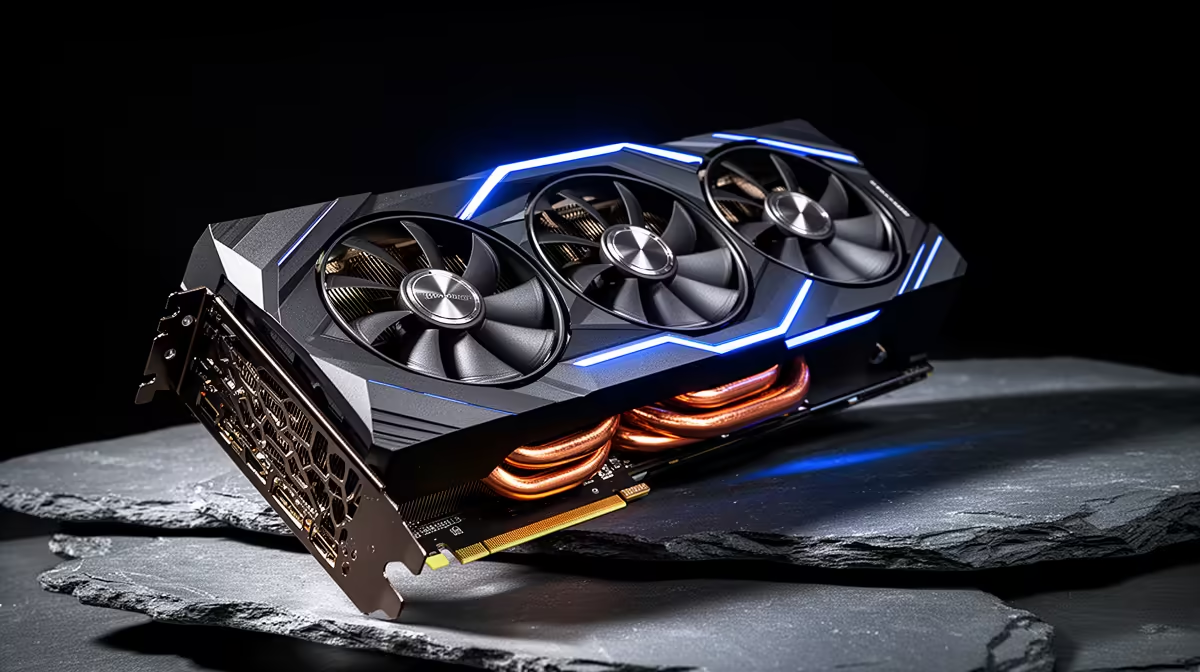
There is an important distinction between a GPU that is 420mm long (which does not exist in current retail) and a case that offers 420mm of clearance for a GPU. GPU clearance is the empty space inside the case from the PCIe bracket mounting point to the nearest front obstruction, typically a fan frame. This clearance accommodates the GPU's actual length plus connector depth. A case rated for 420mm GPU clearance is designed to fit current and near-future GPUs comfortably, with room for the power cables that connect at the end of the card. The longest triple-fan GPUs on the market today, such as the ASUS ROG STRIX RTX 5090, reach approximately 358mm, leaving more than 60mm of buffer in a 420mm-clearance case.
What Case Formats Provide 420mm GPU Clearance 🖥️
Most full ATX mid-towers designed with liquid-cooling priority achieve 400mm or more of GPU clearance, with premium designs reaching 420mm. Compact mid-towers (often called mid ATX or mATX towers) typically cap at 340 to 380mm GPU clearance and may not accommodate the largest triple-fan designs. Mini-ITX cases are more variable and some high-end designs reach 330 to 370mm clearance with creative internal layouts. For straightforward access to 420mm GPU clearance, a standard ATX mid-tower or full-tower at the R2,500 to R5,000 price tier is the most reliable path. These formats are widely available from Evetech and offer the added benefit of 360mm radiator support in the same chassis.
Future-Proofing Your Case for GPU Upgrades 🚀
Choosing a case with 420mm GPU clearance now is a smart future-proofing decision even if your current GPU is under 340mm. GPU shroud dimensions have grown progressively with each generation as manufacturers add larger fans, heatsinks, and vapor chamber designs to manage increasing TDP. A case with 420mm clearance accommodates two or three future GPU generations without forcing a case replacement. This is particularly relevant in South Africa where import costs and exchange rate fluctuations make every major component purchase a considered decision. Avoiding a R2,000 case replacement in two years justifies a R600 to R1,000 premium at purchase time.
Check Clearance With AIO Fans Installed ⚡
If your build includes a 360mm front AIO, the effective GPU clearance in your case is the rated maximum minus the fan and radiator thickness, typically 52 to 55mm combined. A 420mm-rated case with a front AIO setup provides approximately 365 to 368mm of effective GPU space. This fits every current GPU including the largest RTX 5090 AIB cards with a safe margin.
FAQ
Do any current GPUs actually measure 420mm in length?
No current retail GPU measures 420mm.
What is the difference between GPU clearance and GPU support bracket reach?
GPU clearance is the horizontal length the GPU occupies from bracket to PCB end. A GPU support bracket or anti-sag brace is a vertical support that prevents the GPU from sagging on the PCIe slot. These are independent measurements: a case can have excellent clearance but no support bracket, or vice versa.
Is a full-tower necessary for a 420mm clearance case?
No, many ATX mid-towers provide 420mm GPU clearance. Full towers offer more internal volume and fan mounting options but are not required solely for GPU clearance. A mid-tower with 420mm clearance handles any current GPU and most future GPUs while occupying less desk or floor space than a full tower.
Building with a large triple-fan GPU and need the right case?
Browse ATX gaming cases at Evetech that specify their GPU clearance dimension so you can verify fitment before ordering your components.