


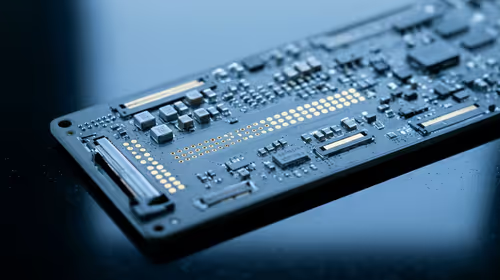
Hot-Swappable PCB Architecture in Modern Keyboards: Guide
Learn hot-swappable PCB architecture in modern keyboards—what it is, how sockets and traces work, and how to pick the right board. Speed up swaps, reduce risk, and upgrade faster 🔧⚡
Read moreShort answer: today's wireless headsets handle game audio at 10-20ms over 2.4GHz. For the spec choice carries through to long-term ownership and resale. Inside: driver, ANC, mic, and battery numbers compared.
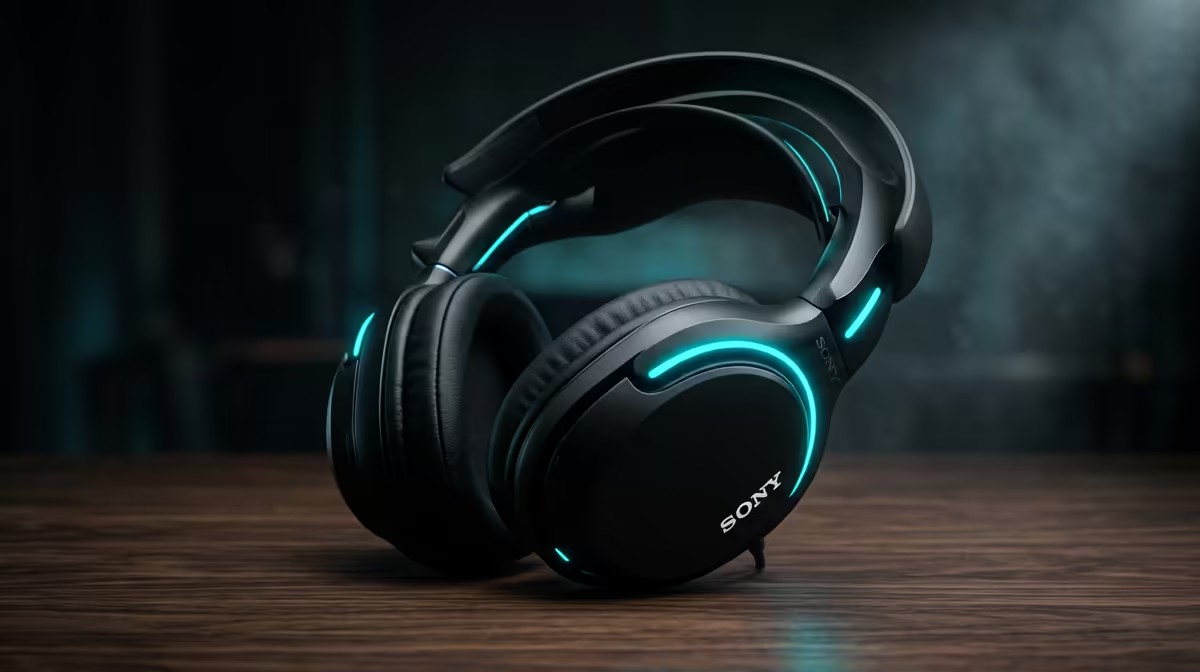
A true multi-platform gaming headset must support USB audio (for PC and PS5), 3.5mm analogue (for Nintendo Switch, older consoles, and mobile), and Bluetooth (for smartphone and tablet). If you game on Xbox, confirm USB dongle compatibility since Xbox consoles restrict third-party USB audio on certain hardware revisions.
Most gaming headsets list PC and PS5 compatibility prominently but bury Xbox caveats in small print. Verify before buying: USB-A dongle works on PS5 (yes for most current headsets), USB-C dongle works on Xbox Series X if included (check Xbox audio compatibility list), 3.5mm jack is present for Nintendo Switch handheld mode and older controllers, and Bluetooth pairs to iOS and Android for mobile gaming. A headset passing all four connection types genuinely covers every major gaming platform in South Africa in 2026. Budget for this multi-platform capability starts around R1,500 and scales to R4,500 for premium wireless models.
Audio output quality varies by connection type. USB allows the headset's internal DAC to process the digital audio signal, typically delivering the best quality. The 3.5mm analogue connection relies on the DAC built into the controller or device, which varies: Nintendo Switch has a clean output; older controllers can introduce more noise floor hiss. Bluetooth audio quality depends on the codec supported by the paired device. For gaming specifically, the difference between connection types is smaller than for music listening, since game audio mixes are optimised for clarity across connection types rather than audiophile fidelity.
Multi-platform gamers switch between desk gaming for PC and couch gaming for console. Headset comfort requirements differ: desk gaming favours lighter headsets with firm headband tension (prevents slipping on downward head tilts), while couch gaming favours deeper earcup padding and relaxed clamp force. Look for memory foam earcup padding over standard polyurethane foam, which retains shape better after extended daily use in warm South African conditions. Ear cup diameter should accommodate your full ear within the pad for both comfort and passive noise isolation.
In your headset's companion app, name each Bluetooth and USB pairing profile by platform (PC Gaming, PS5, Switch, Phone) rather than leaving them as Device 1, Device 2. When sharing your setup with family or moving between rooms, clearly labelled profiles prevent accidental re-pairing that wipes an existing connection. Most companion apps allow custom profile names of up to 16 characters.
Virtual surround sound typically requires either the companion app on a PC or onboard DSP in the headset. On consoles, surround depends on platform-level support: PS5 supports Tempest 3D audio natively for compatible headsets; Xbox supports Windows Sonic and Dolby Atmos for Headphones via a subscription plan.
A wired headset with a 3.5mm jack and optional USB adapter is the most universally compatible option. The trade-off is a physical cable tether across platforms. A wireless headset that includes both a USB dongle and a 3.5mm fallback cable covers most scenarios without permanent cable constraint.
Yes. Premium dual-wireless gaming headsets deliver equivalent audio quality via USB dongle on both PS5 and PC. The platform difference is primarily in how the console handles spatial audio processing rather than in headset output quality itself.
Gaming across multiple platforms and need one headset that handles all of them? Browse Evetech's multi-platform gaming headset range, stocked with options for PC, PS5, Xbox, Switch, and mobile use across South Africa.
Learn hot-swappable PCB architecture in modern keyboards—what it is, how sockets and traces work, and how to pick the right board. Speed up swaps, reduce risk, and upgrade faster 🔧⚡
Read more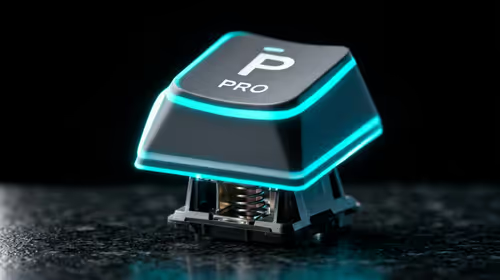
Mechanical switch lifespan explained—what the 50 million keystroke rating really means, plus tips to extend switch life and reduce double-press issues 🔧⌨️
Read more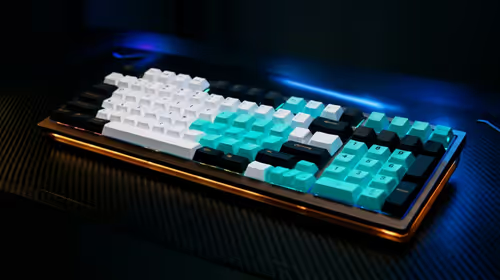
60-percent vs full-size mechanical keyboard layouts—learn what each layout includes, who it suits, and how to choose the right fit 🧩⌨️ for typing, gaming, and productivity.
Read more
Double injection keycaps last far longer than standard printed keycaps in most setups. Learn typical lifespan ranges, what shortens them, and how to maximize durability for smoother daily typing and gaming 😊⌨️
Read more
Full-key anti-ghosting: does it stop missed inputs during fast-paced gaming? We break down latency, polling, and key matrix limits so you can buy smarter 🎮⚡
Read more
Protect mechanical keyboard switches from South African dust and summer humidity with practical cleaning and storage habits. Keep your switches smooth, reduce failures, and extend lifespan. 🌬️💧
Read more
Wondering if a TKL wireless mechanical keyboard is worth it for everyday productivity? We break down latency, battery life, comfort, and workflow gains for real work. ⚡⌨️
Maximise battery life on a fanless 15-inch laptop using efficiency core architecture. Cut idle drain, tune power profiles, and improve thermals for longer runtime. 🔋⚙️
Learn how to reduce desk clutter with a TKL wireless keyboard using fewer cables, smart placement, and tidy essentials. Get a faster, calmer workspace with better ergonomics. ✅🧼
RGB keyboard lighting too distracting? Learn how to manage backlight modes, set brightness, and reduce distraction for focus and productivity 😌🖱️
Are themed gaming keyboards worth the extra cost? Compare build quality, switch options, features, and resale value to find the best fit for your setup 🎮⌨️
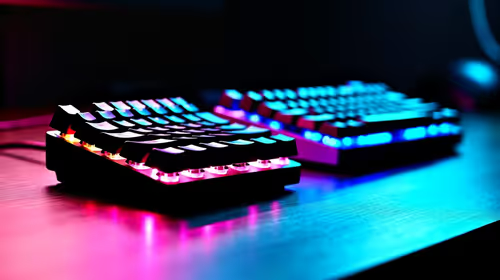
Full-Size vs Tenkeyless mechanical keyboards for gaming: find out if a smaller layout truly improves aim, speed, and comfort. We break down layout, desk space, latency-feel, and keybinds 🎮⌨️
Dedicated media rollers vs function key shortcuts: learn which setup gives you better workflow control, faster media access, and fewer mistakes. 🖱️🎧
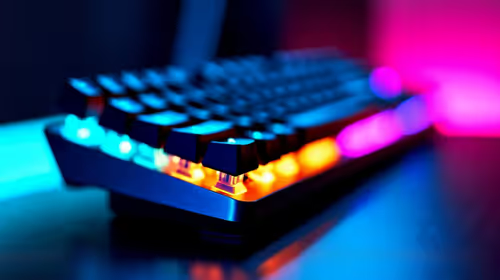
Best Mechanical Switch Type for Gaming: Clicky vs Linear vs Tactile. Find your feel, speed, and noise balance with practical guidance for FPS, MOBA, and productivity 😄🎮
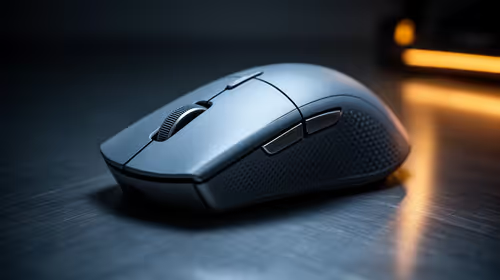
Direct mouse answer: Mouse not keeping up with your work? Everything that matters about dual-mode 2.4GHz + BT 5.0: DPI behaviour, channel switching, battery curves and per-app button mapping. Covers when 2.4GHz USB wins (low-latency desk) and when BT 5.0 wins (laptop, d
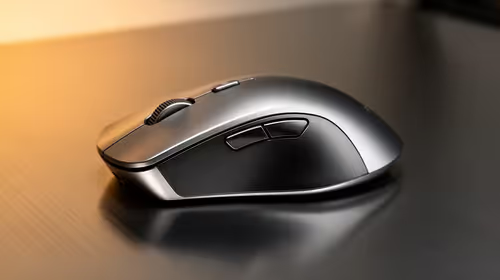
Plain wireless mouse guide: Mouse not keeping up with your work? Everything that matters about wireless productivity mouse: DPI behaviour, channel switching, battery curves and per-app button mapping. Includes DPI tuning tips, channel switch shortcuts, and ZAR-aware fea
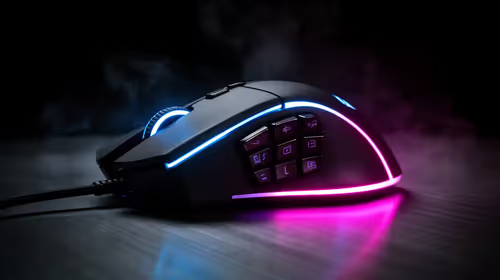
Real productivity numbers: Set up your wireless mouse in this order: everything that matters about wireless productivity mouse: DPI behaviour, channel switching, battery curves and per-app button mapping. Includes DPI tuning tips, channel switch shortcuts, and ZAR-aware
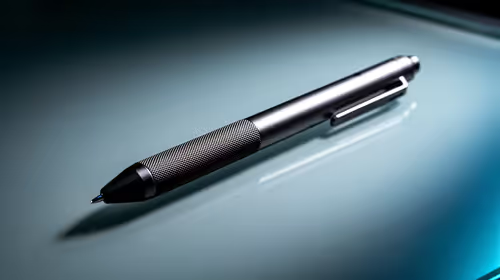
Pen not feeling like paper? Stylus lag and skipping usually trace to old drivers, dirty nibs, or display refresh mismatches, not the pen itself. Covers pressure curve tuning, tilt thresholds, nib swap timing, and SA pricing brackets.