Quick Answer
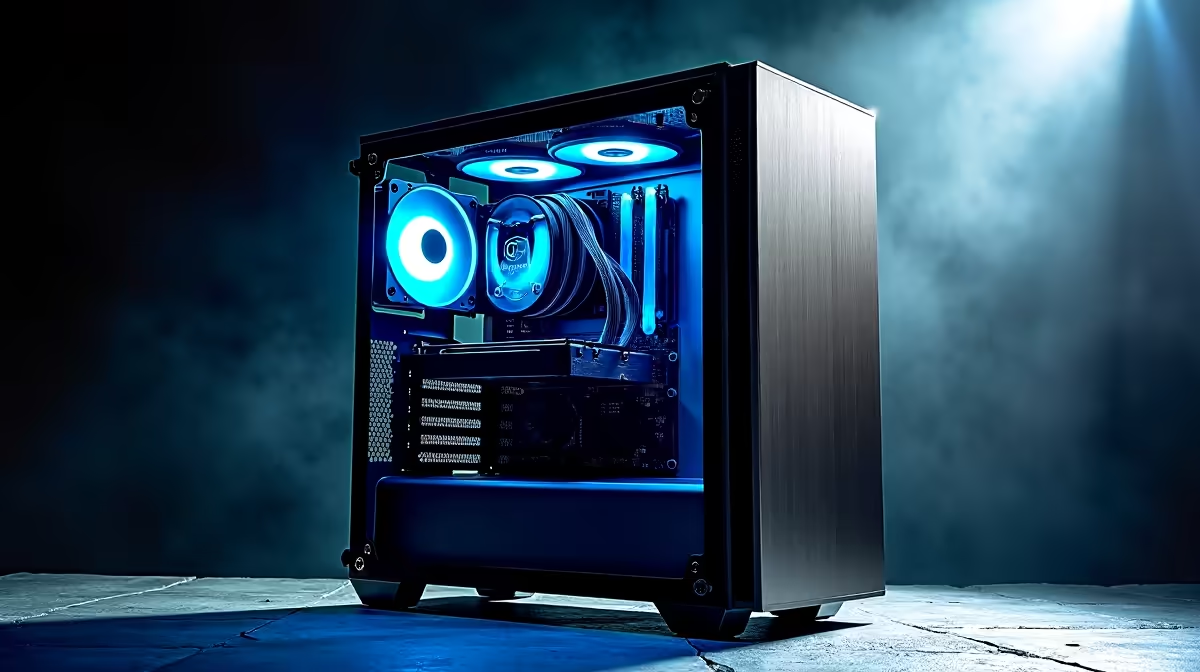
A premium E-ATX case for gaming and creative work should offer confirmed 305mm x 330mm board support, at least 420mm GPU clearance, support for a 420mm top or front radiator, a tool-free panel system, dual-chamber cable management, and a high-porosity mesh front for unrestricted intake airflow. At SA pricing, this spec lands between R3,000 and R6,500 depending on brand and ARGB inclusion.
Board and Radiator Support: The Non-Negotiables 📐
An E-ATX case must explicitly confirm 305mm x 330mm board support with correct mounting hole placement. Beyond the board, confirm support for a 420mm radiator in at least the top position (three 140mm fan mounts). Front 420mm support is a bonus for builds where top mounting is obstructed by tall memory or a wide CPU cooler mounting bracket. Verify GPU clearance with a radiator installed, not the empty chassis figure. Premium E-ATX cases from brands like Fractal Design Torrent XL, Corsair 7000D, and Lian Li PC-O11D XL list GPU clearance with and without front radiators. For a build pairing an RTX 5090 AIB card (potentially 420mm long) with a front 420mm AIO, the internal volume must accommodate both simultaneously with at least 10mm clearance between the GPU and the radiator.
Cable Management and Build Quality Features 🔧
A premium E-ATX case should include a dedicated cable management chamber behind the motherboard tray, with at least 30mm of space for thick PSU cable bundles. Rubber-grommeted cable routing holes at multiple positions (top, middle, and bottom of the tray) allow clean cable runs without sharp bends. Tool-free PCIe slot covers that open with a thumb latch rather than screws speed up GPU installation and future upgrades. PSU shrouds with removable sections allow full-modular PSUs to be installed without fighting cable lengths. For SA creators who may upgrade GPU or storage every two to three years, a tool-friendly design reduces the friction of revisiting the build.
Airflow Design for Mixed Gaming and Creative Use ⚙️
Gaming and creative workloads share a need for sustained airflow at moderate noise. A premium E-ATX case with a high-porosity mesh front allows front fans to operate at 70 to 80 percent of rated CFM with a typical magnetic dust filter in place. Pairing this with multiple top exhaust fan positions (at least two 140mm positions in addition to the radiator mount) creates redundant exhaust paths that handle both GPU and CPU heat simultaneously. Look for a case that separates the PSU intake from the main chamber: bottom-mounted PSUs with their own filtered intake below the motherboard tray keep the PSU cooler without drawing warm internal air through it.
Weigh Portability Against Features ⚡
Premium E-ATX cases can weigh 14kg to 22kg empty. Before buying, consider whether you need to move the system regularly between a home studio and external locations. If portability matters, consider whether an ATX mid-tower with equivalent airflow features serves the build just as well. Saving 5kg empty weight makes a meaningful difference when carrying a fully loaded system.
FAQ
Do premium E-ATX cases include fans?
Some do and some do not. Premium cases often include three to five pre-installed fans as a value add, but these may be basic non-ARGB models. Check the inclusion list before assuming fan costs are covered.
What is the average weight of a fully built premium E-ATX system?
A full E-ATX build with a large GPU, 420mm AIO, full cable management, and glass panels typically weighs 20kg to 28kg. Factor this into workstation desk and shelf load ratings.
Are vertical GPU mounts standard in premium E-ATX cases?
Many premium E-ATX cases include a vertical mount bracket or sell one as an accessory. Confirm the bracket is included if this feature is important, as aftermarket brackets can cost R300 to R800 separately.
Speccing a premium E-ATX build?
Evetech stocks full-tower and E-ATX PC cases with the internal clearance and airflow features that serious gaming and creative workstations demand. Browse the current range for your next chassis upgrade.