Quick Answer
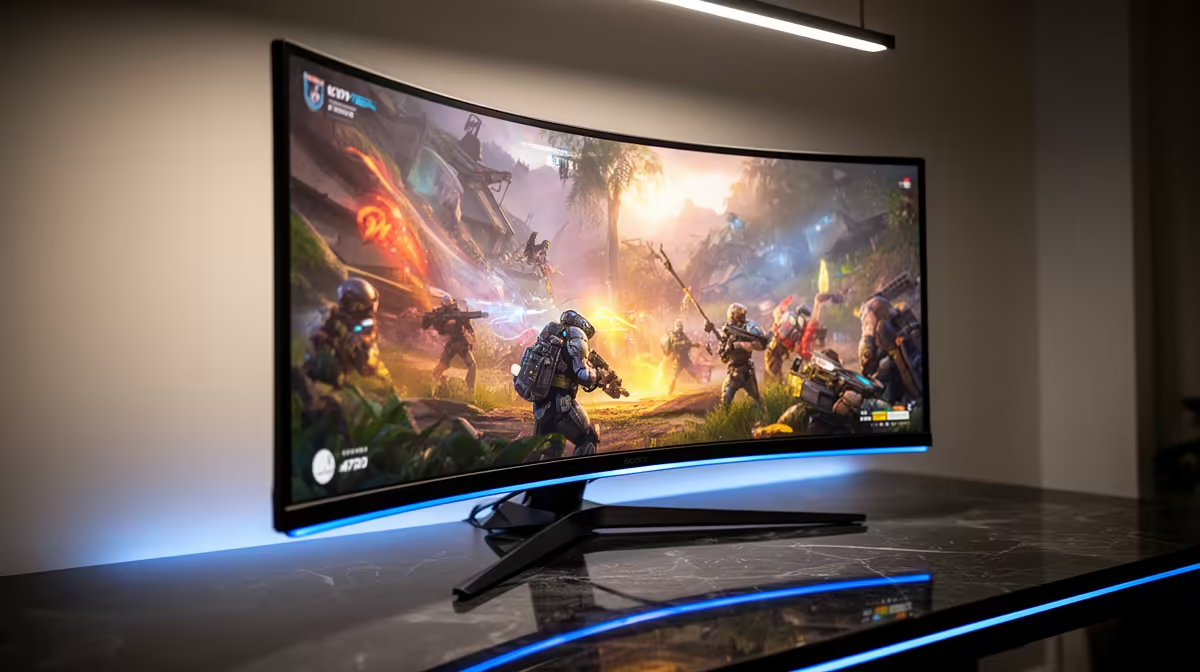
A dual-mode 4K and FHD monitor is worth the extra cost when you genuinely split your time between demanding single-player games at 4K and competitive multiplayer titles where you want 240Hz or higher at FHD. If you primarily play one type of game, a single-mode 4K or high-refresh FHD monitor gives better per-rand value.
The Real Price Gap Between Dual-Mode and Single-Mode Monitors 💰
In South Africa, a quality single-mode 27-inch 4K 144Hz IPS monitor sits at around R9,000 to R12,000. A comparable 27-inch dual-mode panel offering 4K 240Hz and FHD 480Hz from brands like ASUS ROG or LG UltraGear costs R18,000 to R26,000. The premium is R8,000 to R14,000 more for the dual-mode capability. To justify that gap, you need to actively use both modes regularly. A player who finishes a 40-hour RPG then transitions to ranked CS2 sessions will use both modes. A player who only does open-world single-player gaming will not, and the FHD mode collects dust.
When Dual-Mode Makes Sense for SA Gamers 🎮
Dual-mode value cases in SA include: shared family gaming PCs where one user plays competitive games and another plays story-driven titles; LAN gamers who want one monitor that covers both casual home play and competitive LAN event performance; and content creators who also compete, since the 4K mode is useful for video editing while the FHD high-refresh mode serves gaming sessions. For university students gaming in res or digs with limited space, a dual-mode monitor also eliminates the need for two displays, which saves desk space and power draw.
When to Skip Dual-Mode and Invest Elsewhere 🔧
If your gaming PC GPU is below RTX 5070 or RX 9070 XT tier, spending R20,000-plus on a dual-mode monitor creates a bottleneck mismatch. A GPU in the RTX 5060 Ti range struggles to fill 240Hz at FHD in all competitive titles and definitely cannot sustain 4K at meaningful framerates without aggressive upscaling. In this case, allocate the R8,000 to R14,000 premium toward a GPU upgrade instead, pair it with a single-mode 1440p 165Hz monitor at around R6,000 to R8,000, and upgrade the monitor when the GPU tier rises.
Mode Switching Speed Matters ⚡
Some dual-mode monitors take 3 to 5 seconds to switch between 4K and FHD modes, which briefly blanks the display. Others switch instantly via OSD companion software. Check that the monitor you are considering supports quick mode switching if you expect to toggle frequently, for example between a game and streaming software during a live session.
FAQ
Does FHD mode on a 4K panel look worse than a native FHD monitor?
On dual-mode panels that switch the pixel grid natively, FHD mode looks clean because the monitor renders at native FHD rather than simply downscaling 4K. On cheaper monitors that only scale, FHD mode can appear slightly soft. Confirm that the specific model uses true native-mode switching before buying.
Can I use dual-mode with a PS5 or Xbox Series X connected via HDMI?
PS5 and Xbox Series X are limited to HDMI 2.1, which handles 4K at 120Hz but cannot reach the FHD 480Hz esports modes on most dual-mode monitors. The dual-mode FHD high-refresh feature is a PC-only benefit accessible via DisplayPort 2.1a.
Will dual-mode monitors drop in price in SA over the next 12 months?
As more panel manufacturers adopt dual-mode technology, prices should decline gradually. However, rand exchange rate volatility means SA prices do not always track USD price drops proportionally. Expecting a 10 to 15 percent reduction is reasonable, but significant drops within 12 months are unlikely.
Weighing up whether dual-mode is right for you?
Evetech stocks both single-mode high-refresh and dual-mode gaming monitors across a range of price points. Visit the Evetech monitor section to compare specs and find your best match.