Quick Answer
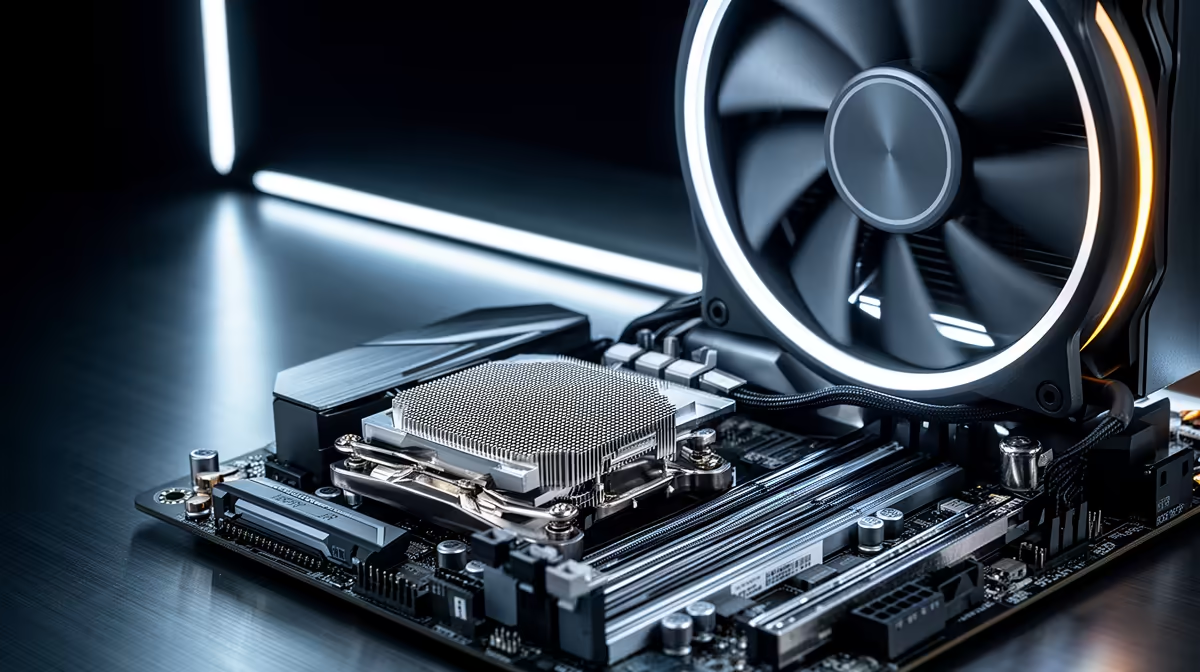
High-TDP desktop CPUs benefit most from a 360mm AIO: specifically the Ryzen 9 9950X, Core i9-14900K, Core Ultra 9 285K, and Ryzen 9 7950X. These chips regularly sustain 150W to 250W under workloads that would thermal-throttle on anything smaller than a high-end tower air cooler or 360mm liquid unit.
The Chips That Demand 360mm Cooling 🔥
AMD's Ryzen 9 9950X has a 170W TDP but boosts significantly above that under all-core Cinebench or Blender loads. The Core i9-14900K is notorious for power consumption, peaking above 250W with power limits unlocked, making it one of the hardest chips in the consumer market to cool. Intel's Core Ultra 9 285K (Arrow Lake) is more efficient but still sustains 125W to 150W under extended workloads. All three of these CPUs require a cooler that can handle sustained heat, not just brief boost spikes, which is where the 360mm radiator's extra surface area relative to 240mm units makes a measurable difference of 8 to 15 degrees under sustained load.
Mid-Range CPUs That Benefit Too 🖥️
The Ryzen 7 9700X and Ryzen 5 9600X do not strictly require 360mm cooling, but they benefit from the headroom it provides. The 9700X at stock runs efficiently enough that a 240mm AIO handles it, but with PBO (Precision Boost Overdrive) enabled, sustained all-core loads push past 100W and temperature margins tighten. A 360mm unit keeps the 9700X under 75 degrees even with PBO, giving you the full boost headroom AMD engineered into the chip. South African builders investing R8,000 to R12,000 in a mid-range CPU often find the R500 to R800 premium for a 360mm over a 240mm unit well-justified for long-term stability.
What Does Not Need 360mm 🔧
Low-TDP efficiency chips like the Core Ultra 5 245 or Ryzen 5 7600 typically peak below 75W and are well served by quality 240mm AIOs or even high-end tower coolers like the be quiet! Dark Rock 4. Spending on a 360mm unit for these chips delivers minimal real-world temperature improvement. If your build is primarily around a budget-to-mid CPU and you want to allocate cooling budget wisely, a 240mm AIO around R1,400 to R1,800 leaves more room for GPU or RAM.
Enable Full PBO Before Judging Your Cooler ⚡
Many South African builders test CPU temperatures at stock settings and conclude a smaller cooler would have been fine, but then enable PBO or XMP EXPO later and find temps spike unexpectedly. Configure your full overclocking or boost profile before evaluating whether your 360mm cooler is keeping up, since that is the real-world operating condition the cooler needs to handle.
FAQ
Does the 360mm AIO make a noticeable difference in gaming frame rates?
Direct frame rate gains from a cooler come only if the CPU was previously thermal throttling. On a Ryzen 9 9950X gaming alongside a workstation workload, preventing throttle events can restore 5 to 15 percent CPU clock consistency, which matters in CPU-limited scenarios. For a well-configured chip not hitting thermal limits, the cooler choice does not directly change gaming FPS.
Can a 360mm AIO cool a CPU for video editing and gaming in the same build?
Yes, and this is one of the best use cases. Creator workloads like DaVinci Resolve or Premiere Pro push CPUs like the Ryzen 9 9900X to sustained high-watt draws for minutes or hours, exactly the sustained load scenario where the 360mm radiator outperforms smaller units.
Is a 360mm AIO overkill for gaming-only builds in South Africa?
For pure gaming on a Ryzen 7 9700X or Core i7-14700K, a premium 240mm AIO handles thermals adequately. The 360mm becomes clearly worthwhile when the chip exceeds 125W sustained, the ambient room temperature is above 28 degrees regularly, or the build includes overclocking or creator workloads alongside gaming.
Not sure which cooler matches your CPU?
Browse Evetech's 360mm AIO selection and check the supported socket list for your specific chip before you build.