Quick Answer
For sustained high-load gaming and content creation, the four fan features that actually matter are bearing type (fluid dynamic for reliability under heat), static pressure rating (2.0mmH2O or higher for radiator positions), PWM range (minimum RPM below 500 for quiet idle, maximum RPM above 1,800 for full load), and noise rating below 28 dBA at max speed. Everything else, including LED features, are secondary.
Bearing Type Under Sustained Heat 🔬
High-load PCs run CPU and GPU temperatures between 75 and 95 degrees Celsius for hours at a time. This heat radiates into fan motors, and bearing degradation accelerates with sustained heat exposure. Fluid dynamic bearings (FDB) are the most resilient under these conditions, rated for 40,000 to 60,000 hours at operating temperatures up to 60 degrees Celsius ambient. Sleeve bearings, common in budget fans, degrade to audible whine within two to three years under high-load conditions.
Static Pressure and CFM Requirements 💨
High-TDP processors and enthusiast GPUs generate 150 to 400W of heat combined. Moving this heat out of the chassis requires fans that push through restriction: radiator fins, dense heatsink stacks, and mesh panels. A static pressure rating of 2.0mmH2O is a practical minimum for radiator-mounted fans in a high-load build. Mainstream gaming content creation builds running an RTX 5080 with a 360mm AIO benefit from 2.5 to 2.75mmH2O fans on the radiator to maintain coolant temps below 40 degrees Celsius at full sustained load.
PWM Range and Curve Flexibility 🖥️
A wide PWM range enables the best balance of acoustics and thermal performance. For gaming and content creation PCs, look for fans that start reliably at 20 to 30% duty cycle (around 300 to 500 RPM) for near-silent desktop work, and reach 1,800 to 2,200 RPM at 100% for maximum cooling under load. The difference between a fan bottoming at 600 RPM and one bottoming at 300 RPM at idle is audibly significant in a quiet home office or studio. In SA home offices where the PC is often the only sound in the room, this matters considerably.
Noise-Normalised Thermal Performance 🔇
The best metric for fan quality is how much airflow a fan delivers at a given noise level, not just raw CFM or raw dBA. A fan moving 65 CFM at 22 dBA is excellent. A fan moving 68 CFM at 32 dBA is merely loud. Look for reviews that include noise-normalised airflow comparisons, typically CFM at 30 dBA or CFM at 1,000 RPM, as the primary purchasing criterion.
Size Up to 140mm Where Possible ⚡
A quality 140mm fan running at 900 RPM moves as much air as a 120mm fan at 1,300 RPM, with significantly less noise. For high-load PCs where airflow demand is constant, swapping the rear exhaust from 120mm to 140mm (if the case allows) is one of the highest-value noise reduction upgrades at R100 to R200 extra cost.
FAQ
Does ARGB lighting affect cooling performance or reliability?
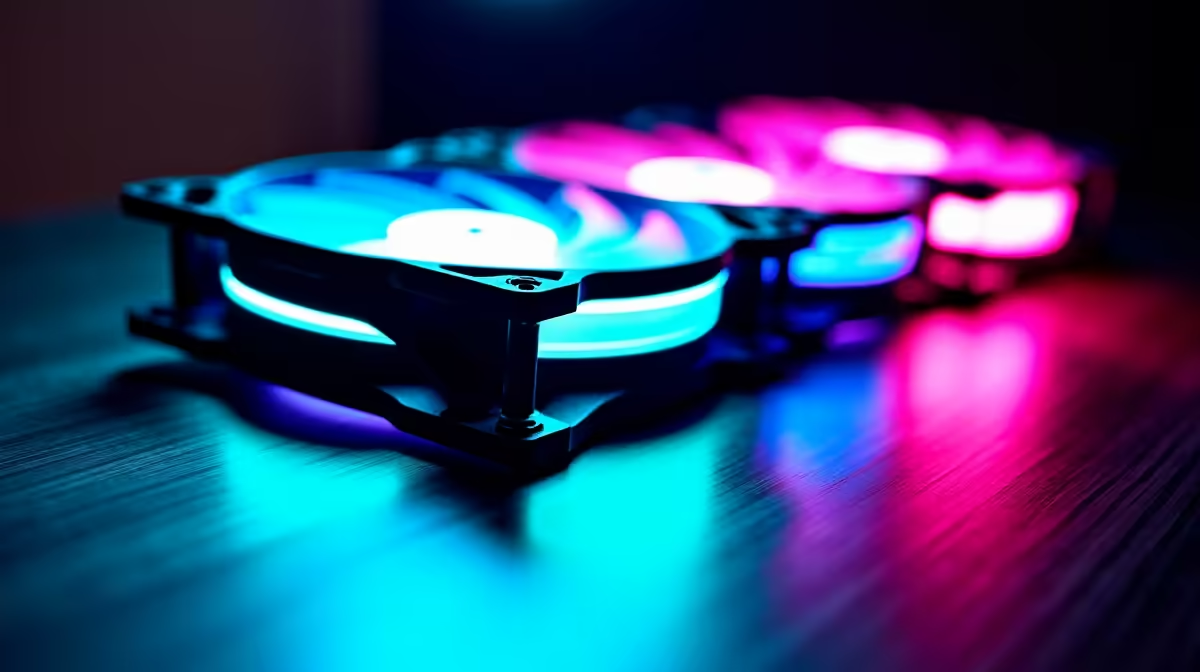
No, ARGB LEDs consume milliwatts and generate negligible heat. Lighting features do not affect bearing life, airflow, or static pressure. Choose ARGB for aesthetics independently of your cooling performance requirements.
Should I prioritise case fans or CPU cooler quality for a high-load build?
CPU cooler quality first: the cooler is directly responsible for CPU thermals. Case fans support the cooler by ensuring the CPU has access to fresh air and that exhaust air exits efficiently. Both matter, but the cooler is the higher-leverage investment.
How many case fans does a content creation build actually need?
Three to five in a standard mid-tower: two to three front intake, one rear exhaust, and optionally one to two top exhaust. More fans beyond five have diminishing returns unless the case is particularly poor at directing airflow or the CPU TDP exceeds 200W.
Kitting out a high-load gaming or content creation build?
Browse Evetech's case fan range including PWM, ARGB, and FDB-bearing models suited for sustained gaming and professional workload machines.