Quick Answer
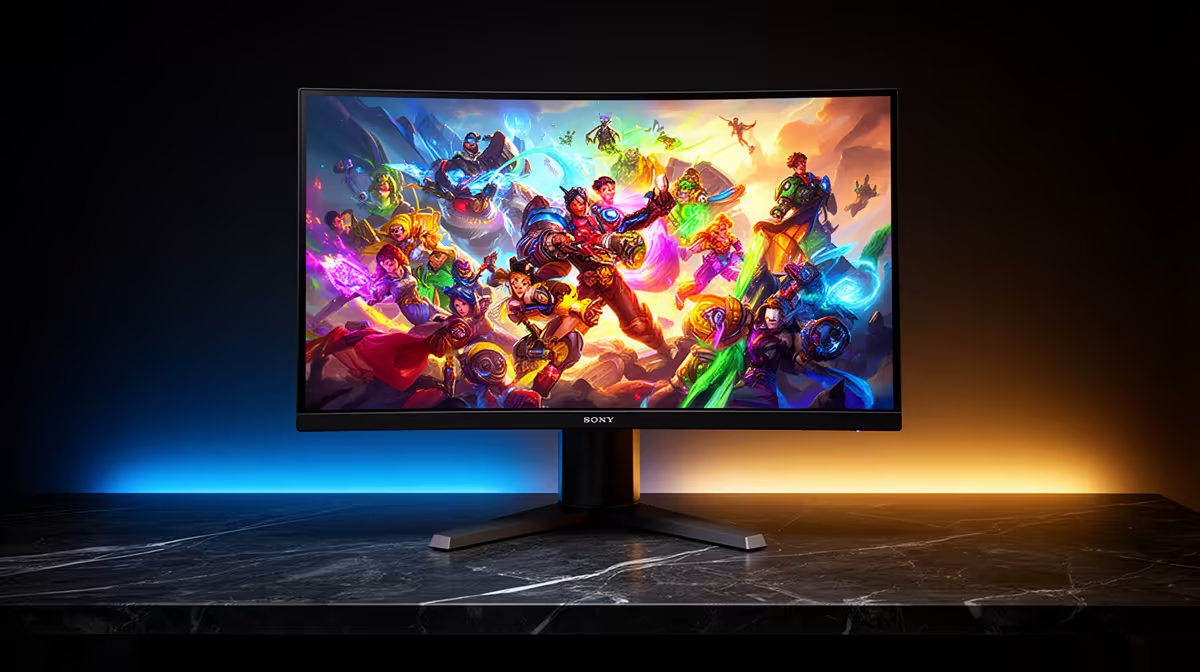
97% DCI-P3 coverage means the monitor can reproduce almost the full cinema colour space, so creative work like photo editing, video grading, and graphic design looks accurate without manual profile switching. Games with HDR pipelines and filmic colour grading also display richer, more saturated visuals on a wide-gamut panel compared to a standard sRGB screen.
What DCI-P3 Coverage Actually Changes for Creators 🎨
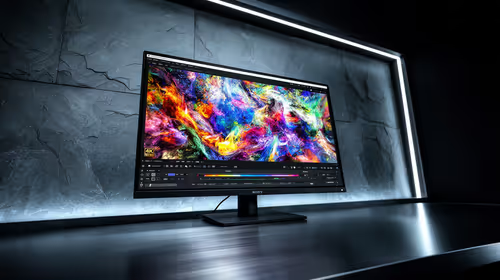
DCI-P3 is the colour space used in digital cinema and increasingly in premium content delivery on streaming platforms. Adobe Photoshop, DaVinci Resolve, and Lightroom can all target DCI-P3 or its close cousin Display P3, meaning edits made on a 97% DCI-P3 panel look correct on any P3-capable output device. The practical difference versus a standard sRGB monitor (roughly 72% NTSC, 100% sRGB) is immediately visible in saturated reds, greens, and teals. Skin tones, landscape gradients, and product photography all benefit. SA freelancers producing social media content, product shoots for local e-commerce, or short films for DStv and streaming platforms will deliver more accurate output without outsourcing colour correction.
Gaming on a Wide-Gamut Panel 🎮
Modern titles with HDR support, including Cyberpunk 2077 and Alan Wake 2, render wide-gamut colour natively. On a 97% DCI-P3 display running HDR, neon lighting, foliage, and fire effects appear noticeably more vivid than on a standard sRGB panel. However, SDR games played without a colour management profile can look oversaturated because the OS may map sRGB content onto the wider gamut incorrectly. Windows 11 HDR calibration and Auto HDR settings should be configured carefully. Toggle HDR off for older SDR-only titles and on for modern releases with native HDR. An RTX 5080 paired with a 97% DCI-P3 monitor at 4K is currently one of the premium creator-gamer combinations stocked at Evetech.
Choosing a Dual-Purpose Monitor: Colour vs Refresh Trade-offs 🖥️
High DCI-P3 coverage is most common on IPS and OLED panels. IPS monitors in the R7,000 to R15,000 range often combine 95% to 99% DCI-P3 with 144Hz to 240Hz refresh rates, making them genuinely dual-purpose. VA panels tend to cover sRGB well but fall short on P3. Pure TN panels achieve high refresh rates but weak colour volume and poor viewing angles, making them unsuitable for colour work. For SA buyers who use one screen for both Premiere Pro edits during the day and Warframe sessions at night, a 27-inch QHD IPS at R8,000 to R12,000 with certified wide-gamut coverage is the most balanced entry point.
Colour Profile Tip for Creators ⚡
Always load the ICC profile supplied by your monitor manufacturer and set Windows to use it under Display Settings, Advanced Display, ICC Profile. This ensures Photoshop and Lightroom read accurate colour data. Gaming with an ICC profile active is harmless for most titles.
FAQ
Is DCI-P3 the same as Adobe RGB?
No. DCI-P3 and Adobe RGB have similar size but different shapes. DCI-P3 covers more reds and greens than sRGB, while Adobe RGB extends further into greens. For video and streaming work, DCI-P3 is more relevant. For print production, Adobe RGB coverage matters more.
Does 97% DCI-P3 mean the colours are more accurate?
Coverage and accuracy are separate. Coverage tells you how many colours the panel can produce; accuracy (Delta-E rating) tells you how close those colours are to their target values. Look for panels specifying Delta-E below 2 for reliable colour accuracy alongside high DCI-P3 coverage.
Do games look wrong on a wide-gamut monitor without HDR enabled?
They can appear oversaturated in SDR mode if Windows colour management is not configured. Enabling HDR in Windows 11 and calibrating via the HDR Calibration app solves this for most modern titles.
Need one monitor for creative work and gaming?
Evetech stocks wide-gamut IPS and OLED monitors covering DCI-P3 alongside high refresh rates, all available for delivery across South Africa.