


Hot-Swappable PCB Architecture in Modern Keyboards: Guide
Learn hot-swappable PCB architecture in modern keyboards—what it is, how sockets and traces work, and how to pick the right board. Speed up swaps, reduce risk, and upgrade faster 🔧⚡
Read moreWondering why are OLED monitors so expensive? This guide breaks down the complex manufacturing, premium materials, and cutting-edge R&D that contribute to their higher price tag. Discover if the stunning visuals and deep blacks are worth the investment for your setup! 🖥️✨
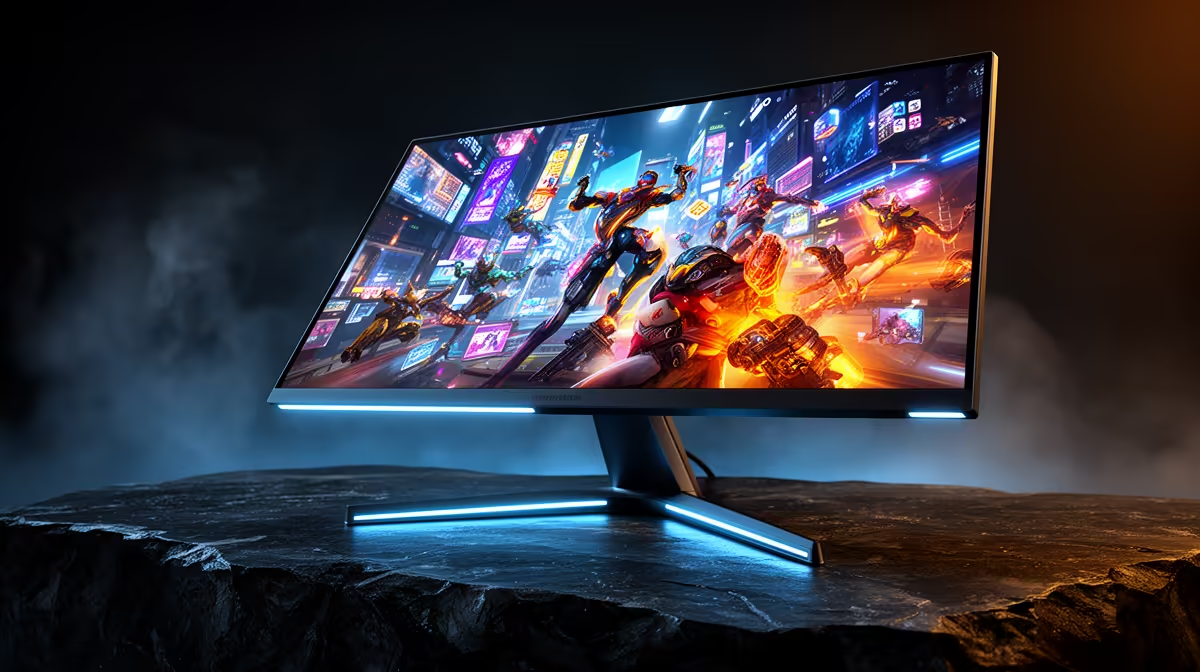
You’ve seen the videos. The perfect, inky blacks in a dark scene from Alan Wake 2. The blindingly vibrant colours in Cyberpunk 2077. OLED monitors look absolutely incredible. So you head online, find a model you like, and then… you see the price. R25,000 for a monitor? Shem. It’s a moment that makes many South African gamers pause and ask: why are OLED monitors so expensive? Let's break down the real reasons behind that premium price tag.
Unlike traditional LCD/LED screens that use a single backlight shining through a panel of pixels, an OLED (Organic Light-Emitting Diode) display is fundamentally different. Each individual pixel is its own tiny light source. This "per-pixel" illumination is the secret to OLED's magic… and its high cost.
Manufacturing a panel with millions of perfect, self-lighting pixels is an incredibly precise and delicate process. If even a small cluster of pixels is faulty on a large sheet of OLED material, the entire section might have to be discarded. This leads to lower manufacturing "yields" compared to the more mature LCD technology, meaning the cost of the failed units gets baked into the price of the successful ones.
Beyond the basic manufacturing challenge, several specific factors contribute to the expense of OLED technology. Understanding them helps clarify why you’re paying a premium.
The light-emitting layers in an OLED panel are made from carbon-based organic compounds. These materials are more expensive to produce at scale than the liquid crystals in an LCD. Furthermore, a huge amount of research and development (R&D) investment goes into making these materials last longer and resist "burn-in"—a permanent ghost image that was a major concern in early OLEDs. That R&D cost is reflected in the final product price.
Because each pixel can turn completely off, OLEDs achieve a theoretically infinite contrast ratio. Blacks are truly black, not a washed-out grey. This makes colours pop and creates a sense of depth that no other display technology can match. They also have near-instantaneous pixel response times, making them a dream for fast-paced gaming by eliminating motion blur. This superior performance simply costs more to engineer and produce.
Modern OLED monitors have built-in features to prevent burn-in, like Pixel Shift and automatic logo dimming. You can help by setting a dark-themed screensaver to kick in after a few minutes of inactivity and hiding your taskbar when not in use. These small habits will keep your screen looking pristine for years.
So, we've established why OLED monitors are so expensive, but does that mean you should get one? It depends entirely on your needs and budget.
For competitive FPS players, the lightning-fast response time is a massive advantage. For those who love single-player, cinematic experiences, the incredible contrast and HDR performance are breathtaking. If you're a content creator who needs perfect colour accuracy and true blacks for video editing or design, the investment can be justified. Exploring the full range of all gaming monitors can help you see where OLEDs fit in the premium tier.
Let's be real: not everyone has a five-figure budget for a screen. The good news is that modern display technology is fantastic across the board. High-end IPS and VA panels offer incredible performance for a fraction of the cost.
You can get stunning 4K monitors with excellent colour and sharpness that are perfect for both productivity and play. For immersive gaming, modern curved monitors can wrap the action around you, enhancing the experience significantly. There are even specialised options like ultra-compact portable monitors for those who need a second screen on the go.
Ultimately, the high price of an OLED monitor buys you the current pinnacle of display technology. While it's a significant investment, for those who demand the absolute best visual quality, there is no substitute. For everyone else, there are amazing, high-value options available across our massive selection of PC monitors.
Ready to Upgrade Your View? Whether you're sold on the perfect blacks of OLED or hunting for the best value, your ideal screen is waiting. Explore our incredible PC monitor deals and find the display that will bring your games and work to life.
For gamers and content creators, the superior contrast, true blacks, and faster response times of OLED monitors often justify the high cost. The value depends on your budget and primary use case.
The primary driver is the complex oled monitor manufacturing cost. Producing flawless organic light-emitting diode panels has lower yields than traditional LCDs, increasing the price of each unit.
Modern OLED monitors have lifespans comparable to LEDs, often rated for 30,000+ hours. However, they can be susceptible to burn-in, though mitigation tech has greatly reduced this risk.
Yes, experts predict the future of OLED monitor prices will see a gradual decrease as manufacturing technology matures, production yields improve, and competition in the market increases.
While the oled burn-in risk exists, modern monitors include features like pixel shifting and static image detection to minimize it. For typical varied use, it's much less of a concern now.
OLED production involves a more complex layering process and higher sensitivity to environmental factors, leading to lower successful yields and therefore higher costs passed on to consumers.
Learn hot-swappable PCB architecture in modern keyboards—what it is, how sockets and traces work, and how to pick the right board. Speed up swaps, reduce risk, and upgrade faster 🔧⚡
Read more
Mechanical switch lifespan explained—what the 50 million keystroke rating really means, plus tips to extend switch life and reduce double-press issues 🔧⌨️
Read more
60-percent vs full-size mechanical keyboard layouts—learn what each layout includes, who it suits, and how to choose the right fit 🧩⌨️ for typing, gaming, and productivity.
Read more
Double injection keycaps last far longer than standard printed keycaps in most setups. Learn typical lifespan ranges, what shortens them, and how to maximize durability for smoother daily typing and gaming 😊⌨️
Read more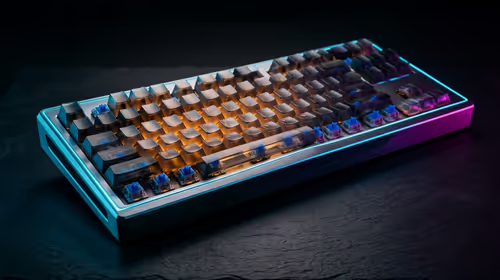
Full-key anti-ghosting: does it stop missed inputs during fast-paced gaming? We break down latency, polling, and key matrix limits so you can buy smarter 🎮⚡
Read more
Protect mechanical keyboard switches from South African dust and summer humidity with practical cleaning and storage habits. Keep your switches smooth, reduce failures, and extend lifespan. 🌬️💧
Read more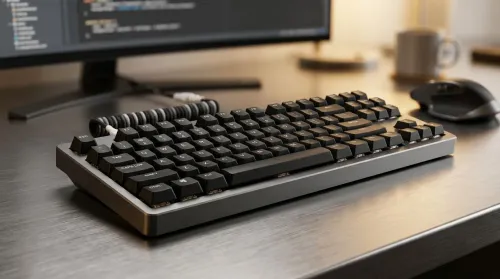
Wondering if a TKL wireless mechanical keyboard is worth it for everyday productivity? We break down latency, battery life, comfort, and workflow gains for real work. ⚡⌨️

Maximise battery life on a fanless 15-inch laptop using efficiency core architecture. Cut idle drain, tune power profiles, and improve thermals for longer runtime. 🔋⚙️
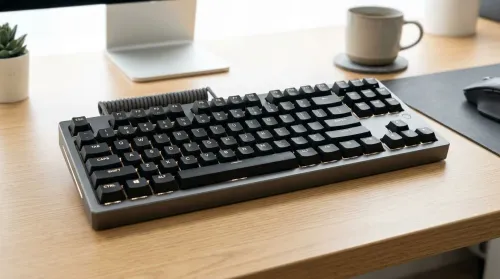
Learn how to reduce desk clutter with a TKL wireless keyboard using fewer cables, smart placement, and tidy essentials. Get a faster, calmer workspace with better ergonomics. ✅🧼
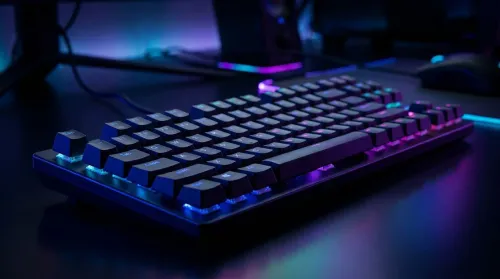
RGB keyboard lighting too distracting? Learn how to manage backlight modes, set brightness, and reduce distraction for focus and productivity 😌🖱️
Are themed gaming keyboards worth the extra cost? Compare build quality, switch options, features, and resale value to find the best fit for your setup 🎮⌨️
Full-Size vs Tenkeyless mechanical keyboards for gaming: find out if a smaller layout truly improves aim, speed, and comfort. We break down layout, desk space, latency-feel, and keybinds 🎮⌨️
Dedicated media rollers vs function key shortcuts: learn which setup gives you better workflow control, faster media access, and fewer mistakes. 🖱️🎧
Best Mechanical Switch Type for Gaming: Clicky vs Linear vs Tactile. Find your feel, speed, and noise balance with practical guidance for FPS, MOBA, and productivity 😄🎮

Direct mouse answer: Mouse not keeping up with your work? Everything that matters about dual-mode 2.4GHz + BT 5.0: DPI behaviour, channel switching, battery curves and per-app button mapping. Covers when 2.4GHz USB wins (low-latency desk) and when BT 5.0 wins (laptop, d

Plain wireless mouse guide: Mouse not keeping up with your work? Everything that matters about wireless productivity mouse: DPI behaviour, channel switching, battery curves and per-app button mapping. Includes DPI tuning tips, channel switch shortcuts, and ZAR-aware fea
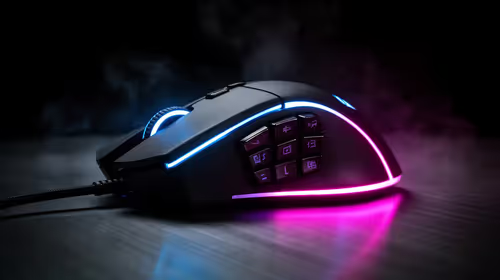
Real productivity numbers: Set up your wireless mouse in this order: everything that matters about wireless productivity mouse: DPI behaviour, channel switching, battery curves and per-app button mapping. Includes DPI tuning tips, channel switch shortcuts, and ZAR-aware
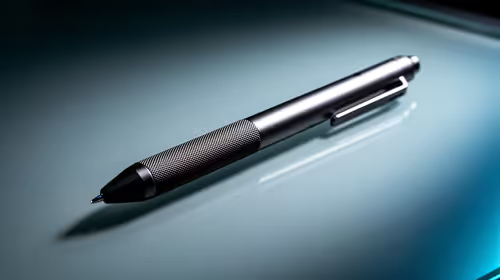
Pen not feeling like paper? Stylus lag and skipping usually trace to old drivers, dirty nibs, or display refresh mismatches, not the pen itself. Covers pressure curve tuning, tilt thresholds, nib swap timing, and SA pricing brackets.