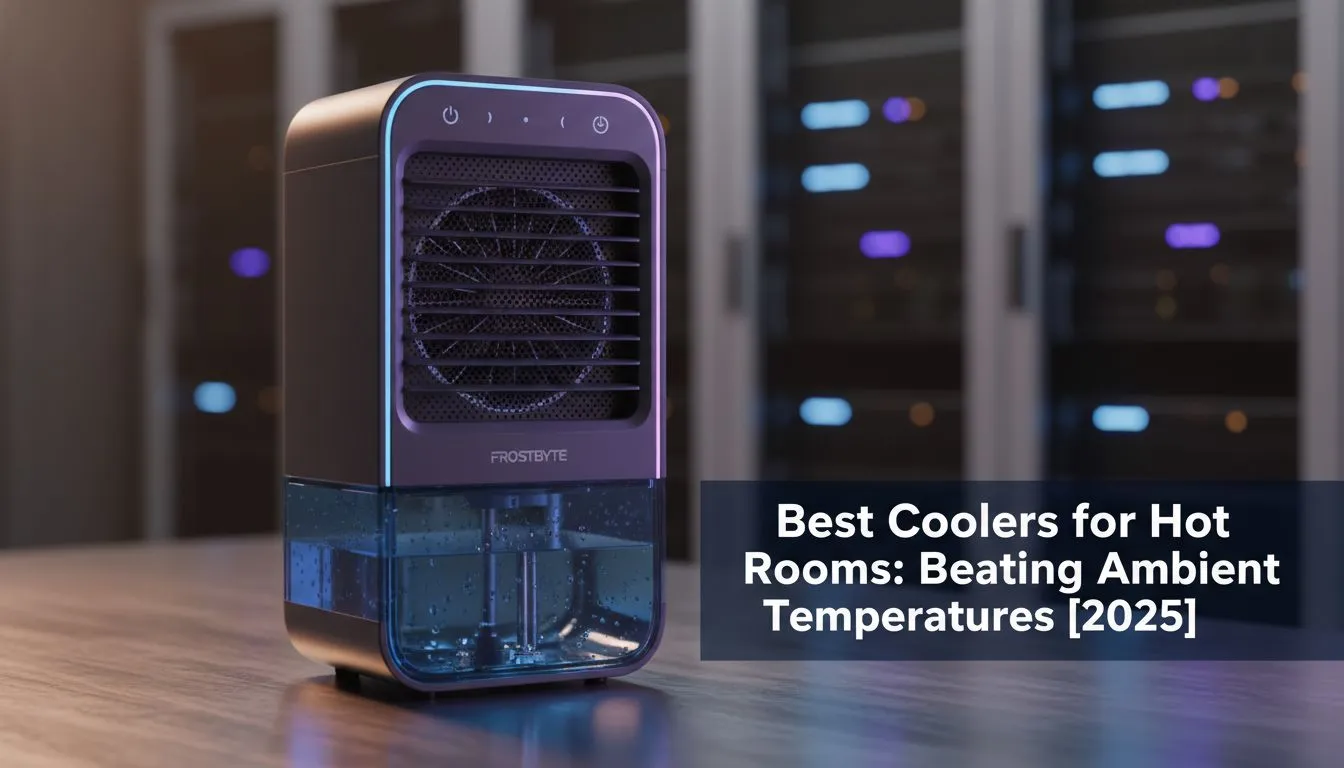
Another sweltering South African summer day, another gaming session ruined by a CPU that sounds like a jet engine. Sound familiar? When the ambient temperature in your room climbs, your PC feels it first. Your frames drop, your system stutters, and that crucial win becomes a laggy loss. But it doesn’t have to be this way. Choosing one of the best coolers for hot rooms is your secret weapon against the heat. Let's dive in. 🚀
Why Your Standard Cooler Fails in High Ambient Heat
Ever noticed your PC performs beautifully in winter but struggles during a summer heatwave? That's ambient temperature at play. Your CPU cooler doesn't magically create cold; it moves heat from your CPU into the surrounding air. If that air is already warm, the cooler has to work much harder to do its job.
When a cooler can't dissipate heat fast enough, your CPU protects itself by "thermal throttling"—aggressively slowing down to reduce its temperature. This is what causes stuttering and massive FPS drops in the middle of a game. For gamers in warmer parts of South Africa, finding effective CPU cooling for hot climates isn't a luxury; it's essential for consistent performance.
Choosing the Best Coolers for Hot Rooms: Air vs. Liquid
The battle between air and liquid cooling is legendary, but when dealing with high ambient temperatures, the choice becomes more strategic. Both have their merits, but they tackle the problem differently.
The Reliability of Air Cooling
Modern high-end air coolers are engineering marvels. With massive fin stacks, multiple heat pipes, and powerful fans, they can rival many liquid coolers. Their biggest advantage is simplicity and reliability—no pumps to fail or liquid to leak. For a hot room, you'll want a beefy model that can soak up and blow away a lot of heat quickly. The key is a large heatsink and fans with high static pressure. A top-tier air cooler is a fantastic, set-and-forget solution.
The Efficiency of Liquid Cooling (AIOs)
This is where things get interesting for hot rooms. All-In-One (AIO) liquid coolers excel at one crucial thing: moving the CPU's heat away from the hot socket area and exhausting it directly out of the case via a radiator. This prevents the CPU's heat from raising the internal temperature of your case and affecting other components like your GPU. An efficient liquid cooler (AIO) is often the superior choice for managing heat in a consistently warm environment.
Case Airflow is King 👑
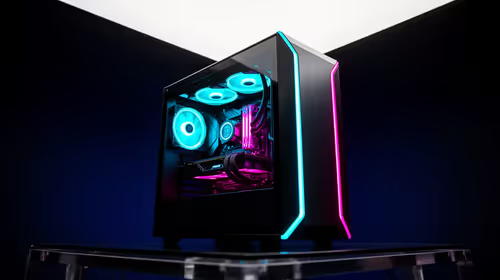
powerful new CPU cooler won't perform well if it's starved for fresh air. Ensure your PC case has a clear airflow path: at least two intake fans at the front pulling cool air in, and one exhaust fan at the back or top pushing hot air out. A well-ventilated case can drop your component temperatures by several degrees, making your cooler's job much easier.
Key Features for Coolers in Hot Climates
When shopping for a cooler specifically to combat a hot room, a few specs matter more than others. Don't just look at the RGB lighting; focus on the performance hardware. ✨
Radiator Size: Bigger is Better
For AIOs, the radiator's surface area is the single most important factor. A small 120mm radiator will quickly become saturated with heat in a warm room and struggle to keep up. A 240mm is a decent baseline, but for the best performance against high ambient temperatures, a 360mm radiator is the gold standard. The larger surface area allows for much more effective heat dissipation, giving you the thermal headroom you need.
Fan Quality and Static Pressure
The fans on your cooler are just as important as the heatsink or radiator. Look for fans with high "static pressure" (measured in mmH2O). This metric indicates how well a fan can push air through the dense fins of a radiator or heatsink tower. Good static pressure ensures the warm air is forced out efficiently, even when faced with resistance.
Our Top Cooler Picks for Beating the SA Heat
While the "best" cooler depends on your specific CPU and case, some brands consistently deliver the performance needed for tough conditions.
For those seeking the ultimate AIO performance, brands like CORSAIR are renowned for their powerful pumps and high-static pressure fans. Their iCUE series offers excellent cooling potential combined with detailed software control, allowing you to fine-tune your fan curves to perfectly match your room's conditions. Exploring the range of Corsair coolers is a great starting point for any serious builder.
Ultimately, whether you choose a monster air tower or a large AIO, the goal is the same: give your CPU enough thermal headroom to perform at its peak, no matter how hot it gets outside. Don't let the weather dictate your PC's performance. Take control by exploring the wide variety of CPU coolers available and find the perfect one to keep your rig cool and your frames high.
Ready to Beat the Heat?
A hot room demands a serious cooling solution. Don't let thermal throttling ruin your performance. Explore our massive range of CPU coolers and find the perfect air or liquid cooler to keep your system frosty and your gameplay smooth.